
Bienvenues-Bâtard-Montrachet WIne Region Guide
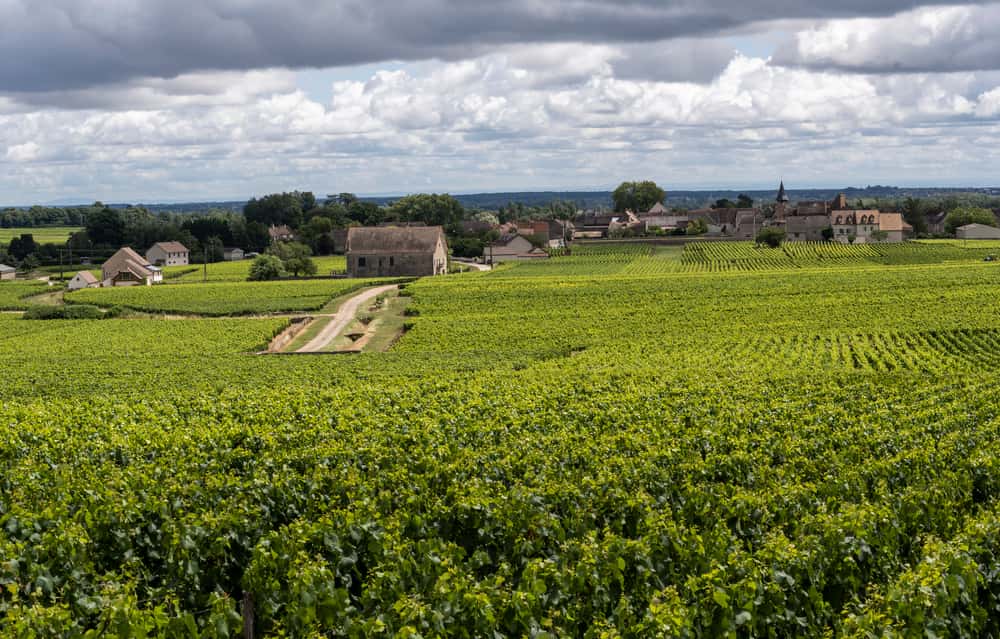
The mejority shape of this appellation land is a flat where the conditions of exploitation of the vine are less favorable than on the sloping slopes of Montrachet or Chevalier-Montrachet.
About Bienvenues-Bâtard-Montrachet
- Classification
- AOP Bienvenues-Bâtard-Montrachet
- Grape Focus
- Chardonnay
- Wine Types
- White Wine
The wine area of Bienvenues-Bâtard-Montrachet produces only white wines from Chardonnay. "Bienvenues" means "Welcome" in French, since the location serves as the doorway to the Grand Cru vineyard from the village of Puligny. Bienvenues-Bâtard-Montrachet is one of two Grand Cru vineyards connected to the Batard Montrachet, which spans 3.46 hectares in the Burgundy hamlet of Puligny. The region cultivates only Chardonnay and is on par with the Batard Montrachet wine region. These incredible white wines have an aging potential of more than 20 years under ideal conditions. Bienvenues-Bâtard-Montrachet wines are of high quality and command a high price. The region was granted its own appellation on 13th July 1937.
Check out the best wine tastings and tours in Bienvenues-Bâtard-Montrachet!
Where is the Bienvenues-Bâtard-Montrachet wine region?
Bienvenues-Bâtard-Montrachet is a great cru vineyard on the southern slopes of the Montrachet hills in Puligny, Burgundy's Cote de Beaune subregion. The area is located between Meursault and Santenay in the southernmost part of the Cote de Beaune. The vineyards are bounded on the west and south by the Batard Montrachet, on the north by the Puligny Montrachet Premier Cru, on the east by the Puligny Montrachet villages, and on the south by the Chassagne Montrachet. This magnificent Grand Cru vineyard is located at the bottom of the slope and has richer and deeper soil than the prestigious vineyards above.
History of the Bienvenues-Bâtard-Montrachet wine region
The wine's origins in Bienvenues-Bâtard-Montrachet may be traced back to the Middle Ages. With the advent of Christianity by the Cistercians, wine production began in the area. The monastery of Maizieres and the Lords of Chagny marketed the Bienvenues-Bâtard-Montrachet wines, which were popular among French aristocrats. Only in the 17th century did the wines of Bienvenues-Bâtard-Montrachet come to prominence. The Chardonnay wines from Bienvenues-Batard Montrachet are on par with those from the larger and more famed Batard Montrachet. On July 13, 1937, the area was awarded its own appellation.
The terroir and geography of the Bienvenues-Bâtard-Montrachet wine region
Bienvenues-Bâtard-Montrachet is located at the foothill of the Montrachet hills with a very similar terroir to more prestigious vineyards above the slope. The soil is mostly limestone and marl with a high content of clay. The vines are well connected with the subsoil layer as the root digs deeper in search of hydration. Most of the vines face east and south with maximum sun exposure. The altitude ranges from 240-250 meters above sea level.
Popular grape varieties from the Bienvenues-Bâtard-Montrachet wine region
The wine area of Bienvenues-Bâtard-Montrachet produces only Chardonnay. The area is noted for excellent Chardonnay grapes on par with the more famed Batard Montrachet. The wine region produces approximately 146 hectoliters of wine, which equates to 20000 bottles. These wines are extremely difficult to obtain due to their limited production and high price.
Food to pair with Bienvenues-Bâtard-Montrachet wine
Civet de Canard
Civet de canard is a classic French duck stew that includes components such as duck legs and breasts, bacon, flour, shallots, garlic, red wine, balsamic vinegar, stock, carrots, bay leaves, and thyme. Duck parts are first dusted and fried before other ingredients are added to form a sauce. Cook the meal until the beef and vegetables are soft. Civet de Canard is traditionally served with wide beans, mashed potatoes, or roasted parsnips. Pair this traditional French meal with exceptional wines from the Bienvenues-Batard Montrachet appellation.
Brie de Meaux
Brie de Meaux is a soft cow milk cheese from France. The flat cheese's lovely skin is covered with white mold. It matures in basements on straw mats for at least a month in the Île-de-France region near Paris. This sort of Brie is well-known among foodies, and it was originally known as the cheese of royalty and the affluent. The cheese is commonly used in French dishes such as Galettes briardes and Bouchées à la Reine au Brie. Brie de Meaux pairs well with Bienvenues-Bâtard-Montrachet wines.
Beluga Caviar
It is the most prized caviar in the entire world. Beluga Caviar is very rare and expensive as the Beluga Sturgeon can take up to 25 years to mature and start producing Roe which is one of the largest fish eggs. This species of fish is mostly found in the Caspian sea and Black sea and occasionally in the Adriatic sea. Beluga Caviar can be served plain or combined with boiled potatoes, pancakes, or sour cream. This caviar is tender and delicate with a buttery flavor. Try this sophisticated dish with sophisticated wines from Bienvenues-Bâtard-Montrachet appellation.
Places to visit in the Bienvenues-Bâtard-Montrachet wine region
Chalon-sur-Saone
Chalon-Sur-Sâone is located in the Sâone-et-Loire area of central Burgundy, between Dijon and Mâcon. Begin your adventure in the big, open area in front of the Town Hall, where you will see several noteworthy structures: Among the notable structures on this plaza are the town hall, the enormous Church of Saint-Pierre, and the Museum Denon. The huge facade of the Church of Saint-Pierre is notable for its baroque architecture. There are several lovely half-timbered homes around the Place du Marché's perimeter. This is an excellent location for a sunny streetside café and people-watching.
Nuits-Saint-Georges
The Cotes de Nuits wine region is focused on the small town of Nuits-Saint-Georges, which is located between Dijon and Beaune in Burgundy's Cote d'Or department. Nuits-Saint-Georges is a picturesque and spectacular village located along the Grande Rue, a lengthy pedestrian street. This street has a variety of shops, cafés, and bars, as well as a few places where you may buy regional wine. There are grapes all around town, stretched out across the mild slopes.
Autun
Autun is located in Burgundy's Saône-et-Loire region, northwest of Chalon-sur-Saone. Even during the Roman era, the town was a bustling hub, and today, the Roman ruins are one of the primary draws. Autun, a very small town, is a popular tourist destination in Burgundy because it still has the original fortified walls (ramparts) surrounding the old town and is in a beautiful setting with the Morvan Hills in the background.
Tailor-Made For You
Your perfect wine trip, planned for you
Tell us what you're dreaming of and a local wine expert will build a personalized itinerary — no obligation, no service fee.
Frequently Asked Questions
Where is the Bienvenues-Bâtard-Montrachet wine region located?
Bienvenues-Bâtard-Montrachet is a great cru vineyard in Puligny, Burgundy's Cote de Beaune subregion, on the southern slopes of the Montrachet hills. The region is located in the southernmost portion of the Cote de Beaune, between Meursault and Santenay. The vineyards are bordered by the Batard Montrachet on the west and south, the Puligny Montrachet Premier Cru on the north, the Puligny Montrachet villages on the east, and the Chassagne Montrachet on the south.
What are some of the best Bienvenues-Bâtard-Montrachet wines that people should try?
Domaine Leflaive Bienvenues-Batard-Montrachet Grand Cru, Cote de Beaune, France
Domaine Jacques Carillon Bienvenues-Batard-Montrachet Grand Cru, Cote de Beaune, France
Etienne Sauzet Bienvenues-Batard-Montrachet Grand Cru, Cote de Beaune, France
Domaine Jean-Claude Bachelet et Fils Bienvenues-Batard-Montrachet Grand Cru, Cote de Beaune, France
Vincent Girardin Bienvenues-Batard-Montrachet Grand Cru, Cote de Beaune, France
What are the different kinds of grapes that grow in the Bienvenues-Bâtard-Montrachet appellation?
The wine region of Bienvenues-Bâtard-Montrachet only produces Chardonnay. The region is known for producing superb Chardonnay grapes on par with the more famous Batard Montrachet. The wine area produces about 146 hectoliters of wine, which is equivalent to 20000 bottles. Because of their restricted quantity and high price, these wines are exceptionally difficult to get.
What kind of wine is a Bienvenues-Bâtard-Montrachet?
Bienvenues-Bâtard-Montrachet wines are truly amazing with pale gold color with vibrant aromas. The wine has aromas of tropical fruit, plum, and vanilla. On the palate, these wines are elegant with a surreal finish.
What to pair with a Bienvenues-Bâtard-Montrachet wine?
This sophisticated wine complements sophisticated dishes with complex textures best. This lovely wine goes well with foie gras, caviar, seafood, veal, and mushrooms.
Join our newsletter now to receive our free guide on how to plan the perfect wine tour.