
Corton-Charlemagne WIne Region Guide
The Charlemagne AOC is a Grand Cru appellation of the Corton mountain and It is currently no longer claimed and therefore merges with the name Corton-Charlemagne
About Corton-Charlemagne
- Classification
- AOP Charlemagne
- Grape Focus
- Chardonnay
- Wine Types
- White Wine
The Corton-Charlemagne appellation, also known as the Corton AOC, is a French AOC for wines produced in the Côte de Beaune district of the Burgundy wine region. The wine region of Corton-Charlemagne is located in northern France, with a long history of producing wines. The appellation was established to prevent certain Burgundian wines from being mass-produced outside Burgundy. Although it was intended to classify an entire wine-producing region, it is now only used to designate wines from specific vineyards in this region. In 2003, the Corton- Charlemagne appellation merged into the Bourgogne Regional Appellation.
Corton-Charlemagne is renowned for being amongst the most delicate Burgundy whites. It is one of the most expensive white wines in the world, but it is still not as expensive as its Montrachet counterparts. Half of this appellation comprises two specific vineyards, En Charlemagne and Le Charlemagne.

Where is the Corton- Charlemagne Wine sub-region?
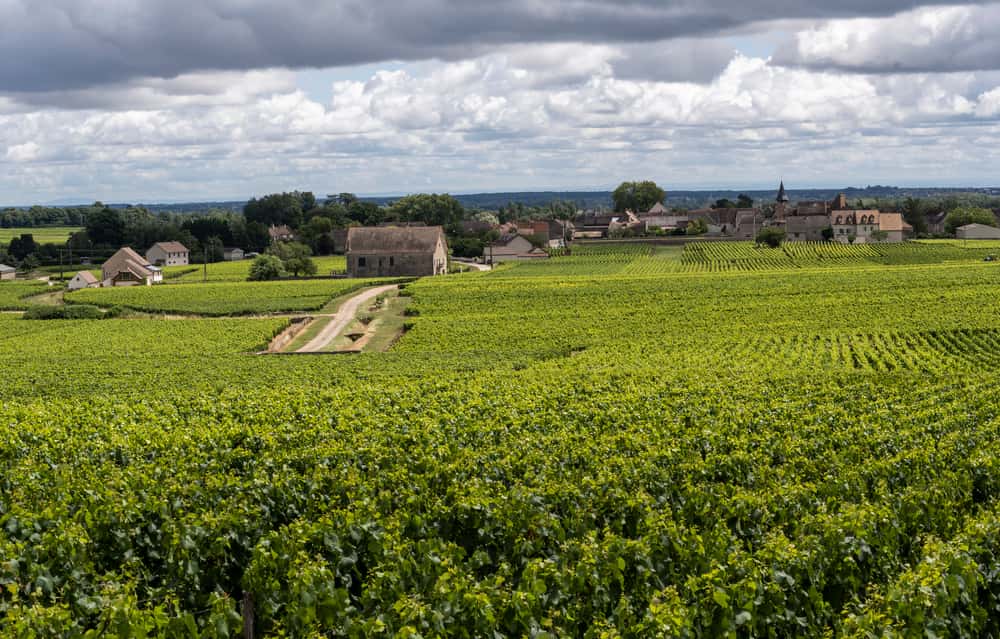
Corton-Charlemagne appellation is almost on the border between the Côte de Nuits and the Côte de Beaune, and at altitudes ranging from 280 to 330 meters, much of it faces south-west. The towns of Aloxe-Corton, Pernand-Vergelesses, and Ladoix-Serrigny are clustered around the Corton mountain.
The History of Corton- Charlemagne
The history of Corton Charlemagne wine is a long and interesting one. This wine's history can be traced back to 696 AD, though vineyards were most likely planted much earlier. The first white grape varieties are said to have been planted on the Corton hillside by Emperor Charlemagne, and the vineyards are named after him. According to later legend, the vineyards are dedicated to white grape varieties because the emperor's wife preferred white wines because they did not stain his beard.
The appellation was officially named Corton Charlemagne in 1816 because it was produced in the commune of Corton-Charlemagne. The appellation was elevated to Grand Cru status in 1937.
Terroir of Corton- Charlemagne
The terroir includes densely forested woodland, limestone and marl soil, clay, and chalk. The clay-rich marly soils range in colour from yellow to ochre to brown. It also has a mixture of sand and some beautiful gravel crystals on its surface. This combination results in a one-of-a-kind soil ideal for growing Chardonnay grapes. This soil type is found on slopes and has a high water retention capacity. The hill of Corton, as part of the Burgundy wine region, has the same continental climate as the rest of the Côte-d'Or.
Grape Varieties in Corton- Charlemagne
Chardonnay is the only permitted grape in Corton-Charlemagne today. However, its appearance on the hill is a recent occurrence. Aligoté was the dominant grape variety until the end of the nineteenth century, with Pinot Beurot (Pinot Gris) and Pinot blanc also being widely planted at one time.
The colour of Corton-Charlemagne wine is pale gold with green highlights. The bouquet has gentle buttery notes of baked apple, dried fruit, cinnamon, and honey. Leather and truffle can be found in older vintages. The wine strikes a perfect balance in the mouth between its impressive acidity and its rounded opulence.
Food to pair with Corton- Charlemagne
Lobster Thermidor
The extravagant lobster Thermidor is a classic French dish named after the play Thermidor. The dish is assembled and baked in whole lobster tails and consists of lobster meat sautéed in wine or cognac, mixed with a creamy egg-based sauce and cheese. It combines traditional French ingredients, such as butter and cream, to make a great dish.
Quenelle
It is a tender dumpling filled with ground meat, poultry, fish, or vegetables, seasoned, and mixed with breadcrumbs, eggs, fat, flour, or cream. Quenelle was invented in the nineteenth century in Lyon and was made entirely of the flesh of pike, a light white fish.
Blanquette de veau
This is the ultimate home-cooked meal: traditional and bourgeois but simple and flavorful. It is widely regarded as a culinary institution in France and the mother of all French dishes. Blanquette de veau is a stew in which the veal and butter are not browned.
Places to visit in Corton- Charlemagne
Sens
Sens is a small town that significantly impacted the medieval period. Visitors to Sens can begin their city tour by visiting the Palais Synodal de Sens, housed in a 13th-century building and now hosts contemporary art exhibitions. They should proceed to the Palais des Archevêques, which houses France's finest international art collection. The massive Gothic interior illuminated by stained-glass windows of the Cathédrale Saint-Etienne is a must-see. The treasury of the cathedral is one of the most valuable in France.
Vézelay
Perched on a hill in rural France, Vézelay offers incredible views of the Morvan mountain range. The town is listed as one of their nation's most beautiful villages for a good reason - its beauty and charm are undeniable. Vézelay serves as an international site for pilgrimage thanks to the beautiful Romanesque art the UNESCO-listed Basilique Sainte Marie-Madeleine offers.
Chagny
Chagny, the hilltop village in Burgundy between Beaune and Chalon-sur-Saône, is a picturesque place beloved by locals. Nestled in a valley, it is at the crossroads of communication routes and the great vineyards between Côte de Beaune and the Côte Chalonnaise. Chagny is known for its hospitality, friendly and colourful Sunday market, and boating, hiking, and cycling.
Interesting facts about Corton- Charlemagne
Chardonnay did not become the dominant grape variety in Burgundy's premium white wines until after the phylloxera outbreak of the nineteenth century.
Tailor-Made For You
Your perfect wine trip, planned for you
Tell us what you're dreaming of and a local wine expert will build a personalized itinerary — no obligation, no service fee.
Frequently Asked Questions
What is one of the most famous wines made from Corton Charlemagne grapes?
One of the most popular wines made from Corton Charlemagne grapes is the Corton-Charlemagne Blanc de Blancs. This white wine has a light, citrusy flavour with notes of peach, pear, and honey.
What are the ingredients in a Corton Charlemagne wine?
The taste and texture profile of a bottle of Corton Charlemagne wine is quite complex. The wine has a fruity, floral, and slightly spicy character with hints of honey and dried fruit.
How long does it take to develop a bottle of Corton Charlemagne wine?
It takes about 12 years for a bottle of Corton Charlemagne wine to age.
Join our newsletter now to receive our free guide on how to plan the perfect wine tour.