

Corsica Wine Region Guide
This wine region has nine appellations and 3 regional grape varieties
- Appellations
- 10 Appellations
- Wineries
- 1 Wineries
- Experiences
- 5 Experiences
- Local Guides
- 2 Local Guides
Explore Appellations in Corsica


About Corsica Wine
- Surface
- 6,123 ha
- Soil
- Granite, schist, limestone, clay
- Climate
- Mediterranean
Corsican wines are produced on the mountainous Mediterranean island that is a mix of elegant coastal towns, dense forests, and rugged peaks. Known as the “île de beauté” - isle of beauty - Corsica amazes, captivates and inspires!
Travel Guide to Corsica Wine Region
Check wine tastings & tours in Corsica Wine Regions
Explore Corsica wine region through our travel guide:
Sub-regions, grape varieties, and Corsican wines
Cultural and natural places to explore

The uniqueness of Corsican Wines
Historical Glance of Corsica Wine Region
The Island of Corsica belongs to France since 1796. However, Greeks, Romans, and Italians have contributed in a colourful historical mosaic of this place. They together have produced a rich cultural history and a unique wine culture that dates back to the 6th century BC.
The abundance of sunshine and the relative lack of rain provides excellent conditions for winegrowing. The small island in the Mediterranean is with 8000 ha a qualitatively important wine-growing area of France with more than 30 grape varieties and 9 AOC regions.
Discover the Corsica wine region through its grape varieties, sub-regions and appellations which gives birth to a distinctive style of wines.
Subregions & Appellations
Corsica wine region offers a great variety of soils with slate in the east, granitic soils to the west, alluvial sediments in the centre, and limestone cliffs to the north and south.
The nine wine appellations include the following certifications: Regional, Cru, Villages and Vin Doux Naturel.
Wine region of Corsica can be conveniently divided into two major wine-growing areas:
Ajaccio Region – Red & Rosés
In the southwestern part of the island – Ajaccio region – the wines are mostly reds and rosés. The main grape variety here is the native Sciacarello, which thrives due to the granite ground and produces mostly medium-bodied red and rosé wines.
The few white wines are made from Ugni Blanc and Vermentino grapes. The latter is known locally as Rolle. Another commonly grown grape here is Malvasia, a typically Mediterranean aromatic white type.
Patrimonio
The region Patrimonio is on the north coast and was the first to receive AOC designation when it was established in 1968. Here mostly whites are produced, on good soil that is primarily chalk-clay and limestone. The grapes grown here are chiefly Vermentino and Nielluccio for the reds and rosés.
Ageing of reds in oak barrels is a fairly new practice in Corsica wine region, but some producers are experimenting.
Corsica Wine Region Map

Grape Varieties
Classic and therefore representative grape varieties of Corsica wine region are mainly the Italian Carcajolo Noir, Sciaccarello and Niellucciu (in Italy: Sangiovese) for the red wines and Genovèse and Vermentino for the white wine.
But also French varieties such as Alicante Bouschet, Aleatico, Cinsault, Carignan, Grenache, Ugni Blanc and Syrah, were introduced with the French rule.
Especially in recent decades, this offer has also been supplemented by international grape varieties such as Cabernet Sauvignon, Chardonnay, Merlot, Mourvèdre and Pinot Noir and Viognier.
Typical Red Varieties
Aleatico
Barbarossa
Carcajolo Nero
Morescono
Sciaccarello
Typical White Varieties
Bianco Gentile
Bianco
Brustiano
Carcajolo
Genovese
Riminese
Pagadebiti
Vermentino
Style of Corsican Wines
What is better for a holiday mood and beach life than rosé?
55% of Corsican wines are rosé and the majority of the production is almost exclusively enjoyed directly on the island. Corsican rosé is very pleasant, fruity, and fresh with some spicy and mineral wine notes.
But the red and white wines of the region offer even more character. Generally they are strong and full-bodied, but not too heavy.
Niellucciu grape variety found its peak on Patrimonio's clay-limestone slopes.
Sangiovese (Italian name) has developed its own character here: Deep dark colour, aromas of wild berries, lots of Maquis herbs (the type of vegetation on Corsica), liquorice and a touch of leather. In the mouth, it captivates with fine but distinctive tannins, stimulating acidity, tension and finesse.
The sea often adds notes of salt and iodine to the wines, which are strikingly evident in the not less characteristic white wines from Vermentino, which in Corsica wine region proves to be a great Mediterranean white wine. The third speciality is Muscat, with each winemaker following his own philosophy.
Cultural and Natural Places to Visit in CorsicaWine Region
Calvi
Elegant Calvi attracts the yachting crowd but it’s even more than just a marina.
The imposing medieval citadel, home to the Foreign Legion, keeps a watchful eye over the town. Elsewhere the narrow, cobbled streets and historic cathedral make a charming backdrop. Chic shoppers love to check out the unique boutiques before catching dinner at a quayside bistro. In fact, some of Corsica’s best restaurantsare to be found in Calvi.

Ajaccio - the Birthplace of Napoleon
The island’s capital and also largest settlement, Ajaccio is famous as the birthplace of Napoleon. Understandably, tourism in Ajaccio makes many references to its famous son, but there’s plenty more besides.
Reminiscent of the mainland towns on the Côte d’Azur, Ajaccio is stylish and vibrant. Away from the bustling waterside, the Musée Fesch is an unmissable art gallery packed with treasures. Those with an eye for style should shop for craftsman-made jewelleryfrom a unique Corsican red coral.
Castagniccia – An Untamed Jungle Region
An untamed jungle of chestnut trees on rolling hills, quaint little mountain villages, free-roaming pigs and cows and a network of narrow country roads - this is Castagniccia.
This area invites you to visit idyllic small mountain villages such as Campodonico. This village is at the same time starting point for a hike to the mountain San Petrone with 1767 m the highest elevation in the Castagniccia.
Furthermore, culinary specialties from chestnut flour such as pulenta, jams, pastries and chestnut liqueur are waiting to be tasted!
Sartène - The Essence of Corsica
Once described as the most Corsican of Corsican towns, Sartène is a little gem.
The town is famous for its Easter celebrations, the center of which is the Catenacciu procession on the evening of Good Friday. Packed with historic buildings, Sartène is a great place to discover traces of the island’s former Genoese rulers.
On the other hand, the cute squares with their friendly cafes make Sartène the perfect place to relaxas well.

Nature Reserve of Scandola
A narrow, winding road leads high above the coast between AOC Calvi and Ajaccio AOC to a huge cliff formation of red granite that drops straight into the sea: the famous "Calanche de Piana".
Wind and weather have operated for thousands of years as a stonemason and created bizarre shapes. This natural beauty is on the UNESCO list. It is best to discover these wonders of nature on foot on one of the many hiking trails.
Find the best Corsica Wine Tour Guides and embark on an unforgettable exploration of the island.
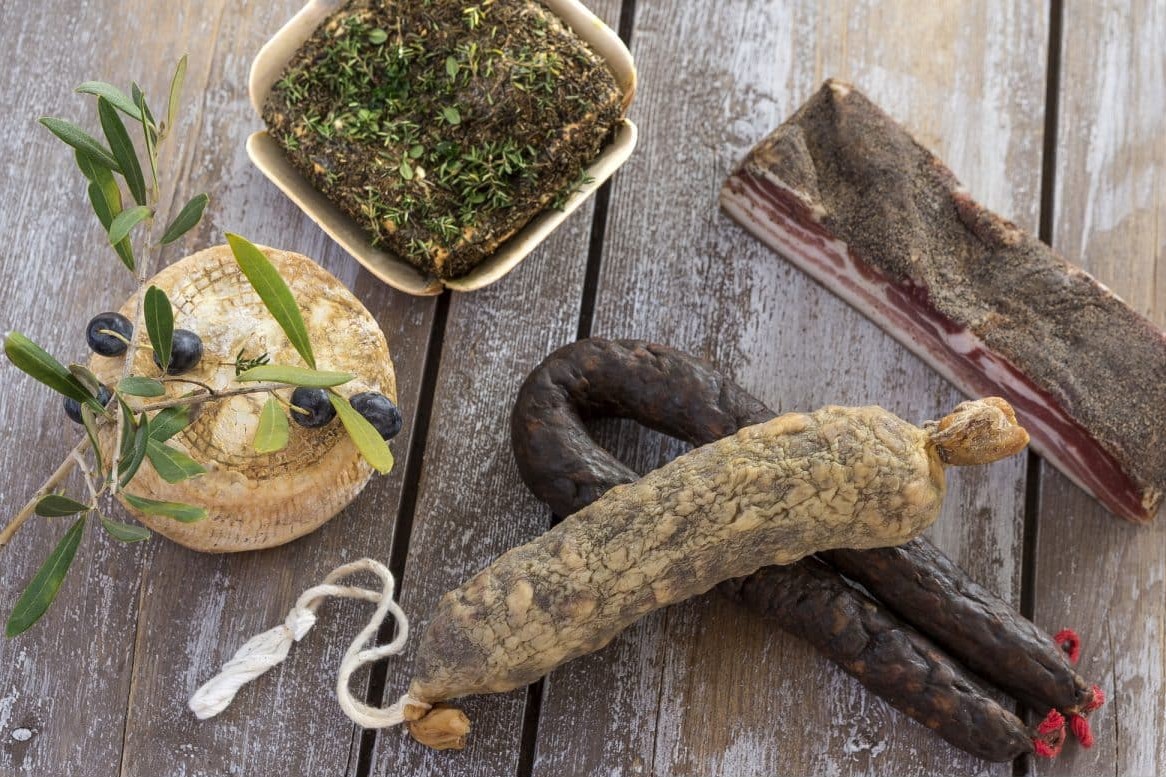
Gastronomy of Corsica Wine Region
Local food specialities - a kitchen influenced by many cultures
like Corsican wines, the island’s gastronomy is coloured with the dual influences of France and Italy. But as well Spanish, Provencal, and even Arabic influences are mixed into the kitchen.
Despite the beautiful mix of different cultures expressed in Corsican Cuisine, It does, of course, also have some uniquely Corsican flavours and dishes.
Corsicans know how to handle spicy herbs. Domestic spice blends consist of a number of different herbs of the so-called “macchia” that grow in the Corsican mountains, such as rosemary, lavender, myrtle, juniperor wild thyme. And as usual for an island, fish and seafood also play a major role.
Aziminu - The Corsican Bouillabaisse
"Aziminu" is an abound fish soup, which includes toasted bread with a strong garlic sauce. Moreover, Corsican bouillabaisse has its own touch through the abundant use of local herbs.
Stufatu - Veal Stew in Corsican Style
From the kitchen of the mountain farmers come the nutritious stews: the "Stufatu" with lamb, onions, noodles, and cheese. The cheese on Corsica is mainly made from goat or sheep's milk.
Sturzapreti - Priest Strangler
The story of this dish goes back to the past, when, after the Sunday mass, the pastor was always invited to lunch with one of the faithful families. This dish was so delicious to the pastor that he ate too greedy, and then choked on it regularly.
These gnocchi-like dumplings from Bastia are a great way to get picky kids to eat their greens. The green comes from chard or spinach leaves. The formed dumplings are topped with brocciu cheese and finished under the grill.
Below, you will find more information about tourism in the region :
Plan your visit in Corsica

Best Wineries in Corsica

Best Wine Tastings in Corsica

Tailor-Made For You
Your perfect wine trip, planned for you
Tell us what you're dreaming of and a local wine expert will build a personalized itinerary — no obligation, no service fee.
Cities around Corsica


Top Rated Local Guides in Corsica


Frequently Asked Questions
What is Corsica known for?
What are the main grape varieties grown in Corsica?
When is the best time to visit Corsica for wine tasting?
How do I get to Corsica?
What are the main wine appellations of Corsica?
Join our newsletter now to receive our free guide on how to plan the perfect wine tour.