
Georgian Wine 101: Qvevri, Saperavi and 8,000 Years of Winemaking
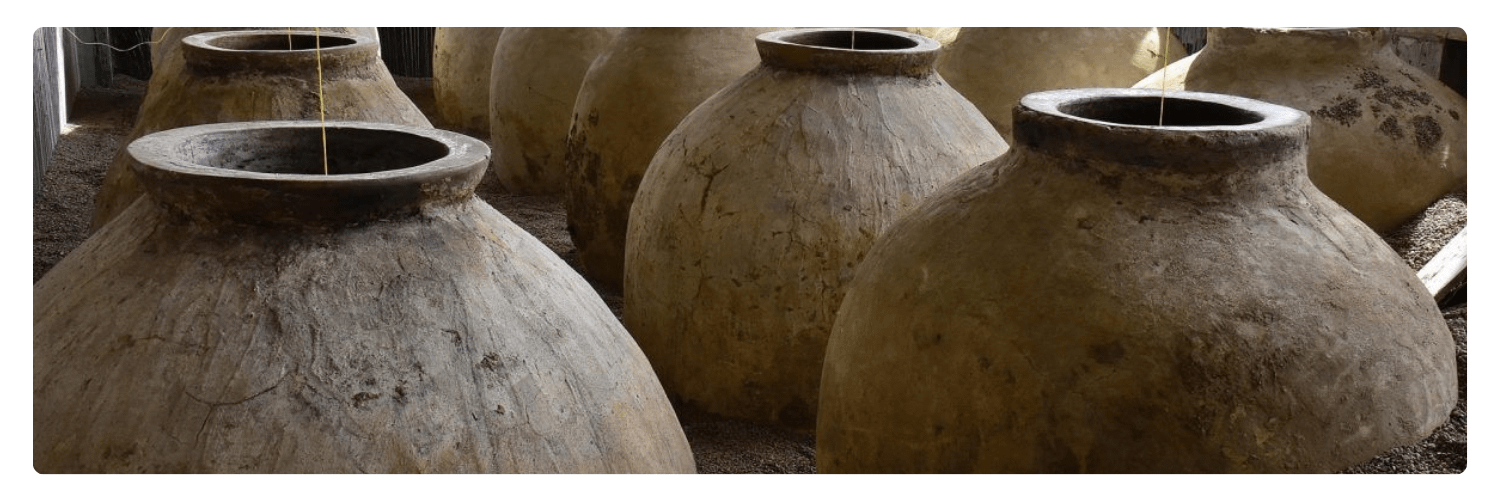
Walk down the stone steps into a marani in Kakheti — a traditional Georgian cellar, cool and dim and smelling faintly of grape must — and the first thing you notice is what is not there. There are no oak barrels. No stainless steel tanks. Instead, set into the floor, are the mouths of large clay vessels buried up to their necks in the earth. These are qvevri, and Georgian farmers have been fermenting wine in them for around 8,000 years. The tradition is unbroken. The clay is the same shape it was in 6,000 BCE. The wine inside — deep amber, or nearly black — has been made this way since before Rome, before the pyramids, before writing.
Georgia is not "an emerging wine region." Georgia is the region every other wine region eventually got here from. It is the earliest, most continuous, and in many ways the most alive winemaking tradition on earth — 500 indigenous grape varieties, a fermentation vessel recognized by UNESCO, and one red grape, Saperavi, so distinctive that it is now planted from New York's Finger Lakes to Australia.
This is a primer for the traveler who wants to understand Georgian wine — what qvevri is, why Saperavi matters, and where to taste both at the source.
At a glance: Georgian wine
Georgian wine is the world's oldest continuously produced wine tradition, dating back around 8,000 years to the Neolithic Shulaveri-Shomu culture in what is now Kakheti and Kartli. The defining method is qvevri — large egg-shaped clay vessels buried in the ground for fermentation and aging, recognized by UNESCO in 2013. The flagship red grape is Saperavi, a teinturier variety with dark-staining juice, deep tannin, high acidity, and remarkable aging potential. Kakheti in eastern Georgia is the main wine region, home to roughly three-quarters of the country's vineyards. Georgian wine tourism centers on family-run marani, harvest (rtveli) in September, and the traditional supra feast pairing wine with exceptional food.
Eight thousand years of Georgian wine
Archaeologists working at Neolithic sites in southern Georgia have found grape pips, wine residues in clay pottery, and evidence of systematic winemaking dating to around 6,000 BCE — findings published in the Proceedings of the National Academy of Sciences in 2017 that pushed the accepted origin of viticulture back by roughly a millennium. Georgia is now widely recognized as the cradle of wine.
That tradition has been continuous for eight millennia. Through the Persian Empire, the Silk Road, Russian imperial rule, the Soviet era, and modern independence, Georgian farmers have kept fermenting grapes in qvevri, kept toasting at the supra, and kept the country's roughly 500 indigenous grape varieties alive when much of the rest of the wine world consolidated around a dozen international grapes.
The qvevri: Georgia's clay heart
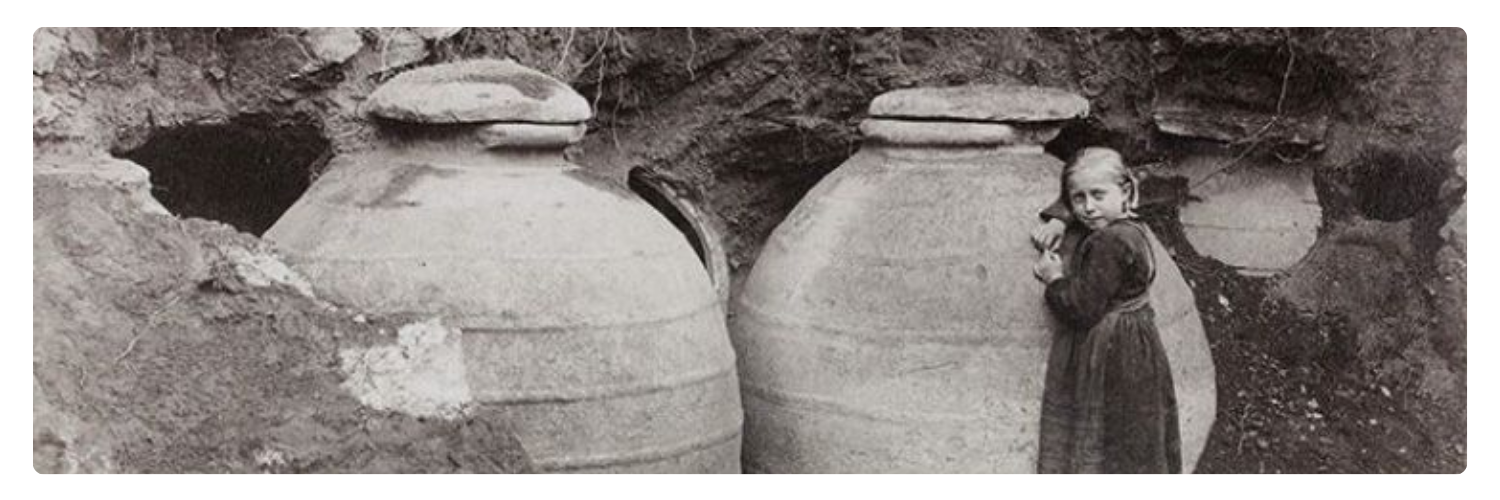
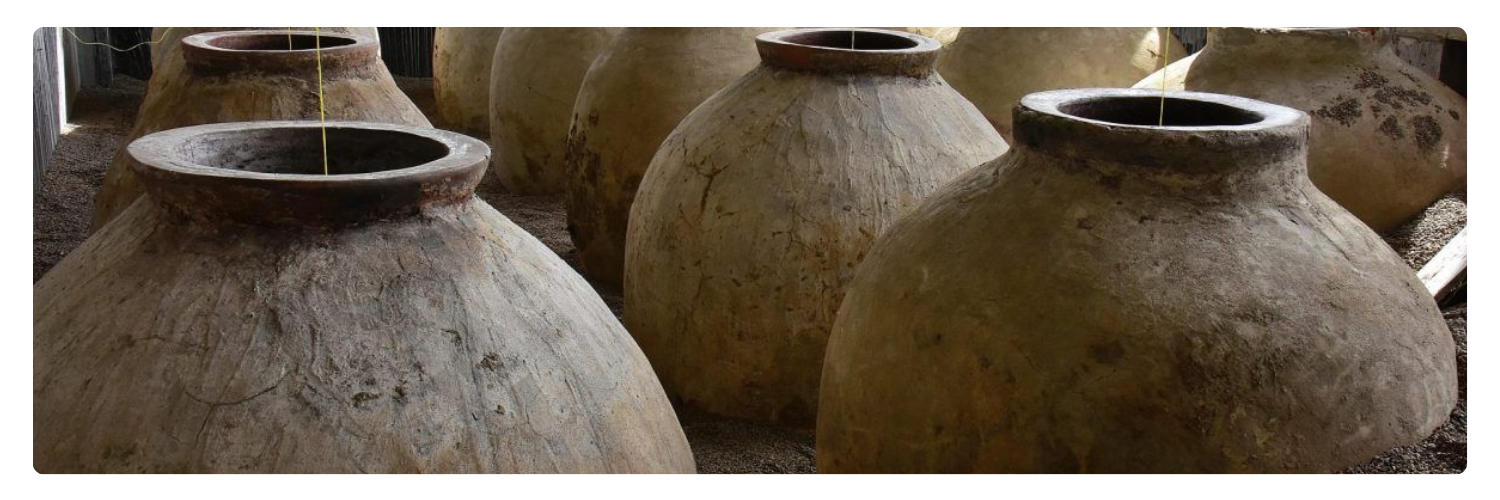
Qvevri are large egg-shaped clay vessels — from a few hundred liters to several thousand — traditionally handmade from local clay, coated inside with beeswax, and buried up to the neck in the earth of the marani. Grapes are harvested, crushed, and poured directly into the qvevri along with their skins, seeds, and often stems. Fermentation begins with wild yeasts. The wine ages in the same vessel, often for six months or longer.
The buried earth acts as natural climate control, holding the wine at a stable cool temperature year-round. The clay itself breathes gently — enough oxygen for slow evolution, not enough for spoilage. The result, for white grapes, is amber wine (fermented on the skins). For red grapes like Saperavi, it is a wine of extraordinary depth: dark, structured, with the tannin and freshness of a serious mountain red.
UNESCO recognized the qvevri method as an intangible cultural heritage of humanity in 2013 — one of the very few winemaking practices to receive such recognition.
Saperavi: Georgia's deep-colored king
Saperavi is Georgia's most important red grape and one of the most distinctive red wine varieties in the world. Its name means "dye" or "paint" in Georgian — a reference to the darkly staining juice, which is unusual for a red grape (most red grapes have clear juice, with color coming only from the skins). Saperavi is a teinturier variety, meaning both the skin and the flesh produce color. The wines it makes are inky, almost black, with high tannin, high acidity, and remarkable aging potential.
The best examples show blackberry, plum, black pepper, and dried herbs when young, evolving into dark chocolate, tobacco, and leather with age. Saperavi's structural intensity means it can pair with almost anything from a Kakhetian table — walnut sauces, roasted lamb, aged sulguni cheese, khinkali dumplings. The grape thrives across all of Kakheti's zones but has produced three particularly celebrated Protected Designation of Origin (PDO) wines: Mukuzani (aged Saperavi from the Mukuzani microzone, produced since 1893), Kindzmarauli (semi-sweet Saperavi from the Kvareli valley), and Khashmi Saperavi (from the historic Khashmi microzone, associated with 12th-century Queen Tamara).
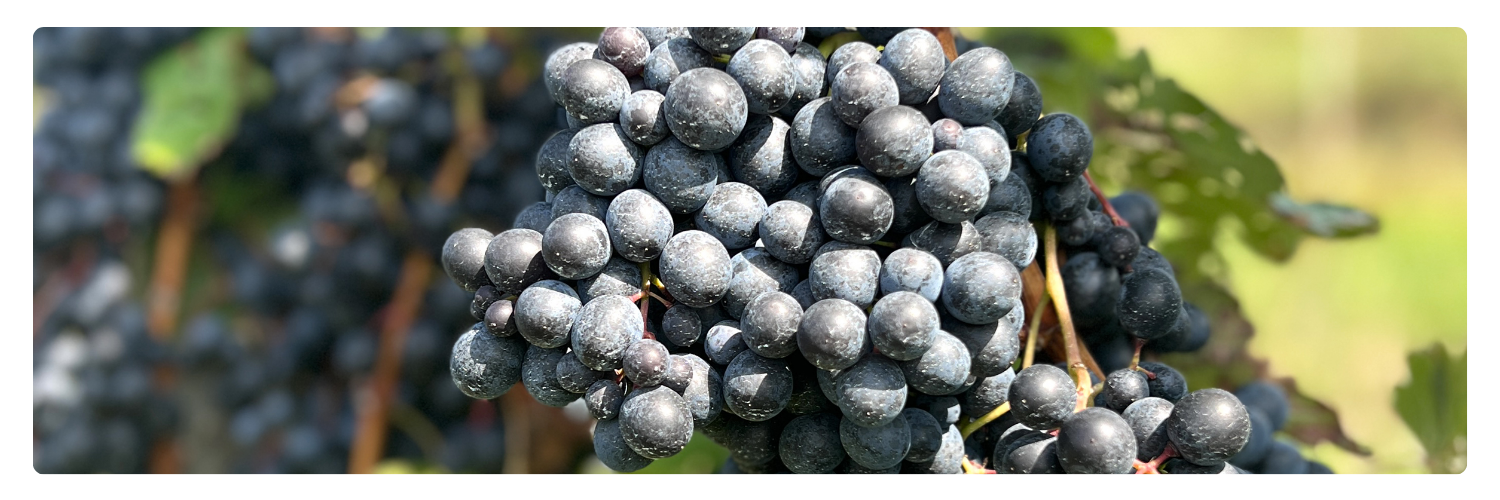
Saperavi is now planted globally — the Finger Lakes in New York, parts of Australia and New Zealand, and increasingly China. But nowhere makes it like Kakheti.
The Georgian wine regions to know
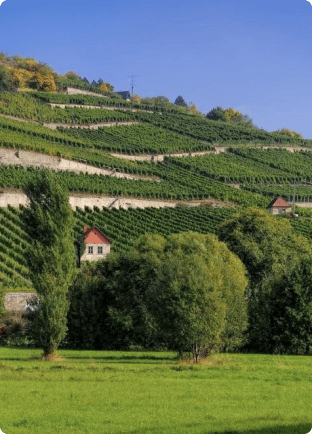
Kakheti, in the east, produces roughly three-quarters of Georgian wine. It is the heartland of Saperavi and Rkatsiteli, home to the greatest concentration of qvevri estates, and the base for most Georgian wine tourism. Its main wine towns include Telavi, Signagi, Kvareli, Napareuli, and Gurjaani.
Kartli, in central Georgia around Tbilisi, is the country's second-largest wine region, producing crisp whites and increasingly serious sparkling wines.
Imereti, west of the Likhi mountains, produces distinctive amber wines using a variation of qvevri fermentation with lower skin contact — the wines are lighter and more delicate than their Kakhetian counterparts.
Racha-Lechkhumi in the northwest is a small mountain region known for the semi-sweet Khvanchkara — one of the country's most historic wines.
Five Georgian wine experiences on WineTourism.com
Sesikeli Winery (Kakheti, near Telavi). A family estate following the full 8,000-year qvevri tradition. Six-month skin-contact fermentations produce amber Rkatsiteli, Mtsvane, and Kisi alongside deep red Saperavi — all in qvevri, all from estate grapes. Winemaker Simon Sesikashvili's Rkatsiteli won silver at the 2020 Qvevri Wine Competition. Best for experiencing the unadulterated ancestral method.
Winery Mtevino (Kakheti). A perfect 101 visit: side-by-side tastings of the same grapes made in both European style and traditional qvevri method. The lineup includes Saperavi, Khashmi Saperavi PDO, Mukuzani PDO, Kindzmarauli PDO, Rkatsiteli, and qvevri-fermented Rkatsiteli, Mtsvane, and Saperavi. The clearest introduction to how method shapes wine.
Gida Wine (Kakheti, Khashmi microzone). Established in 2018 on land linked to Queen Tamara's 12th-century monastic vineyards, Gida specializes in Khashmi Saperavi — a Saperavi PDO with a distinctive character shaped by the Iori river valley. The estate's Khashmi Saperavi, Rkatsiteli, Kisi, and rosé anchor a tasting rooted in a small, specific place.
Wine Art / Ethno (Kakheti). Founded in 2012, Wine Art (dba Ethno Wines) has become one of Kakheti's most respected organic producers. Twenty-eight hectares across three PDOs (Khashmi, Manavi, and Shilda), all estate-grown, all hand-harvested, all wild-yeast fermented in qvevri. Wines include Saperavi, Budeshuri, Kakhuri Mtsvane, Rkatsiteli, Kisi, and Khikhvi — a rare chance to taste six indigenous varieties at one estate.
Vineria Kakheti (Telavi). A structured 10-wine tasting that covers the full range of Georgian styles — dry white, red, rosé, orange, amber, sparkling, sweet, and spirits — alongside qvevri selections. Cultivates 14 indigenous grape varieties including Saperavi, Kisi, Chinuri, Mtsvane, and Rkatsiteli. The single best comprehensive introduction to Georgian wine.
Practical travel tips
Fly into Tbilisi International Airport and rent a car or hire a driver — Kakheti's main wine towns are one and a half to three hours' drive east. Base in Telavi for classical wine-region access, Signagi for hilltop atmosphere with sweeping views of the Alazani Valley, or Kvareli for immediate access to Kindzmarauli. Most estates welcome visitors year-round but call ahead — some are family homes and require booking.
Rtveli, the traditional Georgian harvest, runs from mid-September to mid-October. Many estates welcome visitors to help crush grapes with their feet and see the qvevri being filled. It is the most memorable time to visit — book two to three months ahead.
Every Georgian wine visit should include at least one supra — the traditional feast, with a tamada (toastmaster) leading toasts, and an endless procession of khachapuri (cheese bread), khinkali, and mtsvadi (skewered grilled meat) accompanying the wine.
Frequently Asked Questions
What is Georgian wine?
What is qvevri wine?
What is Saperavi wine?
Where is Georgian wine made?
When is the best time to visit Georgia for wine?
How long should I spend in Georgia for a wine trip?
Featured WineTourism.com Georgian wine experiences
Bookable estates referenced in this guide:
- Sesikeli Winery, Kakheti — https://www.winetourism.com/winery/sesikeli-winery/
- Winery Mtevino, Kakheti — https://www.winetourism.com/experience/wine-tasting-and-tour-at-winery-mtevino/
- Gida Wine, Kakheti (Khashmi) — https://www.winetourism.com/winery/gida-wine/
- Wine Art / Ethno, Kakheti — https://www.winetourism.com/winery/wine-art-ethno/
- Vineria Kakheti, Telavi — https://www.winetourism.com/experience/taste-10-georgian-wines-including-qvevri-selections-at-a-family-winery-in-kakheti/
The cradle of wine belongs on your map
Georgian wine is unlike anything else because it has been made continuously, in the same vessels, from the same grapes, in the same places, for eight thousand years. No other region can say that. For travelers, this makes Georgia one of the most rewarding wine trips in the world — not a variation on the European template, but the source of the template itself. Book a Kakhetian estate for the coming season, arrive with an appetite, and let the qvevri, the Saperavi, and the supra do the rest.