
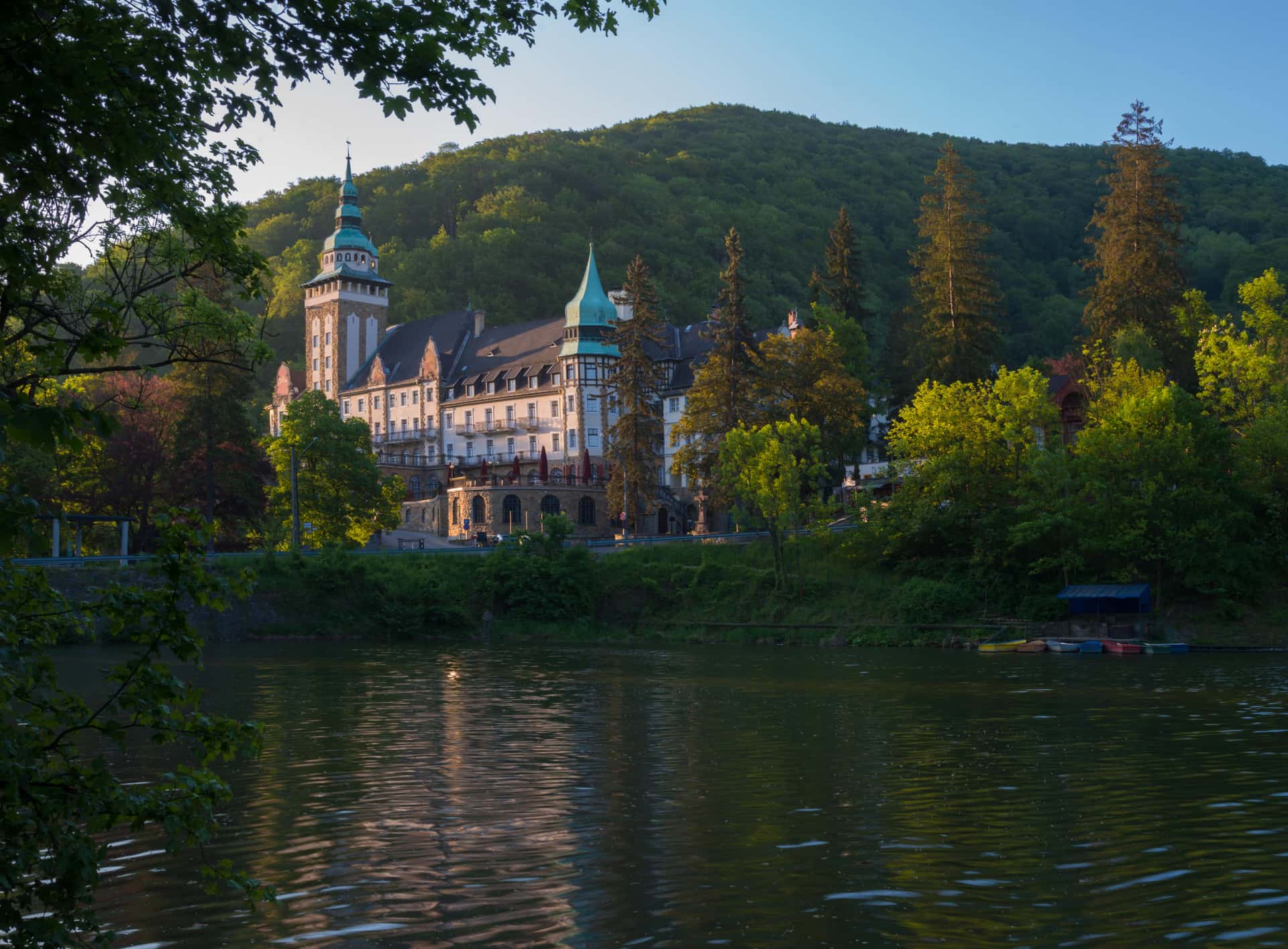
Bukk WIne Region Guide
Discover what makes wines from Bukk in Heves, Hungary stand out.
About Bukk
- Classification
- PDO Bukk
- Grape Focus
- Cabernet Sauvignon, Cabernet Franc, Chardonnay
Travel Guide to Bukk Wine Region
The Bukk wine region of Hungary is located at the southern foot of the Bukk Mountains, between the wine regions of Eger and Miskolc. Viticulture in this region dates back to 1313, with the center of grape production in the villages of Diosgyor and Miskolc. By the onset of the 18th century, viticulture in Bukk was flourishing at its best and there was a network of high-quality wine cellars in the region producing excellent wines thanks to the wonderful local terroir. Today, the wines of the Bukk region are still considered to be some of the best in Hungary and the region continues to produce large volumes of wine for wine lovers both locally and abroad.
Find out about Wine Tasting & Tours in Bukk to enjoy if you visit the region.
Continue reading the travel guide to Bukk wine region to discover more about:
 The Royal Palace in Godollo, Hungary.
The Bukk wine region and its wines
The Bukk wine region can be found at the foot of the Bukk Mountains, wedged in between the other wine-making regions of Eger and Miskolc. This wine region has a long history of viticulture that stretches back to 1313 when it was first included in the region’s charter. By the 16th century, the region had a well-established wine culture across most of its villages, with the hubs being in Diosgyor and Miskolc. When the 18th century arrived, the wine industry continued to flourish and there was a distinct growth in the wine trade during this time. Many of the surrounding winemaking regions would transport their grapes to Bukk to be matured in the local cellars. To satisfy this demand, a network of high-quality wine cellars was built that could accommodate large quantities of wine.
More recently, in the 20th ad 21st centuries, the Bukk region fell into the shadow of other Hungarian winemaking regions such as Eger. As a result of this, Bukk wines can often be found carrying the Eger label as they have very similar terroir and growing conditions.
Today, the total production area of the Bukk wine-making region is approximately 17 636 ha, of which 15 323 hectares are planted with first-class grapes.
Climate and Soils
The climate of the region is favorable for the cultivation of vines as the adjacent Bukk Mountain Range protects the region from cold winds from the north. The mountain also means that the region receives low levels of precipitation which can sometimes result in water shortages during the summer months.
Across the Bukk region, there is a range of soil types that can be found. In the north, at the foot of the Bukk Mountains’, the terroir comprises Triassic and Jurassic rocks, black slate, and limestone which means that very few vineyards are planted here. Towards the south, the soil comprises more of Miocene rhyolite tuff covered by Pannonian clay and sand. In other parts of the region, there are also pockets of brown soils, luvisol forest soils, chernozem brown forest, and grassland soils.
Grape Varieties:
Red: Kekfrankos, Cabernet Sauvignon, Cabernet Franc
White: Leanyka, Chardonnay, Cserszegi Fuszeres, Olaszrizling
The first-rate wines of the Bukk wine region
In producing the classic Bukk wines, the grapes that are used must come from the Bukk vineyards that are strictly controlled. The sugar levels of the grapes cannot be increased, the acidity of the wine cannot be modified, no enzymes are allowed in the production process, chips cannot be used, the alcohol level must remain between 11.5% and 14%, and the minimum aging period must be 6 months.
In the production of Terroir Bukk wines, the grapes that are used can only come from first-class vineyards within the Bukk region. Only the grapes that are typical of the Carpathian Basin may be used and all vineyards should use organic practices. The vines must be harvested manually, sugar levels cannot be increased, acidity cannot be modified, chips cannot be used, the alcohol level must remain between 12% and 14%, and the minimum aging period must be 6 months in a barrel and another 6 months in the bottle.
Bukk Wine Region Map
You can also check out our interactive map of the Bukk Wine Region to discover wineries with open cellar doors.

Read more about Wineries in Bukk to visit.
What to see in the Bukk Region
Huvosvolgy Children’s Railway
The Children’s Railway in Hungary is one of the country’s most unique tourist attractions. Like all other railways, it has a ticket office, signals, switches, and a timetable. The big difference with this railway is that the entire attraction is run completely by children! The railway line runs from the Buda Hills to Huvosvolgy, crossing the cogwheel railway and the highest point of Budapest, Janoshegy. All along the route of the train there are lookout towers, forests, playgrounds and places of pilgrimage which are a wonder to see. The train itself operates only on certain days and is a wonderful adventure for both adults and children to enjoy. Don’t forget to have a look at the Children’s Railway Museum and Souvenir Shop on platform 1 of Huvosvolgy Station for exciting games and items for the whole family.
Royal Palace of Godollo - The world’s second-largest Baroque castle
The Royal Palace of Godollo is conveniently located a mere 30km outside of Budapest and is considered by many to be the Hungarian version of the Palace of Versailles. This palace is the second largest Baroque castle in the world and was built at the beginning of the 18th century. During that time, it was the summer residence of the Queen Elizabeth who loved spending her days in the palace and its surrounding parks. After World War II, the palace was abandoned and began to decay. It has been recently renovated and restored back to its original magnificence.
 Royal Palace of Godollo, Hungary
During the restoration process, beautifully painted walls were uncovered showing the life and times during the 18th century. One of the main attractions at the Royal Palace is the northern front garden with many walkways that were redeveloped in 1998. Inside the palace there are a number of permanent exhibitions to enjoy as well as the 26 hectares English garden that was decaled a natural reserve in 1998.
Diosgyor Castle - The castle of queens
The Diosgyor Castle is located at the foot of the Bukk Mountains, only 8 km from the city of Miskolc. Although it is not known who the first residents of the castle were, during the 14th century it became one of the homes of Louis the Great who used it as an engagement gift to six of his queens. This is how the castle became known as the castle of the queens. Visitors of the castle can experience what it was like to live during medieval times. The castle also hosts a range of exhibitions, events and interactive programs for all who visit. One of the most interesting parts of the castle to walk through is the southwestern wing which was left in ruins in the 1800s after it was struck by a thunderbolt.
 View of medieval Castle of Diosgyor in Hungarian city Miskolc
Natural Places to Visit in Bukk
The most incredible feature of the Bukk wine region is the surrounding Bukk Mountain range. The Bukk Mountain is the tallest mountain in Hungary and provides the perfect backdrop for a range of outdoor activities including hiking, walking and skiing. The untouched mountains are the perfect place to find the freshest air and the most beautiful scenes in Hungary.
Bukk National Park - The national park of beech trees
The Bukk National Park includes the famous Bukk Mountain and was first opened in 1977. The park covers 43 168 hectares of land and is characterized by limestone caves, the flat Bukk plateau, rocky outcrops and some of Hungary’s most spectacular fauna and flora. The Bukk National Park is unique in that it is the highest national park in Hungary and is also home to the country’s highest waterfall. The most popular activities to enjoy when visiting the park are hiking, viewing the wildflowers in the spring, enjoying a picnic on the shores of Lake Gyari, taking a boat trip, spending time in the hanging gardens, exploring the many caves and marveling at the waterfalls. The best time to visit the park is in the spring months when the flora is in full bloom and there are a number of places nearby offering a range of accommodation options.
Hor Valley - The longest valley of Hungary
The Hor Valley, at 23kms long, is the longest valley in Hungary. Along the valley there are a number of interesting places to see including the Subalyuk Caves, the Oszla Regional House and the Odor Castle ruins. This valley is by far the most interesting and beautiful valley in Hungary and is perfect for a leisurely road trip. The valley slopes tower above the road and are lined with various species of oak trees. One of the most wonderful attractions of the valley is the diverse flora, much of which cannot be found elsewhere in Europe. When exploring the valley keep an eye out for interesting animals including hedgehogs, shrews and tiny mice!
Szalajka Valley - Step into a forest wonderland
The Szalajka Valley is located near the town of Szilvasvarad and is one of the most popular hiking and outdoor activities spots in the Bukk Mountain region. The popularity of this valley is thanks to its incredible natural beauty, its accessibility, excellent infrastructure and the range of activities available. The best way to explore the Szalajka Valley is to take a few days to travel to the mountains and visit the various sites in the valley. One of the most popular attractions in the valley is the Szilvasvarad Railway that travels for 5km through the valley. Other sites to see include the various valley lakes which are teeming with delicious trout, the Szikla Spring, the Fatyol Waterfall and the Istallos-ko cave.
The taste of Bukk - Dishes to try in Bukk
The cuisine of the Bukk Mountain region is some of the most delicious in Hungary thanks to the range of the freshest ingredients available from the natural land. These ingredients include the freshest trout from the Szalajka Valley lakes, mountain mushrooms and so much more. The beautiful natural environment of the area, the local wine and the delicious cuisine make it the perfect place to relax and enjoy some of the best meals in Hungary.
Palocleves - Lamb soup with sour cream
Palocleves is a traditional Hungarian soup that is a lighter version of goulash with the addition of some extra flavours. There are many different recipes for making Palocleves but many say the best is the original recipe that was created by Janos Gundel, a famous Hungarian chef at his restaurant in Budapest. Legend has it that he was looking to create a dish that included all of the features of traditional Hungarian cuisine and from this, Palocleves was born. The soup is made by frying bacon with onion and then adding deboned and cubed lamb to this. The meat mixture is left to simmer in water, garlic, salt, pepper, paprika, cumin and bay leaves after which potatoes, carrots and green beans are added. Before serving the soup, a mixture of sour cream and flour is added to it with a finishing touch of dill.
Paprikas Csirke - Paprika Chicken
Paprikas Csirke is one of the most famous and well-loved dishes in Hungary. Although the traditional recipe is made with chicken, this dish can also be made using veal, mushrooms or fish. In making Paprikas Csirke, onions are cooked with paprika, tomatoes and water to make a sauce. The chicken or other meat is then added to this sauce and cooked on a low heat. When the chicken is almost ready, sliced peppers are added to the dish. To finish the dish, a mixture of sour cream, flour and heavy cream is added to it and it is garnished with an additional spoon of sour cream for finish.
Kurtos Kalacs - Hungarian Sweet Bread
Kurtos Kalacs is a delicious Hungarian sweet bread that is made with flour, butter, eggs, sugar, milk and yeast. This dish is a staple in every Hungarian home and most have their own version of the recipe which they prefer. Some versions of the bread include raisins and cinnamon for additional flavour. When baking Kurtos Kalacs is it usually shaped into large logs or braided. Although Kurtos Kalacs is bread, it is usually eaten as a dessert during the Easter period.
Share about Bukk Wine Region:
Tailor-Made For You
Your perfect wine trip, planned for you
Tell us what you're dreaming of and a local wine expert will build a personalized itinerary — no obligation, no service fee.
Join our newsletter now to receive our free guide on how to plan the perfect wine tour.