

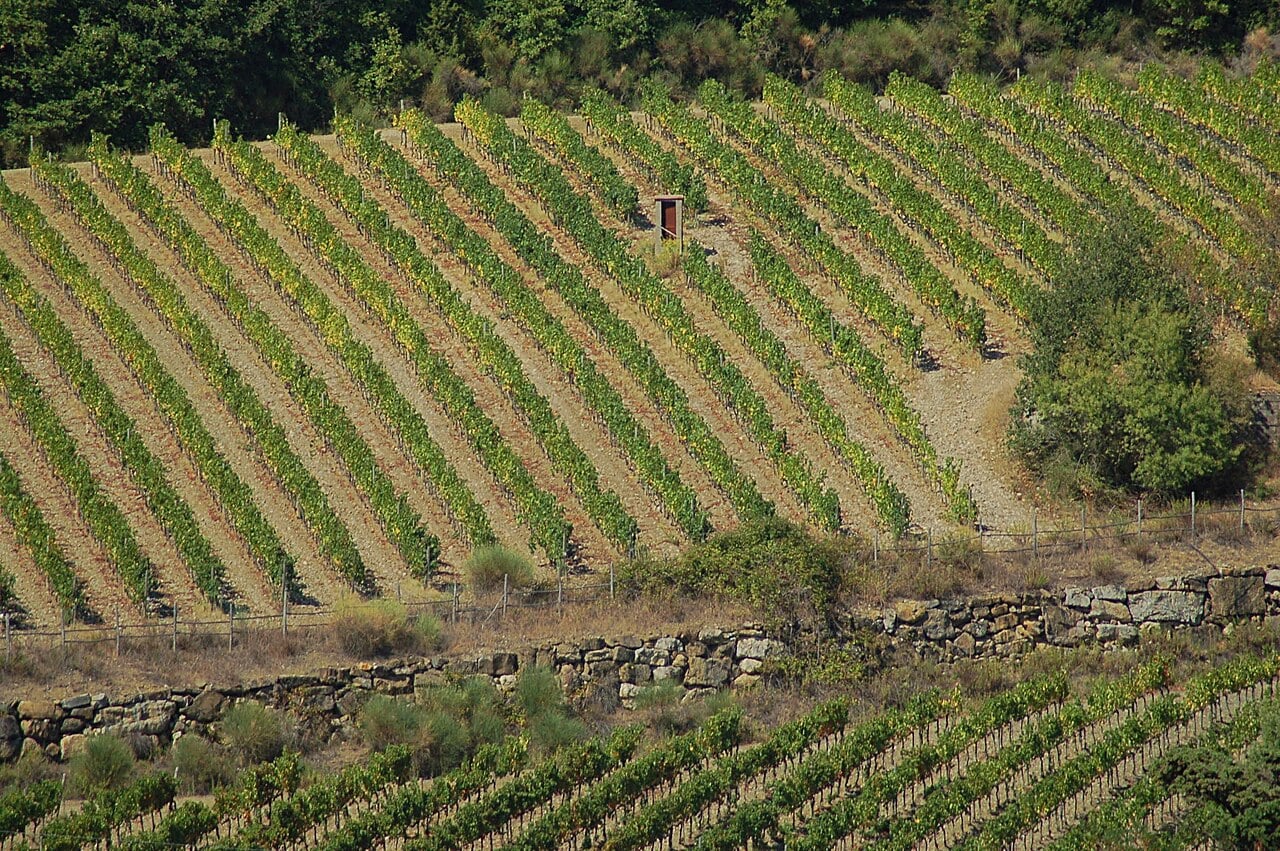
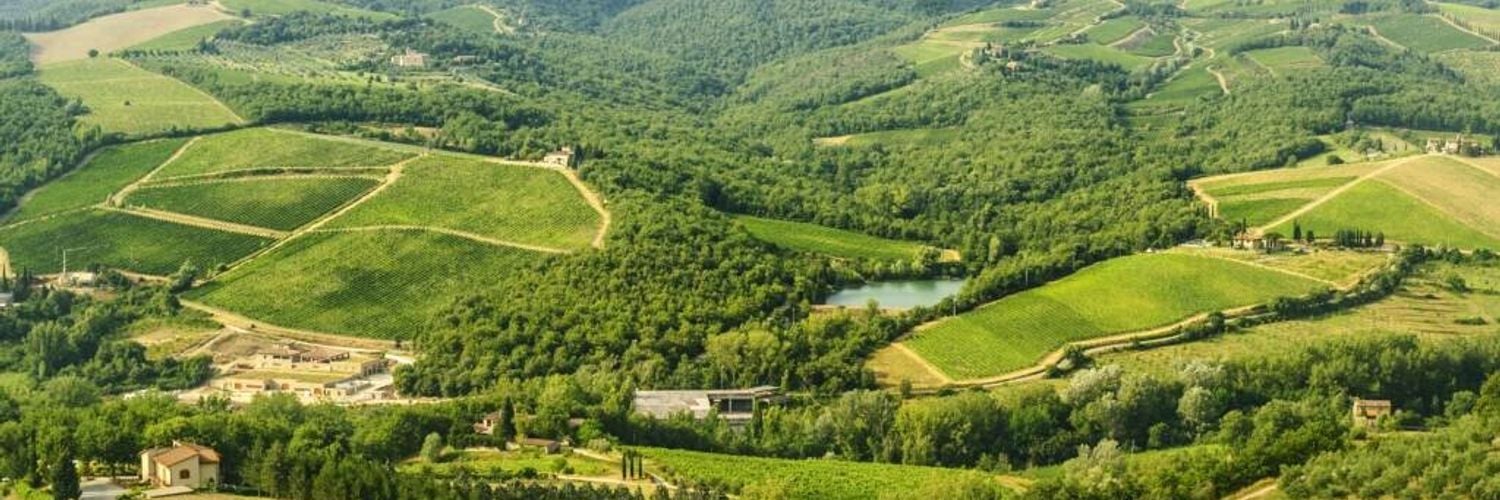
Tuscany invites wine enthusiasts to immerse themselves in its picturesque landscapes and rich winemaking heritage. This iconic region is home to exceptional wine zones, including Chianti Classico, Bolgheri, Montalcino, and Montepulciano, each showcasing indigenous varieties such as Sangiovese and Canaiolo. Experience intimate winery visits, savor exquisite Brunello di Montalcino, or indulge in the refined Super Tuscans that define Tuscany’s unique character. Explore the art of wine tourism in this timeless Italian treasure.
Tuscany is Italy’s most iconic wine region, home to world‑famous wines such as Chianti Classico, Brunello di Montalcino, and Bolgheri Super Tuscans. With 557 bookable wine experiences, 347 wineries, and an average rating of 4.92/5 from 10,000+ verified reviews, Tuscany offers the most diverse and immersive wine tourism experiences in Europe.
This guide is designed to help you plan a Tuscany wine trip, understand its sub‑regions, choose the best wineries to visit, and book authentic wine tastings directly with producers.
Are you starting to plan your trip to the Tuscany wine region? Discover and book wine tastings and tours in Tuscany with WineTourism.com
Discover Tuscany wine region through our travel guide:

Tuscany combines centuries‑old winemaking traditions with breathtaking landscapes, historic towns, and world‑class cuisine. From rolling vineyards in Chianti to the coastal terroir of Bolgheri and the UNESCO‑listed Val d’Orcia, Tuscany is ideal for both first‑time wine travelers and seasoned collectors.
Key reasons to visit:
Tuscany combines centuries‑old winemaking traditions with breathtaking landscapes, historic towns, and world‑class cuisine. From rolling vineyards in Chianti to the coastal terroir of Bolgheri and the UNESCO‑listed Val d’Orcia, Tuscany is ideal for both first‑time wine travelers and seasoned collectors.
Interested in customizing your wine vacation in Tuscany? Simply send us your preferences here, and our team of experts will tailor the perfect itinerary for you.
Winemaking in Tuscany dates back over 2,500 years to the Etruscans, who cultivated vines long before Roman expansion. During the Middle Ages, monasteries and noble families refined viticulture, laying the foundations for today’s appellations.
A major turning point came in the 20th century with the creation of Chianti Classico quality regulations and later the rise of Super Tuscan wines, which challenged traditional rules and elevated Tuscany’s global reputation.
Tuscany’s wine region is not only one of Italy’s most prestigious but also among the most recognizable in the world. Stretching from the Ligurian coast to the rolling hills around Florence, the area borders Liguria, Emilia-Romagna, Marche, Umbria, and Lazio, each influencing its diverse landscapes and microclimates. Thanks to a combination of sun-drenched limestone soils, Mediterranean breezes, and centuries of expertise, Tuscany produces wines of remarkable character and quality. Iconic names such as Chianti Classico, Brunello di Montalcino, Vino Nobile di Montepulciano, and the legendary Super Tuscans are celebrated worldwide, while smaller appellations like Carmignano, Bolgheri, and Maremma Toscana are gaining recognition for their authenticity and innovation. From bold reds to crisp whites like Vernaccia di San Gimignano and traditional sweet wines like Vin Santo, Tuscany offers a complete spectrum of wine styles that attract collectors, connoisseurs, and travelers alike.
Tuscany is divided into several key wine sub‑regions, each with distinct terroir, grape varieties, and wine styles.
Among the best known and most important wines is the Chianti Classico. Originally served in its well-known straw-wrapped wine bottle, the fiasco, which had fallen out of favour but is now making a bit of a come-back. The grapes all come from the same region in Tuscany and are grown only in a strictly limited area between Siena and Florence. Sangiovese which forms the majority of the Chianti blend is a thin-skinned grape, so it makes translucent Tuscan wines. Chianti Classico wine can vary from light-bodied to full-bodied according to the producer and the terroir where it is produced. It is a robust yet fruity wine that displays among other things an aroma of sour cherries.
Brunello di Montalcino is one of the most famous red wine provinces in Italy and is also made from the Sangiovese grape (Brunello, meaning "the little brown one" is the local Sangiovese clone) in strict accordance with DOCG rules. Thus, the wine must ripen for at least 24 months in the wood barrel and may not be released until the beginning of the 5th year after the harvest. It is not surprising that Brunello is the most expensive "classic" Tuscan wine.
Vin Santo is the typical dessert wine of Tuscany wine region. It is made from the white grape varieties Trebbiano and Malvasia. The grapes are hung on roof beams and dried. After pressing, the wine matures for at least three years in small oak barrels. Typically they give you almond biscuits called Cantucci to dip into the wine and taste it like this.
Discover the main wine growing areas on Tuscany map.

The story of rebellious winemakers
Anyone who knows Italian bureaucracy, especially in viticulture and winemaking, will know that changing rules in Italy is not an easy task. However, In the 1970's several winemakers in Tuscany vineyards started a revolution in winemaking. The first step was the release of wine Sassicaia by Mario Incisa Della Rocchetta and later followed by famous Antinori with wines Tignanello, Solaia, Ornellaia, etc.
What was so special about Super Tuscan wines? winemakers went against the regulations and traditions by using international grape varieties in Super Tuscan wines, and even though the wines had superior quality, they were still classified as table wines (Il vino da Tavola). When the international press had to write about these unlawful wines, describing them as table wines could not do them justice. This is how the term "Super Tuscan" was born.
Eventually, winemakers reached their aim, and the classification system of wines went through some substantial changes. The popularity of Super Tuscan wines forced the government to create another acronym IGT(Indicazione Geografica Tipica) In 1992, which allowed winemakers to experiment more with grape and blending choices.
Currently, there are around 100 wineries experimenting around different international and local grape varieties. Check out the list of wineries in Tuscany and learn more about their wine story!
The queen of Tuscan grape varieties is undoubtedly Sangiovese: with more than 100,000 hectares, it occupies more than 10% of the Italian vineyards. Tuscan wines contain a lot of tannin and acid, but relatively little colour. It is the main grape variety for Chianti or for Brunello di Montalcino, one of the most prestigious wines in Italy. For the Vino Nobile di Montepulciano also a Sangiovese clone is used, in this case, the grape Prugnollo Gentile. Also, Canaiolo and Merlot are represented in the region and since the advent of the Super Tuscans also Cabernet Sauvignon and Cabernet Franc.
As for white grape varieties you will find:
Vermentino, Malvasia, Trebbiano, Chardonnay, Pinot Grigio, Moscato, Vernaccia
Find your perfect stay at a beautiful winery in Tuscany, surrounded by vineyards and rolling hills.
Set in the breathtaking hills of Chianti, Paluffo is an eco-friendly estate that combines sustainability with rich Italian heritage and warm hospitality. This remarkable property, dating back to the 15th century, features four beautifully designed apartments, a natural swimming pool, an organic winery, and a flourishing orchard.
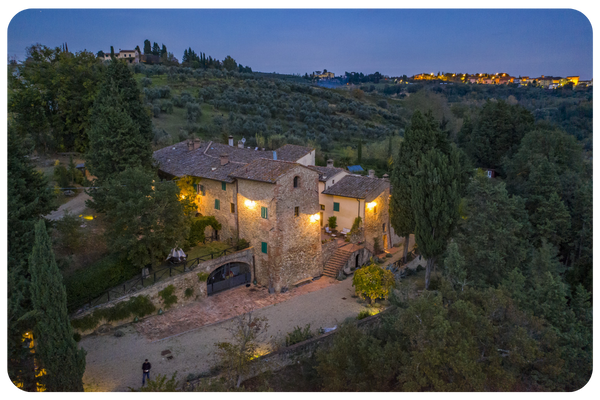
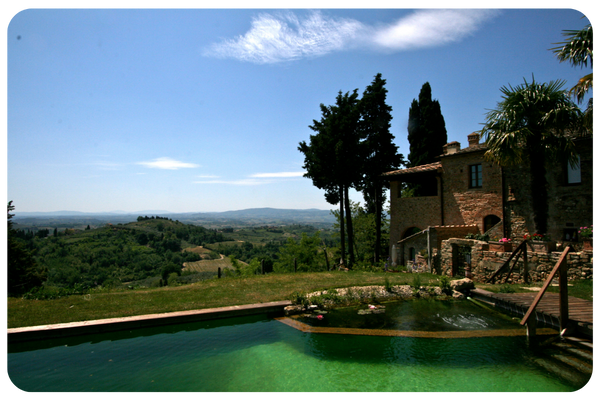
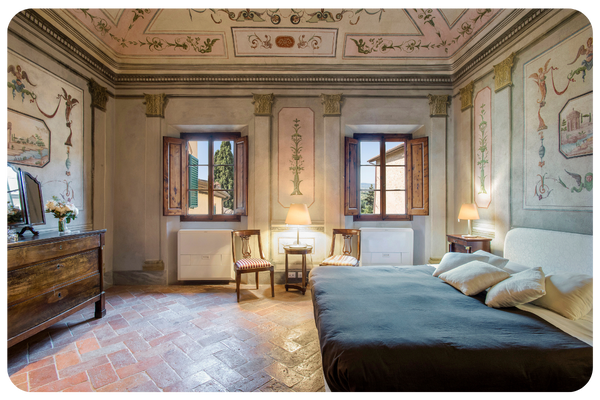
Set amidst the stunning vineyards and pristine landscapes of Tuscany, Villa Croce Di Febo offers a unique retreat just 3 km from the historic center of Montepulciano. Perched on a hill, this beautifully restored villa boasts breathtaking views of the surrounding valley
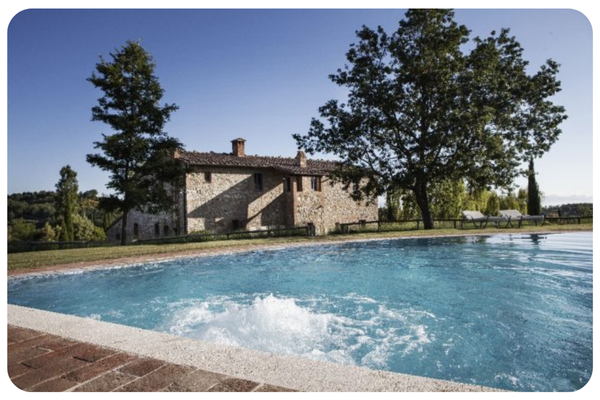
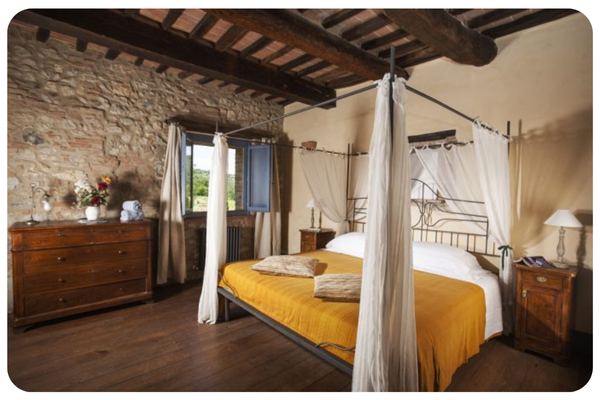
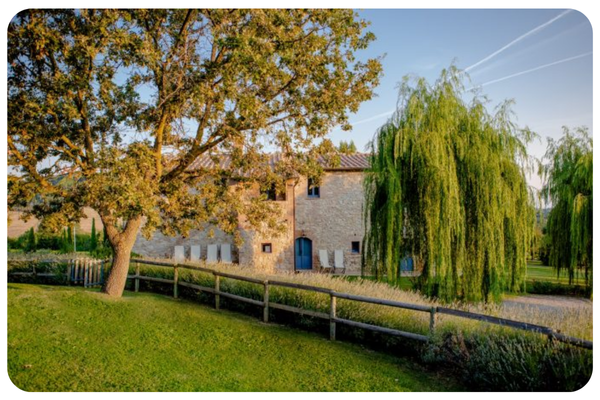
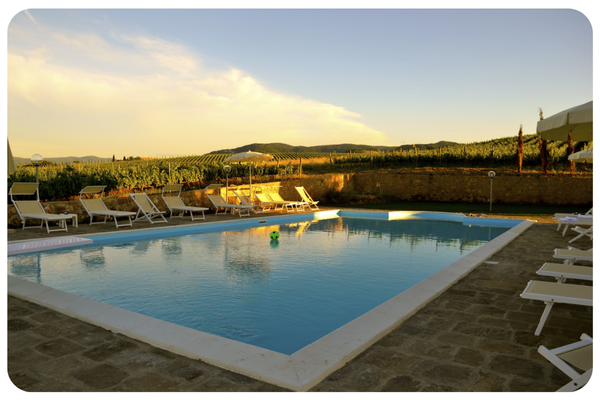
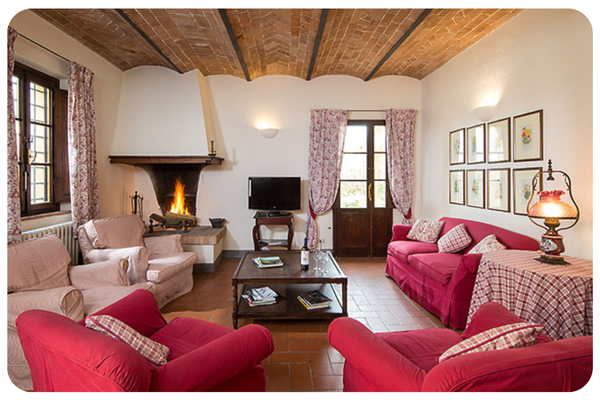
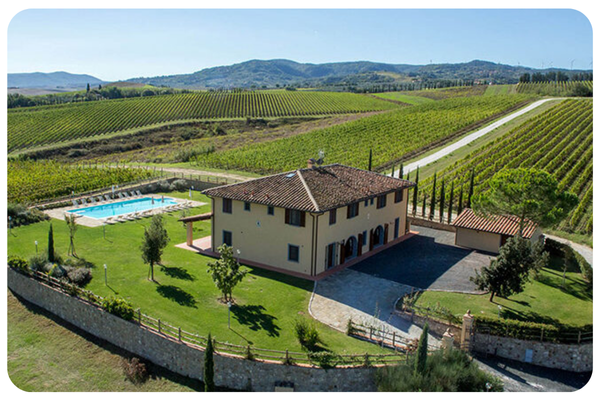
Badia di Morrona features a stunning estate with beautifully restored farmhouses, each equipped with a swimming pool and surrounded by lush greenery. These villas and apartments offer all the comforts you need to unwind in the picturesque Tuscan landscape.
When you think of Tuscany wine region, do you also have that image of rolling hills, green vineyards, and picturesque Italian cities in mind? To realize that image, you need to go to Val d'Orcia. In this valley, which stretches from the hills of Siena to Monte Amiata, the famous hilltop towns of Montepulciano, Montalcino, San Gimignano, Pitigliano, Bagno, and Vignoni are strung like pearls on a chain. The entire area is part of the UNESCO World Heritage, and each of the small towns has its own special feature. For example, Vignoni offers the Bagno Vignoni monumental bath, which you can enjoy as a romantic trip for two or as a family fun activity. Let yourself drift back to Etruscan times.
This city, also a UNESCO World Heritage site, is best known for Palio, the hardest horse race in the world, held twice a year. Further, this charming town also offers characteristic narrow streets flanked by brick buildings. The Piazza del campo, as the heart of the city, is one of the largest medieval squares in the world and has an unmistakable peculiar shell-shape. In this place, you will find the Torre del Mangia from where you have a breath-taking view over the town.
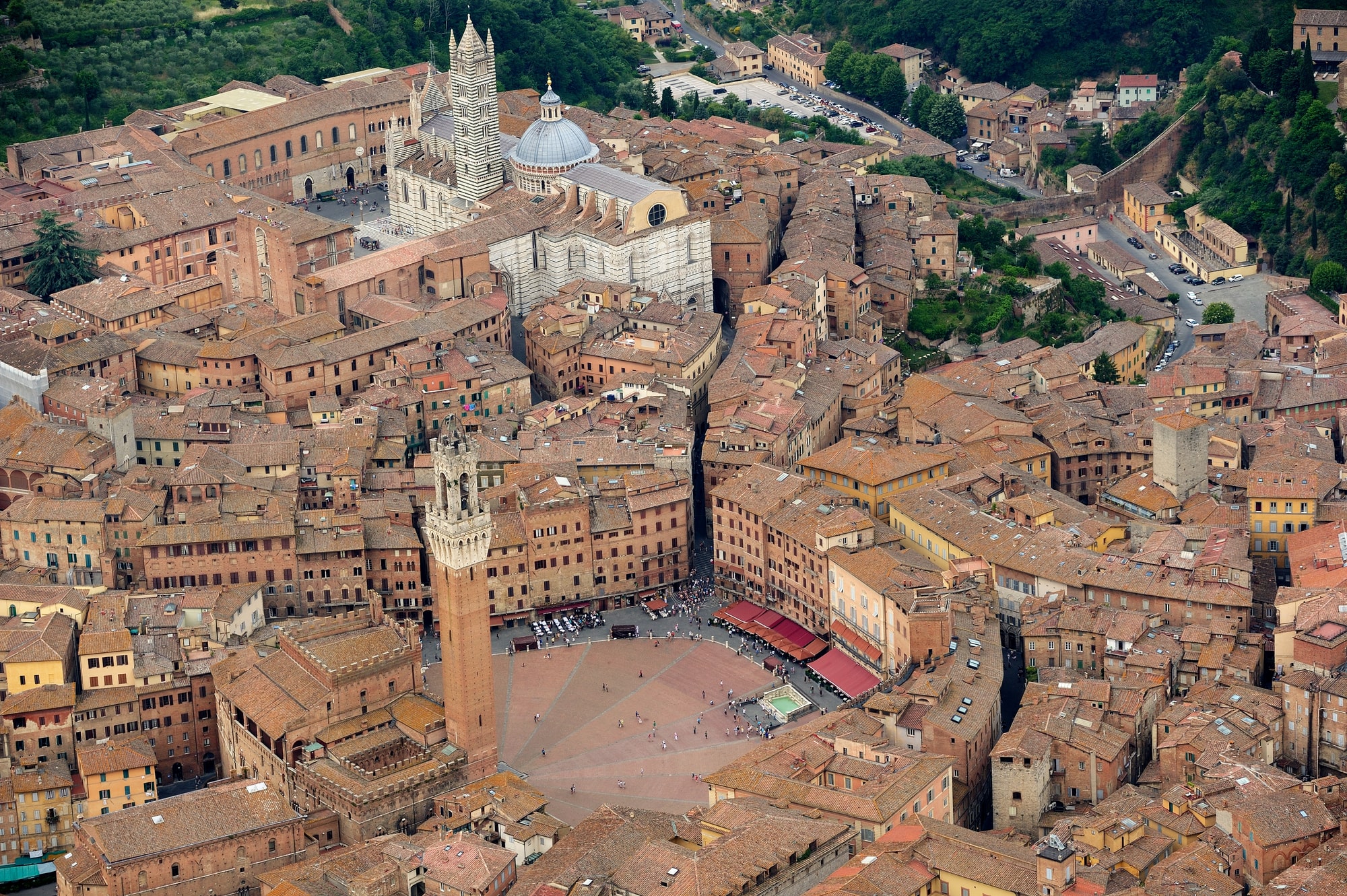
Another must-do is a visit to the cathedral with its black and white facade. The special thing about the church hides inside: the floor is full of esoteric symbols and religious stories that are dedicated to the Assumption.
Check out our list of wineries near Siena to discover amazing wine experiences.
What to visit in Volterra?
The bell tower of the central Palazzo dei Priori, decorated with medieval frescoes, offers a panoramic view over the city and is thus a first good starting point for orientation. The city's ancient defensive walls are not only a great place to hike and take photos, but also have great views of the surrounding countryside.
Piazza Duomo is home to beautiful medieval buildings made of precious materials, including the famous Carrara marble. Inside these buildings are some magnificent works of art from the 16th and 17th centuries.
In the archaeological area of Vallebuona, there is a magnificent theatre from the 1st century AD and is considered to be one of the most beautiful and best-preserved theatres of that time.

Surrounded by mountain ranges and the Mediterranean, Tuscany wine region surprises with a multi-faceted nature. Formed cultural landscapes, dense forests, wetlands and Mediterranean scrubland characterize the face of Tuscany.
The seven Tuscan islands lie in the clear waters of the Tyrrhenian Sea and bear the beautiful names Elba, Giglio, Capraia, Gorgona, Pianosa, Giannutri and Montecristo. Large parts of the landmass and 60,000 ha of sea surface are under protection, the national park is the largest marine park in Europe. Elba, the third largest island in Italy, is a land of sights and attractions, making it worth a visit to the island for a few days.
The remainder of the six islands each have their own characteristics, but they all share wild nature and characteristic landscapes.
Greenheart of the Maremma Natural Park, called by the Tuscans "Uccellina" (limestone cliffs dominating the southern and central parts), extends over 10,000 hectares between Principina a Mare (about 20 km south of Castiglione della Pescaia ) and Talamone. It was established in 1975 as a natural park and today is a nature reserve south of Grosseto, Magliano in Toscana and Orbetello. Within the park, you will find all the typical landscape features of the Maremma, such as dense forests, historical finds, pristine beaches, and vast pastures. More routes are possible to visit the Natural Park of Maremma. Even 16 routes on foot, 4 on the bike, 4 on horseback, 4 in the carriages, 2 in a kayak. Find your preferred way to explore the park.
Val di Cornia also is known as the Garden of Tuscany because of the stunning beauty that thrives here in all its glory. Enjoy relaxing hikes through oak forests, olive groves, vineyards and along winding streams that splash in the undisturbed nature of the valley through the natural parks of Baratti and Populonia.
Nature lovers will enjoy a hike through the pretty park of Montioni in Suvereto and the park Poggio Neri in Sassetta. Or go on a day trip along the coast and enjoy some relaxing hours in the sun on the beach of Spiaggia Lunga. Or participate in some water sports such as surfing or snorkelling in the Gulf of Baratti, Cala San Quirico or Buca Delle Fate; all within a short distance of Val di Cornia.
Discover the ultimate Tuscany Wine Tour experience with our expert guides, and embark on unforgettable Guided Wine Tours in the heart of Tuscany.
Cuisine of Tuscany wine region is very diverse due to the fact that Tuscany is situated by the sea, but also provides forests with game and meadows for animal husbandry. By comparison, Tuscany is considered a food rich region with a long tradition. There are many bean dishes available and also sweet chestnut dishes as chestnut trees are abundant in Tuscany wine region. Above all, the very high-quality Tuscan olive oil is very much used in the kitchen. Some regional wineries are able to propose you a perfect food and wine pairing.
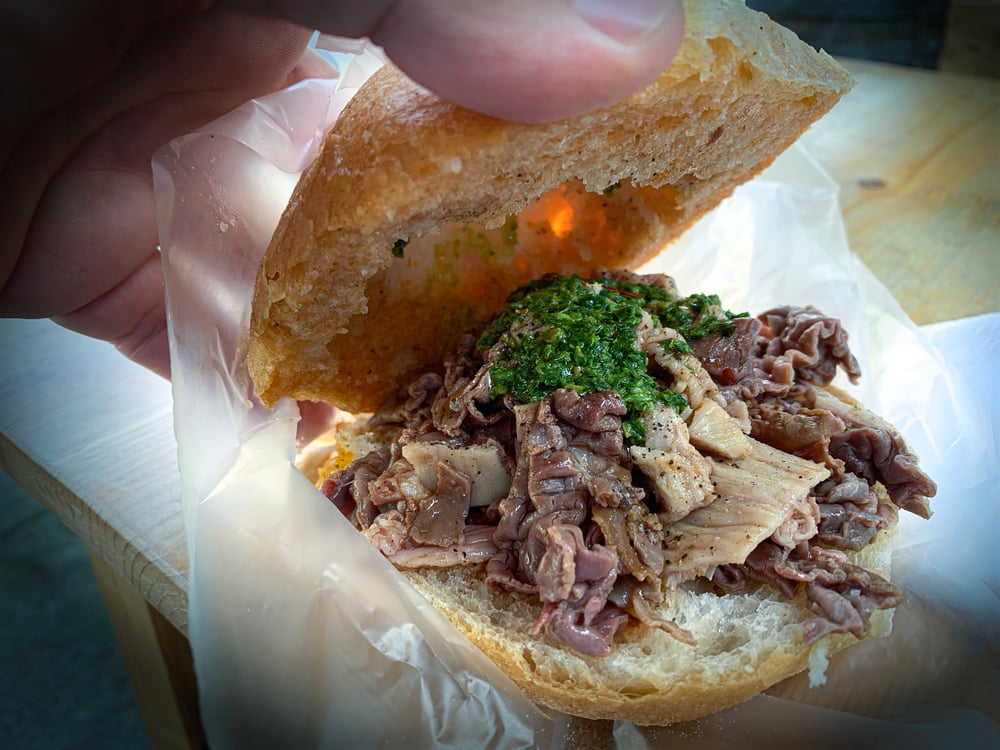
The dish is related to the tripe but does not consist of rumen like this but of the darker and more delicate abomasum of the cattle. The abomasum is cooked in a broth with tomatoes, onions, and parsley. Then it is either done in the style of Bollito misto or, typically Florentine, as a snack in a Sandwich eaten and is especially well-known in Florence.
Check out our list of wineries near Florence to discover amazing wine experiences.
This bread salad is eaten in Tuscany all summer long. The recipe of the Tuscan bread salad stands for the characteristics of Tuscan cuisine: high-quality, yet frugal ingredients (such as ripe tomatoes and good olive oil) and a mostly simple procedure.
It is best to have a sciocco bread which means that no salt is added to the bread that is typical for Tuscany.
You also need good, fresh products from the vegetable garden, such as fresh, ripe tomatoes, aromatic basil, red onions, and virgin olive oil. Everything is mixed and eaten cold. Such a dish is saturating without feeling stuffed and is very refreshing in Italian summer.
Bistecca Alla Fiorentina is a grilled Porterhouse or T-bone steak.
The meat is cut from the whole roast beef. It slices up to 1300 grams and up to six centimetres thick slices from the fillet, the bone and the flat roast beef so that a T-shaped piece of bone remains in the steak.
The preparation takes place exclusively on the grill, whereby the meat piece is sometimes pre-painted with olive oil. After a short roast time, the steak is turned and salted on the cooked side. After the other side has been grilled for as long, you also salt them. Now the meat is covered with a piece of fresh butter or drizzled with olive oil and seasoned as desired with black pepper from the mill. It goes well with rosemary potatoes and a strong red wine from Tuscany.
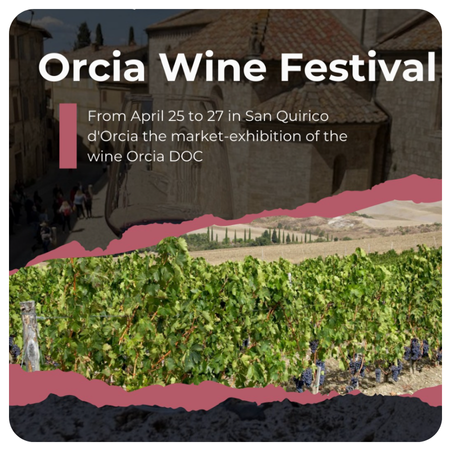
Orcia Wine Festival(April)
Celebrates the Orcia DOC wines with guided tastings and exhibitions in the frescoed halls of Palazzo Chigi.
Dates: April 25–27, 2025
Location: San Quirico d'Orcia
Price: Ticketed (price varies by tasting)
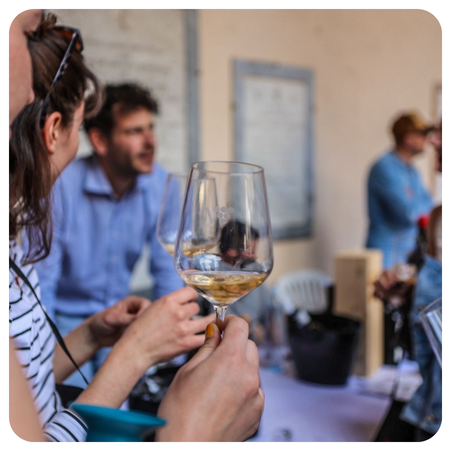
Valdichiana Wine Festival(May)
A weekend event featuring wine tastings from the Valdichiana region in the historic setting of Piazza San Francesco.
Dates: May 3–4, 2025
Location: Castiglion Fiorentino
Price: Ticketed (price varies)
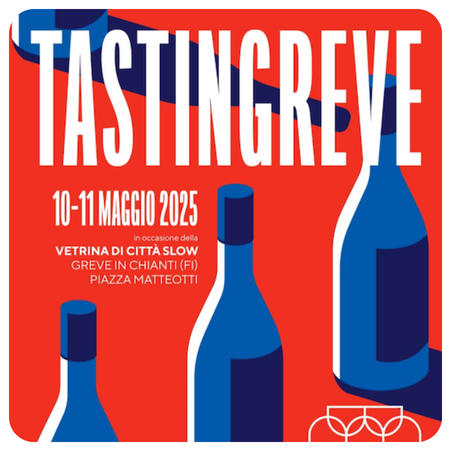
Tasting Greve(May)
Local winegrowers open their cellars for tastings of Chianti Classico wines.
Dates: May 10–11, 2025
Location: Greve in Chianti
Price: Ticketed (price varies)
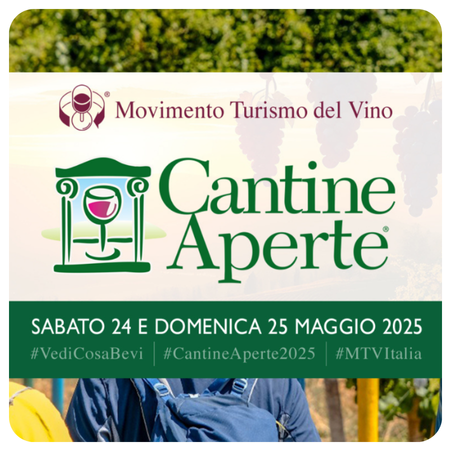
Cantine Aperte(May)
A nationwide event where wineries open their doors for tours and tastings
Dates: May 24–25, 2025
Location: Various wineries across Tuscany
Price: Often free or with a nominal fee
Go through our guide to wine festivals in Italy to discover more.
Discover the locations of wineries in Tuscany
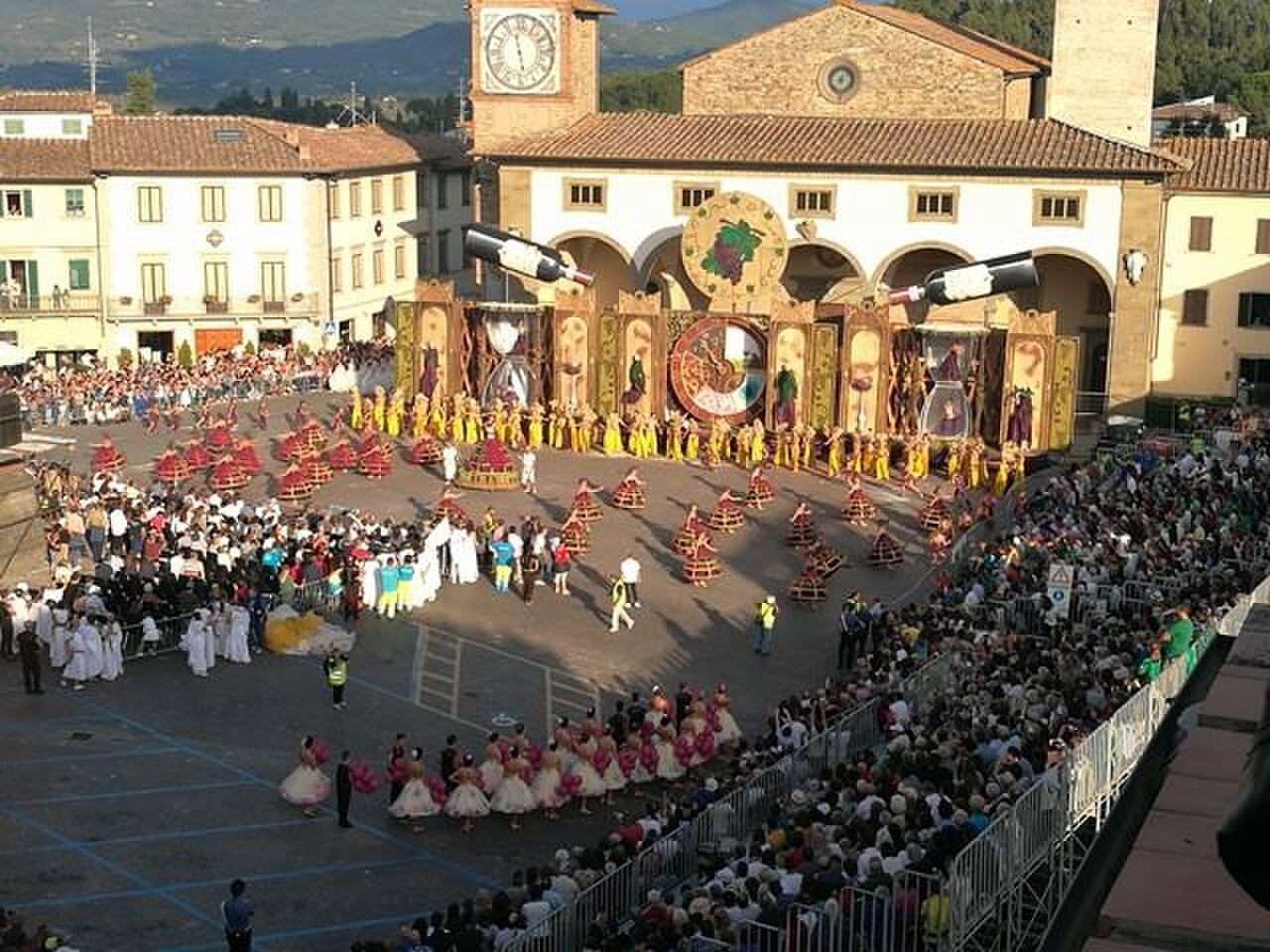
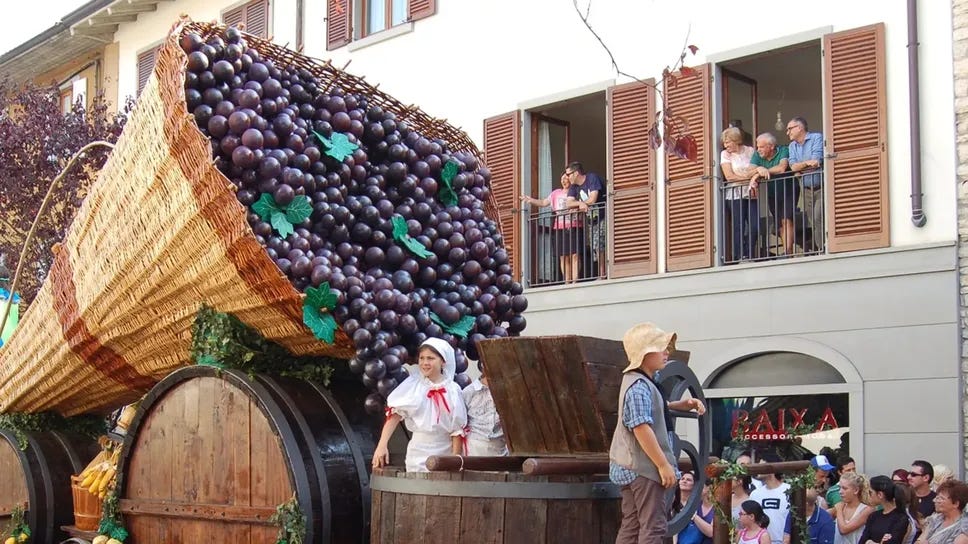
Tuscany, Italy
Annual Last Sunday of September 2026 (approx. 27 September 2026)
Summer is when a wine trip becomes something else. The days are longer. Lunches run into afternoons. Tastings that would end at four in October run until seven, and by then someone has brought out olives and bread and the sun is still on the terrace. The best wineries know this. They plan for it....
2026/07/21
Walk into a wine shop in Greve, and the black rooster stares back at you from a hundred labels. Walk into a wine shop in Rufina, forty minutes northeast, and you'll see almost none. Same country, same grape, same broad name — but two different wines with two very different stories, told by...
2026/07/13
Winery Stays for Every Budget: From €40 Farmhouses to Luxury Villas Few travel experiences feel as timeless as staying at a winery. You wake up surrounded by vineyards, drink coffee overlooking rolling hills, and end the evening with a glass of local wine only meters away from where the grapes...
2026/05/25
Join our newsletter now to receive our free guide on how to plan the perfect wine tour