


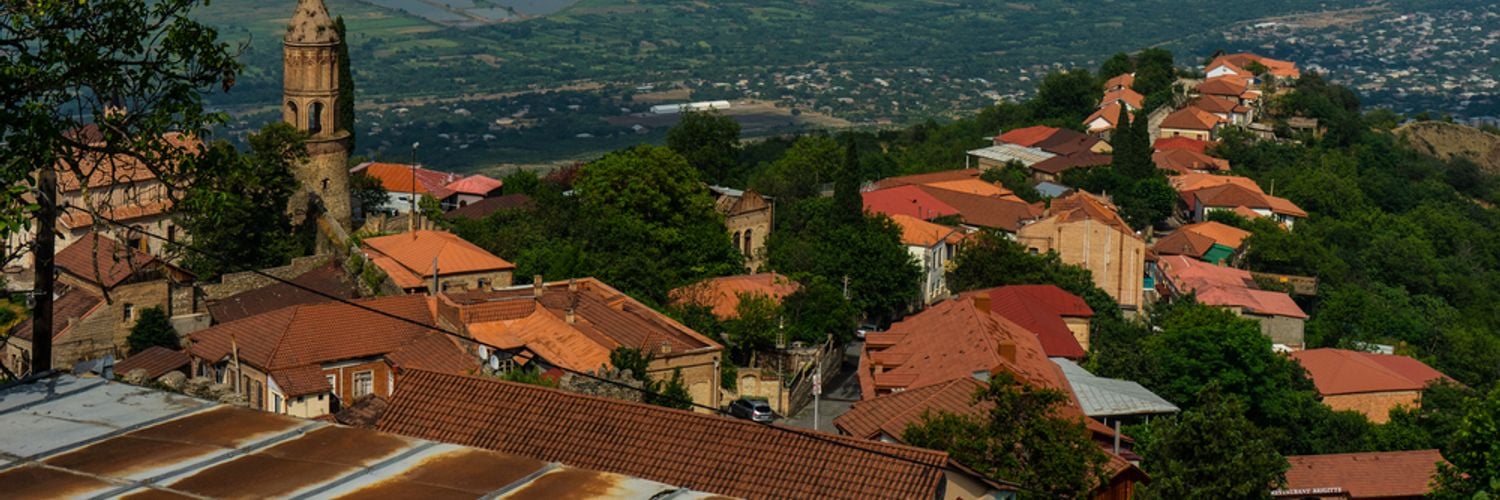
Kakheti, el corazón de la cultura vitivinícola de Georgia, le invita a sumergirse en sus ricas tradiciones. Cuna de exquisitas variedades de uva autóctonas como la Saperavi y la Rkatsiteli, esta región presume de impresionantes paisajes salpicados de bodegas históricas y pueblos con encanto. Explore las diversas zonas vinícolas de Telavi, Kvareli y Gurdjaani, donde cada visita promete experiencias de cata únicas que celebran siglos de tradición vitivinícola y la vibrante cultura local. Descubra la profunda conexión de Kakheti con el enoturismo y disfrute de un viaje inolvidable a través de sus viñedos.
Si quieres contemplar los viñedos de Kakheti en el Valle de Alazani, con una copa de vino ámbar en la mano, y disfrutar de las majestuosas vistas del Cáucaso, entonces es hora de hacer un viaje a Kakheti, la región vinícola más importante del país del vino de Georgia, una tierra cuyo impresionante paisaje te dejará tan embriagado como su vino. Este viaje te llevará atrás en el tiempo para presentarte las técnicas de elaboración de vino más antiguas y dejarte probar vinos únicos.
Descubre Degustación de vinos y tours en la región vinícola de Kakheti .
Descubre la región vinícola de Kajetia a través de nuestra guía de viaje:
Vinos únicos y variedades de uva de Kajetia

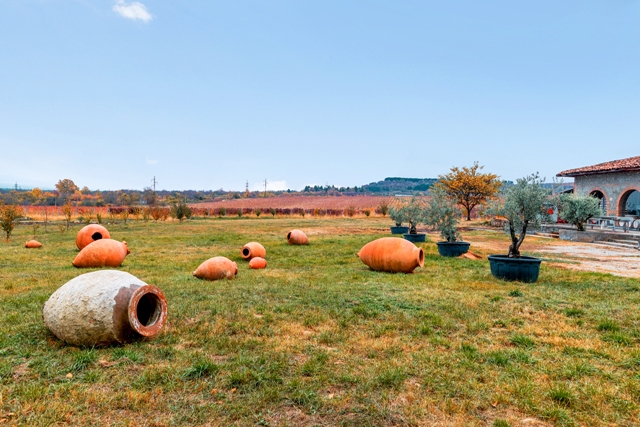
Se han encontrado artefactos en el territorio de la región vinícola de Georgia que proporcionan evidencia de una tradición continua de elaboración de vino de 8000 años de antigüedad. Durante milenios, las diversas culturas de la región vinícola de Georgia han conservado la técnica del Qvevri para la producción de vino. Hoy en día, este estilo de vinificación sigue siendo tan popular como siempre y constituye una parte integral de la identidad de la viticultura georgiana.
¿Interesado en personalizar tus vacaciones vinícolas en Kajetia? Simplemente envíanos tus preferencias aqui, y nuestro equipo de expertos diseñará el itinerario perfecto para ti.
Un Qvevri es un gran recipiente de arcilla con una forma específica. En el idioma georgiano, Qvevri significa "enterrado en el suelo", lo que por sí solo nos revela la esencia de esta técnica. El Qvevri se entierra en el suelo, dejando la parte superior expuesta para facilitar el control del proceso de vinificación. Se sella con una tapa de madera o piedra, cubierta con una capa de arcilla que actúa como sellante. La apertura de un Qvevri suele realizarse en primavera y siempre va acompañada de una celebración, un evento que vale la pena presenciar. Esto hace que la primavera sea uno de los mejores períodos para visitar la región vinícola de Kajetia.

Desde que los procesos de fermentación del vino en un Qvevri son en gran medida naturales, sin intervención humana, a menudo es una gran sorpresa descubrir qué tipo de vino se encuentra al abrir el Qvevri. Es por eso que cada vinicultor espera con entusiasmo este momento, y por qué va acompañado de una celebración. Puede parecer un gran riesgo para el enólogo, pero rápidamente te dirán que es un riesgo que vale la pena asumir, ya que esta incertidumbre es una parte intrínseca de la singularidad y el encanto del Qvevri. La temperatura constante bajo tierra y el proceso de micro-oxidación de los recipientes de arcilla le otorgan al vino un color especial y características únicas. Además, suaviza los taninos, incluso después de varios meses en contacto con las pieles, brindando al vino una estructura delicada y aterciopelada.
La técnica del Qvevri se practica en todo el país vinícola de Georgia, pero cuando escuchas esta palabra, lo primero que viene a la mente es la región vinícola de Kajetia. Para la mayoría de los georgianos, "vino de Kajetia" está estrechamente asociado con "vino de Qvevri". Por lo tanto, la mejor manera de conocer el método Qvevri es comenzar desde la región vinícola de Kajetia.
Desde 2013, cuando la UNESCO incluyó la antigua tradición de vinificación en Qvevri en la lista del patrimonio cultural inmaterial, este método se ha vuelto aún más popular y se ha extendido más allá de las fronteras de Georgia. Las tendencias en la reintroducción de la técnica del Qvevri pueden encontrarse en diferentes regiones vinícolas del mundo. Representantes del viejo y nuevo mundo están experimentando activamente con la producción de vino en recipientes de arcilla similares a las ánforas.
Kakheti Wine Region is located in the eastern part of Georgia wine country and comprises two river basins, Ivri and Alazani. These rivers have a significant influence on the character of Kakhetian wines. Kakheti wine region is bordered on the west by another very important wine region of Georgia - Kartli. To the east and south is Azerbaijan. Northe
La región vinícola de Kajetia está situada en la parte oriental del país vinícola de Georgia y comprende dos cuencas fluviales, Ivri y Alazani. Estos ríos tienen una influencia significativa en el carácter de los vinos de Kajetia. La región vinícola de Kajetia está delimitada al oeste por otra región vinícola muy importante de Georgia: Kartli. Al este y al sur, limita con Azerbaiyán. La parte norte de Kajetia está bordeada por la cordillera del Cáucaso, y no hay nada más hermoso que contemplar los viñedos de Kajetia brillando bajo el sol y contar las nubes blancas flotando sobre la cordillera del Cáucaso.

A ambos lados de la carretera de Tiflis a la región vinícola de Kajetia, se pueden ver filas de hermosos viñedos y, si no puedes resistir la tentación, fácilmente puedes detenerte y dar un paseo entre ellos. La mayoría de los viñedos de la región vinícola de Kajetia no están vallados, por lo que puedes visitarlos libremente. Probablemente notarás un suelo de color particularmente oscuro, lo cual se debe a su alta concentración de hierro. No olvides buscar estos mismos tonos de la tierra más tarde en tu copa de vino.
SSuelos de la región vinícola de Kajetia:
Aluvial
Chernozem
Gris-cinamonita
Prado gris-cinamonita
Cinamonita
Prado-cinamonita
Bosque marrón
Suelos carbonatados crudos.
Variedades de uva de la región vinícola de Kajetia:
Tintas:
Saperavi
Simonaseuli
Budeshuri red
Zhghia
Ikalto red Tavkveri
Blancas
Rkatsiteli
Kisi
Khikhvi
Green Kakhetian
Mtsvivani Kakhetian Chitistvala
El terruño de Kajetia ofrece condiciones ideales tanto para las variedades locales como para las variedades internacionales de vino. Cuando se habla de la región vinícola de Kajetia, lo primero que viene a la mente son las uvas Rkatsiteli y Saperavi. Estas dos variedades de vino se han convertido en la imagen de la región vinícola de Kajetia y de Georgia en su conjunto. Con el aumento del reconocimiento del vino georgiano, el interés en estas variedades está creciendo, por lo que no te sorprendas si encuentras estos vinos de Kajetia en diferentes regiones vinícolas del mundo.
Rkatsiteli es la principal variedad blanca de Kajetia. Se caracteriza por su elegancia y su alta capacidad de adaptación al entorno. Se desarrolla cómodamente incluso en condiciones de heladas, mostrando una resistencia comparable a la de los vinos Riesling y Pinot de las regiones vinícolas del norte. Rkatsiteli es tan diversa como la propia región vinícola de Kajetia. Se puede disfrutar en su versión de vino blanco seco elaborado tanto con técnicas convencionales como con el antiguo método Qvevri, así como en vinos fortificados y dulces de postre elaborados con esta uva.
Como vino blanco joven y clásico, muestra un familiar color amarillo verdoso. Con el tiempo, el vino Rkatsiteli desarrolla un tono dorado intenso. El vino elaborado con el método kajetiano varía entre ámbar y marrón según su edad.
El perfil aromático del Rkatsiteli depende de la tecnología de vinificación utilizada. Sin embargo, se pueden identificar algunos aromas que se encuentran con mayor frecuencia en el vino Rkatsiteli:
Manzana verde
Nueces crudas
Membrillo
Cítricos
Nueces
Frutas tropicales
Manzana seca
Especias georgianas
Si visitas la región vinícola de Kajetia durante la época de la cosecha, será difícil resistirse a comer las deliciosas, dulces y jugosas uvas directamente de las viñas mientras las recoges.

Saperavi is the leading red grape variety from Kakheti wine region, it is versatile enough to produce Saperavi es la principal variedad de uva tinta de la región vinícola de Kajetia. Es lo suficientemente versátil como para producir vinos secos, semidulces, dulces y fortificados, tanto con el método Qvevri como con el método convencional.
Los vinos elaborados con Saperavi tienen características pronunciadas y son fáciles de distinguir de otros vinos tintos de Kajetia, ¡y de los vinos de cualquier otra región del mundo! Esta antigua variedad de uva parece contar la historia de siglos de tradición con su sobriedad y elegancia. La intensidad de sus colores y aromas nos ofrece un vino fuerte y profundo que perdura con su presencia.
Cabe destacar que la pulpa de la uva Saperavi es de color rojo (una uva conocida como teinturier), una característica inusual para las variedades de vino tinto, lo que se refleja en la intensidad del color del vino Saperavi. En la región vinícola de Kajetia, el vino Saperavi es frecuentemente llamado “vino negro” por los lugareños, y ahora entiendes por qué.
Frutas oscuras maduras
Cassis y especias
Cereza
Mora
Grosella negra
Ciruela
Regaliz
Café
Los vinos Saperavi se distinguen por su alta calidad y su gran potencial de envejecimiento, lo que te permitirá disfrutar de las noches en Kajetia con vinos Saperavi de diferentes añadas. Sin duda, te enamorarás de muchas cosas en la región vinícola de Kajetia, y el Saperavi será una de las primeras.

Most of the vineyards (65%) in Georgia wine country are located in the Kakheti Wine Region. Kakheti wine region is divided into two zones: Telavi and Kvareli. It should also be noted that 15 of the 20 PDO's of Georgia wine country are located in Kakheti.
From this list we can select three PDOs that are most famous for producing distinctive wines in Kakheti Wine Region:
What is PDO?
Protected Designation of Origin or PDO defines the Georgaphical area and know-how of producing certain wines.
Tsinandali is located in the Telavi district, on the right bank of the Alazani river. The total area of the vineyards cover 653 hectares and vines are planted at an altitude of between 300-750m above sea level. Tsinandali produces high-quality dry white wine from Rkatsiteli and Kakhetian Mtsvane varieties. The core component of Tsinandali wine is Rkatsiteli, while the share of Kakhetian Mtsvane is set at a maximum of 15%.
Wine is characterized by a straw-colored tint. When you taste it, you will find the wine balanced and harmonious. Rkatsiteli provides the full body while the refreshing acidity is a gift from the Mtsvane grape. If you visit Kakheti wine region during the summer, enjoy an 8-10 ̊ C chilled Tsinandali alongside a freshly caught Alazani river trout with oyster mushroom garnish. The Tsinandali wine is full of elegant grassy hints and tropical and creamy tones - it easy to appreciate that you are dealing with a multi-layered, very interesting wine and not just a summer refreshing wine.
When visiting Tsinandali in Kakheti wine region, don’t miss the Tsinandali Estate, where Georgian wine was bottled for the very first time. The cellar still boasts wine bottles from the 19th century! Apart from this historical background, the estate is full of other stories and activities for visitors. The establishment of the Tsinandali estate is connected to Prince Alexander Chavchavadze. Going back to the 19th century, he was - in addition to being an excellent winemaker - a businessman, a military man, a poet, and one of the pioneers of Georgian romanticism. Tsinandali estate was turned into a cultural nexus and it can be said that they still maintain this image.
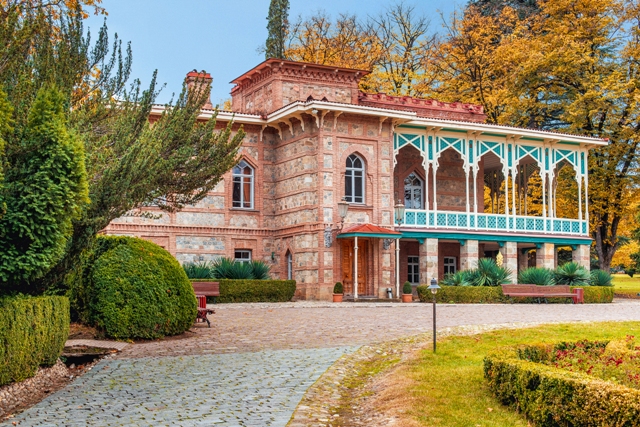
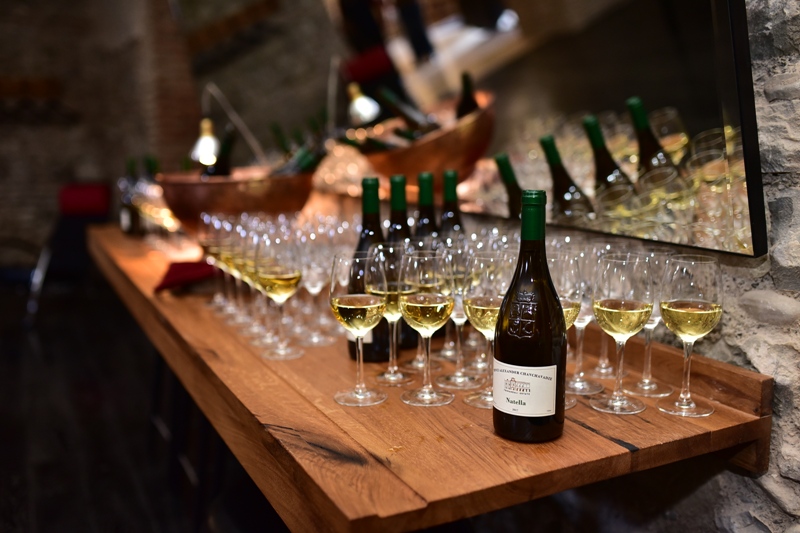
Along with the historical artifacts of winemaking, you can see how the distinguished Georgians of the 19th century lived, take a walk in the beautiful garden, best accompanied by the romantic poetry of Prince Alexander himself of course! Last but not least, you can taste their exceptional Tsinandali, which makes you feel that you have traveled back in time and are a guest at one of Prince Alexander's parties.
Near Tsinandali, in Kakheti wine region, again on the right bank of Alazani, you can visit PDO Mukuzani in Gurjaani administrative unit. The total area of the vineyards are 246 ha and is located at an altitude of 350-750 m above sea level. Mukuzani wine has been produced since 1893 from Saperavi grapes. It is traditionally aged in oak barrels. Dark pomegranate-colored wine with ripe berry tones and a slight hint of oak is a perfect combination with local cuisine. During your visit to Mukuzani, you will have a wonderful time for dinner with Mukuzani. It seems to be an old friend who has not seen you for a long time and you want to spend time talking to and reminiscing over old stories. You cannot imagine how many things Mukuzani wine has to offer you... The peculiarities of the Saperavi variety and Mukuzani terroir create such a complex wine that you just can not get bored with.
Kindzmarauli is located in the Kvareli district on the left bank of the river Alazani. The total area of Kakheti vineyards is 2400 hectares and sits between 250-550 m above sea level. The semi-sweet wine of Kindzmarauli has been produced from Saperavi grapes since 1942. Kindzmarauli is a small paradise for lovers of semi-sweet wines. If you see an explosion of intense colors and aromas in your glass while traveling in the Kakheti wine region, you know that it is Kindzmarauli. A subtle scent of red fruit, berries, violet, and lilacs, or dried fruits will slowly seduce you. If you think you do not like semi-sweet wines this may be the wine to change your mind. Unlike the most popular semi-sweet wines, Kindzmarauli has more tannins, though it is still very tender and velvety. It has a very complex and full-body, so do not be surprised if in addition to desserts it is offered with a meat dish. Kindzmarauli is like the beginning of a new relationship -full of emotions, excitement, and pleasure. Therefore, if you are traveling with your partner in Kakheti, Kindzmarauli is a must-do on your list.
Wine is an integral part of Kakheti's identity. Therefore, Kakheti vineyards – called kaks - have always played a very important role for the locals in their daily life. Locals took special care to protect Kakheti vineyards and even used various rituals for this purpose.
According to one of the rituals, the hostess of the family baked special bread rolls. A family man who took care of the vineyard brought these bread rolls, along with candles and wine, to the vineyard during the flowering of the vine. On each of the four sides of the vineyard, the man would pour a glass of wine, light a candle, break the bread rolls into four parts, throwing them to the four sides of the kak. In this ritual, he prayed for the protection and preservation of the vineyard.
According to another ritual, it was necessary to protect the vineyard of Kakheti wine region from both birds and rodents as well as from the "evil eye" (a person who is driven by envy or evil and whose sight may bring you bad luck). Prayers were recited in the vineyard. Also, red-and-white prayer-inscribed pieces of cloth were attached to the vines throughout the kak.
In Georgia wine country, it is said that the guest is sent by God. The guest - both in the past and present-day - is associated with great honour and joy. Even as a tourist in Georgia, you will feel greeted like a long-lost relative returning to the family fold. It is a tradition of warmth and generosity.
The tradition of "table" (gathering together to eat) is based on this hospitality tradition, and it is a cultural custom passed down all the way to the present day. In this process food, wine, singing, dancing, toasts and the “tamada” (toastmaster) play an important part.

These traditions are well worth experiencing yourself. , and there is no better place than Kakheti wine region to observe them. Along with Kakhetian wines and food, you will find a “tamada”, who unites the dinner guests and moderates’ conversations on a variety of topics using specific toasts. Then you too will say a toast and you will feel as if you had wanted to say one for a long time and could not find the appropriate moment. The meal is usually accompanied by Kakhetian folklore and song, as it is said that "everyone sings" in Georgia wine country. Maybe you will be even luckier and the members of the table will start singing "Chakrulo". Chakrulo is a Kartli-Kakhetian folksong featured on the list of intangible monuments of UNESCO. The song was launched into space in 1977 as a sample of "Earth Voices" for alien civilizations!
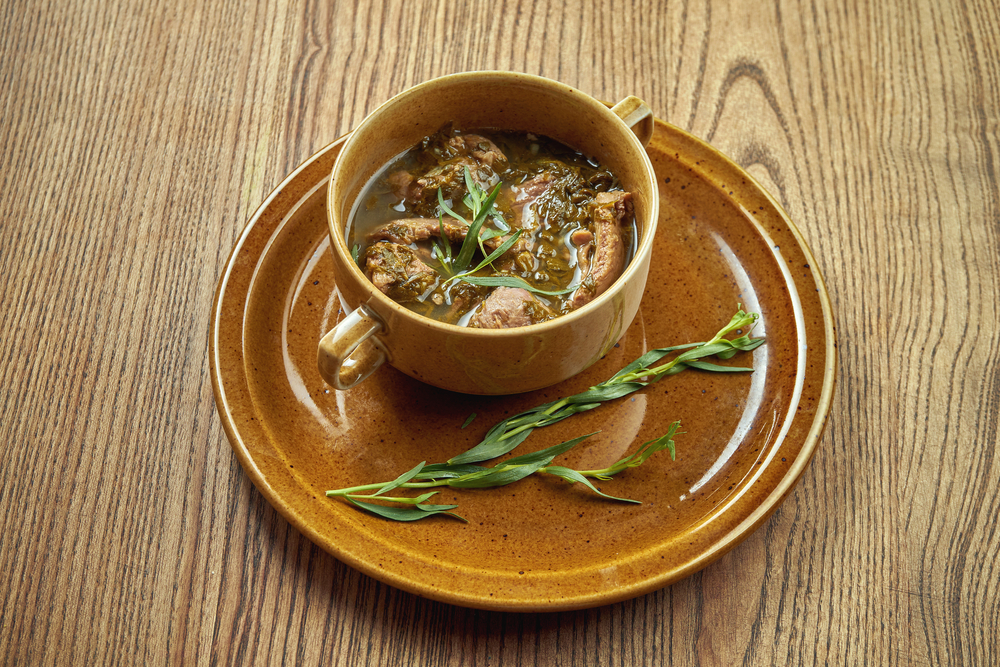
If you decide to visit Kakheti wine region during the spring, then other pleasures await you along with the opening of the Qvevri. As you already know, wine plays an important role in the lifestyle of Kakheti wine region, so you should not be surprised that Kakhetian cuisine includes prominent use of wine. Chakapuli is roasted/boiled mutton and veal. White dry Kakhetian wine, many herbs, and plums (Tkhemali) are used to prepare it. Its lively aromas are associated with the arrival of spring and the awakening of nature. That is why it is even more desirable to taste Chakapuli in the spring, along with white wine from a newly opened Qvevri.

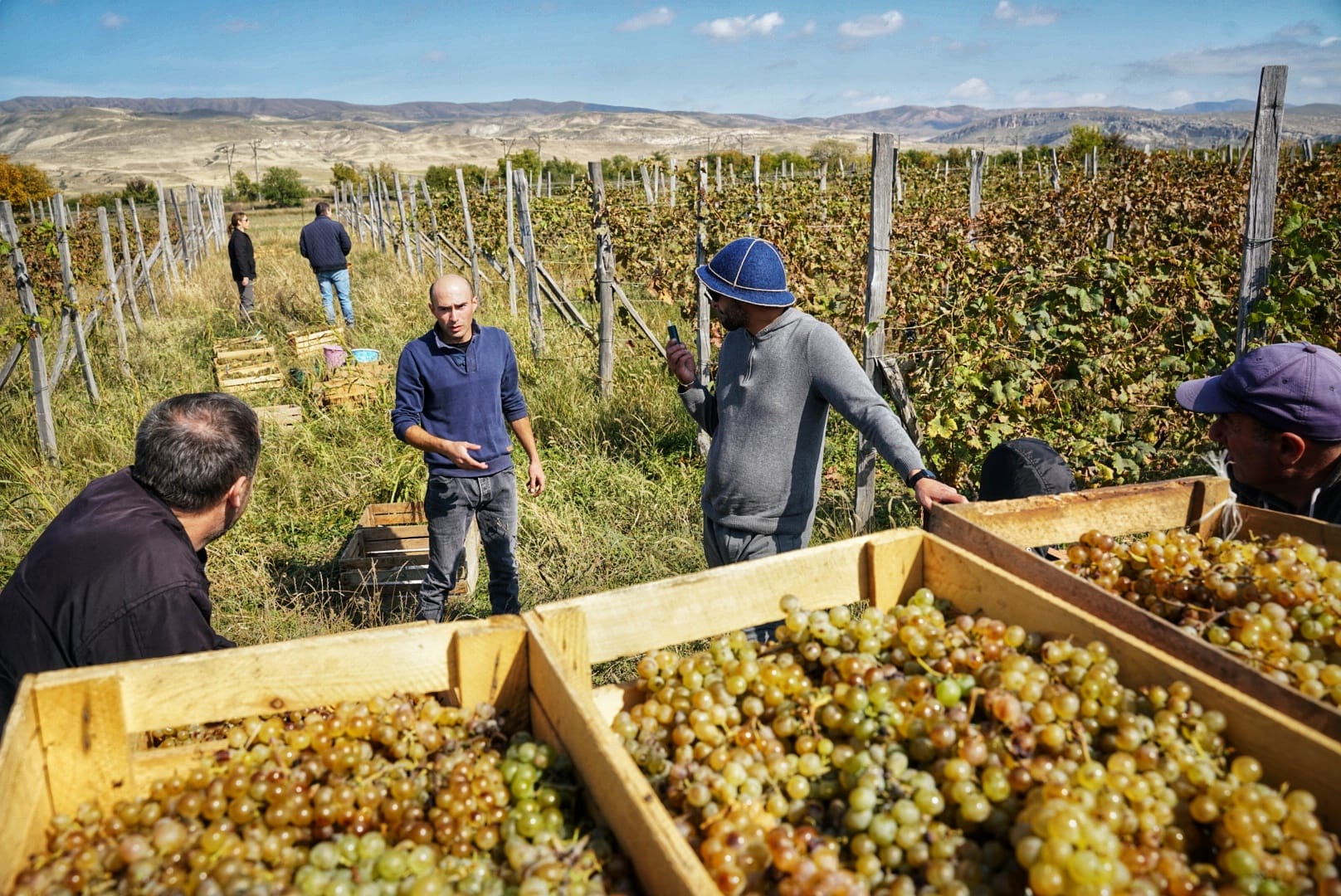
Mtsvadi is a fusion of Caucasian and Asian cuisine, but when somebody mentions it, Georgians’ will associate it with the Kakheti wine region. Mtsvadi is a barbecue dish roasted over a fire pit. In Kakheti, vine stalks are used as roast spits for the meat. Without a Mtsvadi, a Kakhetian harvest is almost impossible. If you decide to visit Kakheti during autumn, then make sure to take part in the harvest - after the pleasant – but exhausting - labor, wash down the Mtsvadi with a Kakhetian Qvevri wine from the vineyard.

Churchkhela is the most popular Georgian dessert. Threaded walnuts or hazelnuts are soaked in boiled grape juice and dried. If you, like many other tourists, wonder why there are colorful "candles" on display in the tourist streets, this is actually Churchkhela. Wherever Churchkhela is available, it is an excellent accompaniment to wine tasting. If you visit Kakheti wine region during the harvest, you should take part in the process of making Churchkhela. Afterwards, you can save some homemade Churchkhela for the New Year, the same way Georgians do.
Sighnaghi is a small, rough city, located on a high hill. Historically, it was protected by walls and a large gate. During enemy invasions, which were quite frequent in Kakheti wine region, it was Sighnaghi that sheltered the population in the area. Nowadays, many tourists escape to Sighnaghi to enjoy a glass of wine atop the Sighnaghi parapets, gazing out across the beautiful Alazani valley view. Sighnaghi is called the city of love in Georgia wine country. Apart from the wonderful architecture, tiny beautiful streets, and the amazing Kakhetian wines, you can also get married in Sighnaghi at any time you wish. The marriage house is open 24 hours a day. So, if you are thinking about marriage, the city of love will be a great place for it!
If you are a wine lover and you are in the Kakheti wine region, then it is almost mandatory to visit the Alaverdi Monastery and its cellar. Besides being one of the most important cultural heritage sites, Alaverdi Monastery is also famous for its continued tradition of producing wine since the 10th century. Today, there are about a hundred varieties of wine grape in their vineyards. The monks mostly produce Qvevri wines using ancient wine-making techniques.

The monastery complex of David Gareja is completely carved into the rock. In the desert area of Kakheti wine region, it stands as a silent sentinel keeping many stories and secrets. The monastery complex was founded by the Assyrian father David in the sixth century. Over the centuries, the monastery complex has played an educational, cultural, and political role. Just 60-70 kilometers away from Tbilisi, this monastery complex will take your breath away, make you feel strangely humble, and make you feel you are stepping back through time.
Lagodekhi National Park is characterized by a diverse landscape and various forms of wildlife. The Lagodekhi national park includes natural monuments such as the "Rocho Waterfall", "Ninoskhevi Waterfall", "Machi Fortress", "Black Rock Lake" and "Nature Cognition Trail". Try to spend a few days in Lagodekhi to be able to thoroughly explore the park and to spend your evenings with the local winemakers.
Eagle Gorge is a natural monument located in the Vashlovani protected area. It consists of a limestone canyon and the surrounding forest cover. The Khornabuji fortress is also located there. Up to sixty species of birds can be observed in this area. Youcan also see endangered plants in the canyon.
Ilia Lake - is located in Kindzmarauli PDO. Its deciduous forest provides charm for all seasons, and if you visit Kakheti wine region in winter, the snow-covered trees and the white colors reflected in the lake will make you feel like you are in a fairytale. There are many tourist attractions around the lake. Kakhetian wine pairs wonderfully with this amazing view.
Where to eat in Kakheti wine region?
The Terrace Signagi
Kapiloni
Chateau Buera
Where to stay in Kakheti wine region?
Schuchmann Wines Chateau, Villas & SPA
Akhasheni Wine Resort
Qilimcha's Guesthouse
The best wine bars in Kakheti wine region
Pheasant's Tears Winery – Wine Bar
Natural Wine Bar
Ambri Wine Saloon
Descubra la ubicación de las bodegas en Kajetia
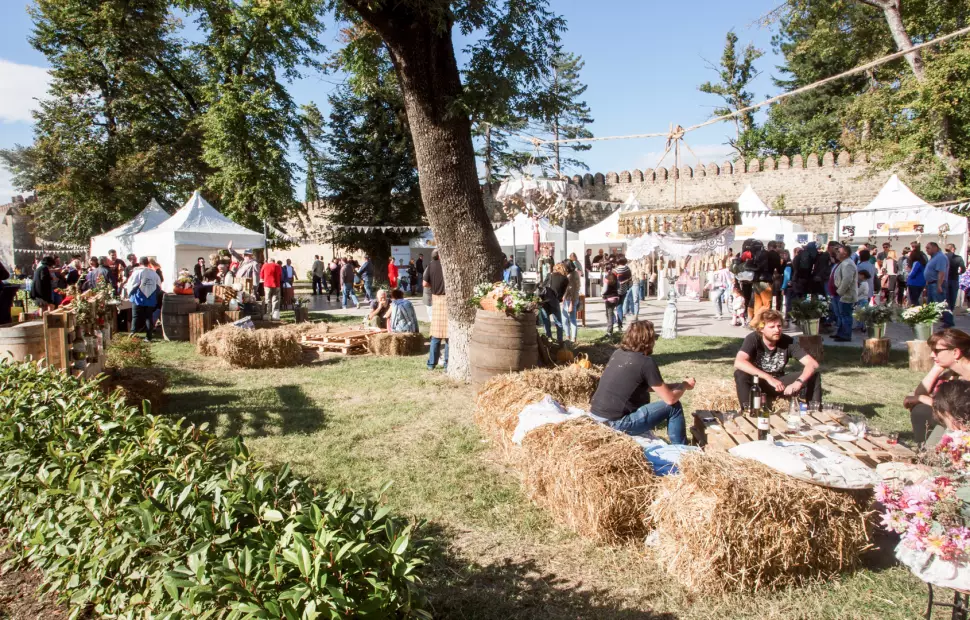
Kajetia, Georgia
Annual Finales de noviembre / principios de diciembre de 2026 (fechas por confirmar)
 Leer más sobre "Introducción al vino georgiano: Qvevri, Saperavi y 8.000 años de elaboración de vino."
Vino Georgiano 101: Qvevri, Saperavi y 8,000 Años de Elaboración de Vino Baja por las escaleras de piedra hacia un marani en Kakheti — una bodega tradicional georgiana, fresca y tenue, con un ligero olor a mosto de uva — y lo primero que notas es lo que no está allí. No hay barricas de...
2026/09/07
Únase ahora a nuestro boletín para recibir nuestra guía gratuita sobre cómo planificar el tour de vinos perfecto
