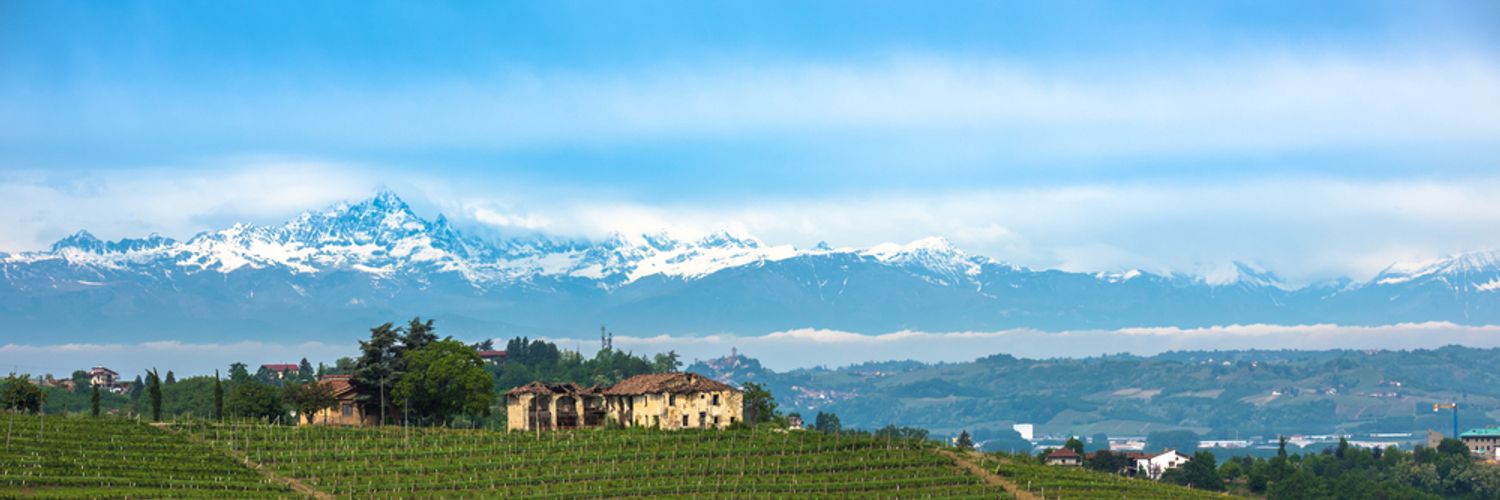

Bordeaux, Brunello di Montalcino, Rioja, Chianti… the list of famous and appreciated red wines from all over the world could be very long. Each of these wines has its own characteristics, its own history, structure and taste and each of them is appreciated because they all have something that the other wines don’t have. Among the world’s red wines, there’s one that has gained the nickname of “King of Wines”, do you know which one is it? Easy, it’s Barolo! Piemonte’s signature wine is both the king of wines and the wine of kings.
Acclaimed as the 'King of Wines' and 'Wine of Kings', Barolo holds an esteemed position in the wine world, especially in its birthplace of Italy. This regal title originates from the 19th century when Barolo, crafted from the distinguished Nebbiolo grapes, found favor amongst the royalty. Situated in the sweeping Langhe hills of Piemonte, northwest Italy, lies the Barolo region, a place renowned for producing these deeply complex and robust red wines. Characterized by its rich, full-bodied structure, and notes of tar, roses, cherries, and truffles, Barolo continues to reign supreme in the hearts of wine connoisseurs worldwide.
Let’s explore the reasons why:
1. It’s considered to be the most prestigious Italian red wine
Barolo wine is produced, as its policy document states, only using 100% Nebbiolo grapes that have to come from the 11 municipalities where it is legal to use the Barolo name. If Nebbiolo comes from another municipality, then it can’t be considered Barolo, even though Nebbiolo is an autochthonous grape from Piedmont and is grown pretty much everywhere.
The uniqueness and fineness of Barolo were immediately rewarded with the DOCG status when the certificate was first introduced in 1980. It was clear that the exceptionality of Barolo had to be protected and that is why, all the steps of the production, the composition, and characteristics it should possess have been written down in a policy document, called disciplinare. This already explains a lot why Barolo is the king of wines, isn’t it?
Have a look at our Barolo wine region page to discover more about this unique territory and the wine production.
2. The Charming and Inimitable Characteristics of Barolo Wine
Let’s start from the colour. Barolo wine is characterized by a transparent ruby red that turns into a more orange shade as the wine ages. Transparency is the sign that the Barolo in your glass is pure, high-quality and made with the best Nebbiolo grapes.

The ageing in the barrel not only affects the colour, but also affects the bouquet and the intense smell of Barolo. The aroma of red fruits is a permanent aspect, even though in young Barolos, the aroma of flowers is very strong. If you get to taste a Barolo Riserva, you will notice that it presents quite remarkable vanilla and cinnamon flavours.
The complexity of the bouquet and all the shades that differentiate the various Barolos, which could differ because of the municipality they are produced in or the ageing period, make Barolo pure wine royalty.
3. The Birth of Modern Barolo Wine
Camillo Cavour, short for Camillo Benso Conte di Cavour, was an Italian statesman that guided the government during the reign of King Vittorio Emanuele II. Camillo Cavour was from Piedmont, like Barolo itself, and as a young man, he started to be very much interested in agriculture and viniculture.
He was sent by his father to the village of Grinzane, today Grinzane Cavour, to learn more about winemaking and how to harvest and cultivate the land. Together with the winemaker Pier Francesco Staglieno and Louis Oudart, he started to work on getting the Barolo production to the next level. Thanks to the expertise of Oudart, this trio was able to define modern Barolo, the one we get to savour today.
But the making-of Barolo wine wasn’t just an all-male affair, during the 19th century, an influential figure in the production of Barolo was marquis Giulia di Barolo, a French woman married to Tancredi Falletti di Barolo, the last Marquis of Barolo. Due to her winemaking heritage – her family in France was well-known for the production of exquisite wines – she became very passionate about Barolo wine and worked hard to help affirm it as the king of Italian reds.
The first bottle of modern Barolo, which was then defined as ‘the wine of kings’, was bottled in 1844 and only 100 bottles were filled.
4. Barolo Wine of Kings – A Royal Delight

At this point, we (might) know why Barolo is considered to be the king of wines, but we are now going to explore why it is also called ‘the wine of kings’. Before 1946, Italy was a monarchy, and the Italian royal family was called Savoia. They were originally from Piedmont and particularly enjoyed the consumption of Barolo, probably because it tasted like their own land. They were fully aware that Barolo, in all its forms, was the excellence of Piedmont and that it had all the characteristics to be a wine fit for a king.
Members of the Savoia family were very passionate about the production of Barolo and even started their own wineries to pursue their strong interest in winemaking. The King of Sardinia, Carlo Alberto, bought the Verduno estate to produce Barolo, and king Vittorio Emanuele II followed his lead and started his own winery at the Fontanafredda estate, close to Serralunga d’Alba.
5. Barolo and Barbaresco, the king and queen of Italian wine
Every king needs his queen and dominating the kingdom of Piedmont there’s an exceptional pair: King Barolo and its Queen, Barbaresco. These two amazing red wines share some common features but in the end, they are very unalike.
Among their similarities there’s the fact that they are both produced using only Nebbiolo, are both produced in the Langhe wine region and gained the DOCG status the same year, 1980.
As said, the wine region where the wines are produced in the same, but the municipalities where these wines can be produced are different. The change in terroir where Nebbiolo grows gives Barolo and Barbaresco very different organoleptic characteristics, even though the same grape is used.
What changes is also the ageing period, and this is what truly makes the difference and crowned Barolo king of wines.


