Stuttgarter Weindorf is one of the wine festivals that anchors the Württemberg calendar, drawing both local visitors and international wine travellers each year. It is held at Marktplatz in Schillerplatz, in the heart of one of Germany's most distinctive wine areas. The festival has been running since 1976 and reaches its 51th edition in 2026, giving it one of the longer track records among wine events of its kind.
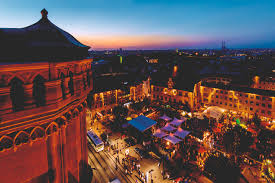
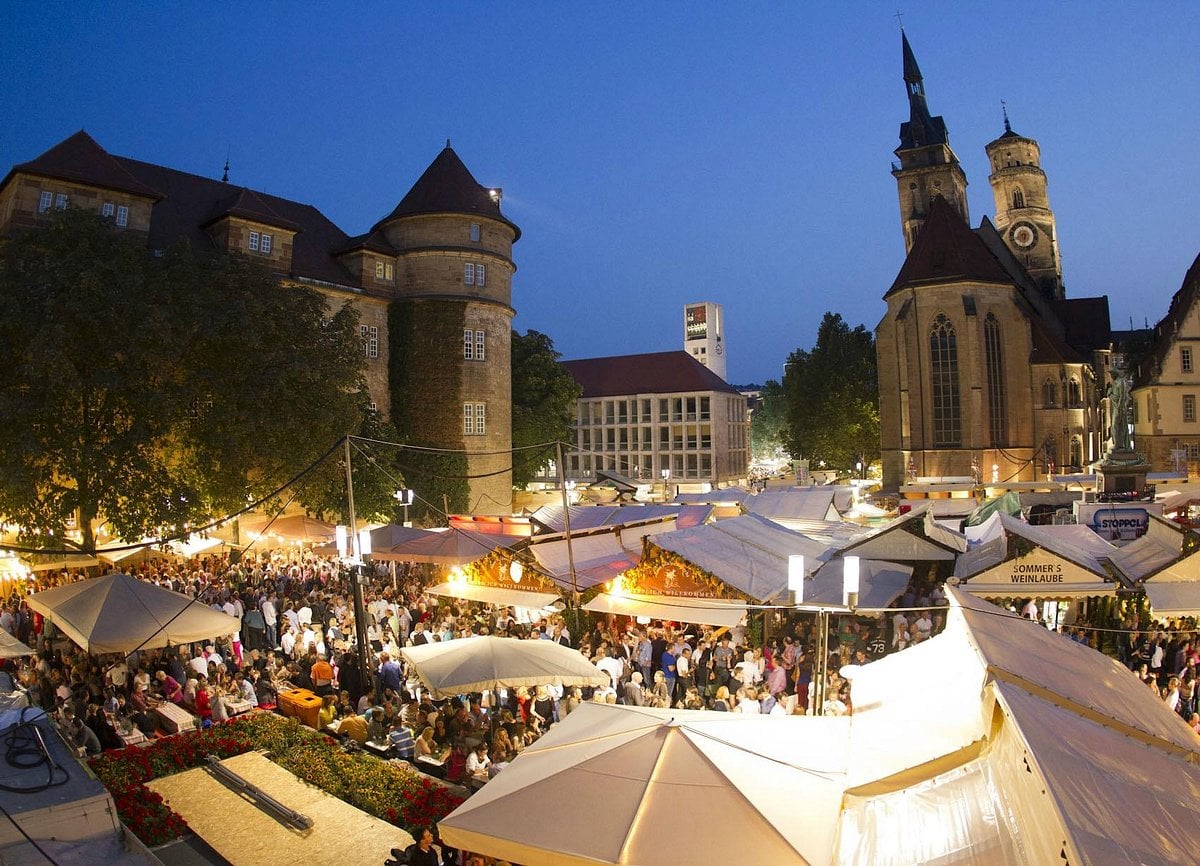
The Stuttgarter Weindorf transforms central Stuttgart into a Württemberg wine village for 12 days each late summer, with around 120 traditional wooden Lauben (wine huts) set up across the Marktplatz, Schillerplatz and Kirchstraße. The participating Wengerter (Württemberg wine growers) pour their Trollinger, Lemberger, Schwarzriesling, Riesling, Kerner and other regional varieties, with each Laube also serving Swabian specialities — Maultaschen, Spätzle, Schupfnudeln, Zwiebelrostbraten and the area's distinctive Saiten (Frankfurter sausages). Programme includes brass-band concerts, traditional Swabian dance performances, and the official wine-queen crowning. German wine festivals — weinfeste — are some of the country's most-attended summer events, with hundreds taking place across the wine regions between June and October. Programmes typically combine open-air tastings under marquees in the village square, tastings of the local Riesling, Pinot Noir (Spätburgunder) and other regional varieties, traditional brass-band music, food stalls offering Flammkuchen, Maultaschen, Schnitzel and the local sausage specialities, and a Weinkönigin (wine queen) ceremony at the heart of the programme. Many festivals trace their origins to the medieval guilds and have run continuously for over a century. The event is organised by Pro Stuttgart Verkehrsverein e.V, which sets the tone and direction of the programme each year.
Württemberg is Germany's fourth-largest wine region, centred on Stuttgart and the Neckar river valley. The region is unusually red-focused for Germany, with around two-thirds of plantings devoted to red varieties: Trollinger (Schiava in Italy) is the regional icon, alongside Lemberger (Blaufränkisch), Schwarzriesling (Pinot Meunier) and Spätburgunder. Whites include Riesling, Kerner and Müller-Thurgau. Württemberg wines are mostly drunk locally — the Württembergers consume more wine per capita than any other Germans — and the region offers a strong wine-tourism programme with Stuttgart's annual Weindorf one of Germany's biggest wine festivals.
The 2026 edition is scheduled for August 26 - September 6, 2026. Entry is free, with optional paid tasting passes or guided sessions available on site. Full programme, ticketing and updated information are published on the official site at https://www.stuttgarter-weindorf.de. Visitors are advised to check directly with the organiser for the latest schedule, as festival programmes are sometimes updated close to the event date.
Württemberg is reached via Stuttgart airport, with Stuttgart as the cultural centre (home to Mercedes-Benz, Porsche, the State Opera and the Stuttgarter Weindorf in late August/early September — one of Germany's largest wine festivals). Heilbronn, Esslingen, Ludwigsburg and the Remstal valley are the main wine-tourism areas. Swabian cuisine pairs the wines with Maultaschen (the Swabian ravioli), Spätzle (the regional egg noodle), Käsespätzle, Zwiebelrostbraten (onion-topped beef), the region's Linsen mit Spätzle und Saiten (lentils with sausage), and the famous Schwäbischer Kartoffelsalat with Trollinger lighter reds.