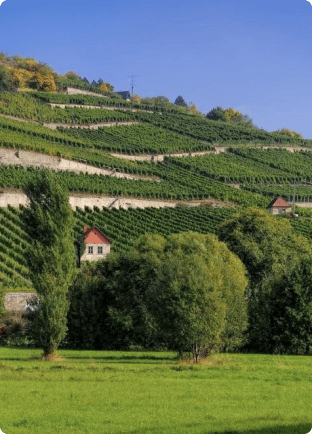
Sauternes, or Sauternais, is located south of the city of Bordeaux and is famous for its truly lovely tasting sweet wines under the Sauternes appellation, from grapes with the fungus Botrytis, although some wineries also make elegant Bordeaux’s dry whites, about 6% are dry white wines. The entire Sauternes appellation has 2,002 hectares of vines.
As in most of France, wines were introduced to Sauternes by the Romans and sweet wine dates back to the 17th century. It was also at that time when the Dutch introduced and planted white wine varieties and brought with them German wine making techniques. The wine produced in this area was known at the time as vins liquoreux, but it is not clear about the use of Botrytis or nobly rotted grapes at that time. Nobody knows when the process of making sweet wine from grapes attacked by Botrytis actually started taking place in Sauternes. To qualify as a Sauternes wine, it has to be sweet and have an alcohol level of at least 13%.
Sauternes wine region comprises five sub-regions: Barsac, Sauternes, Brommes, Fargues and Preignac, having 12 First-Growth classifications and with Chateau d’Yquem as being the only château to receive the First Great Growth classification. Common grapes are Sémillon, Sauvignon Blanc to 70% in a blend, thereafter 25% of Sémillon alone, and some amounts of Muscadelle and Sauvignon Gris. These are also the grape varieties that are allowed according to AOC law to grow in the Sauternes region.

Sauternes is part of the Bordeaux wines classification from 1855 and has three levels: Premier Cru Supérieur, Premier Cru and Second Cru.
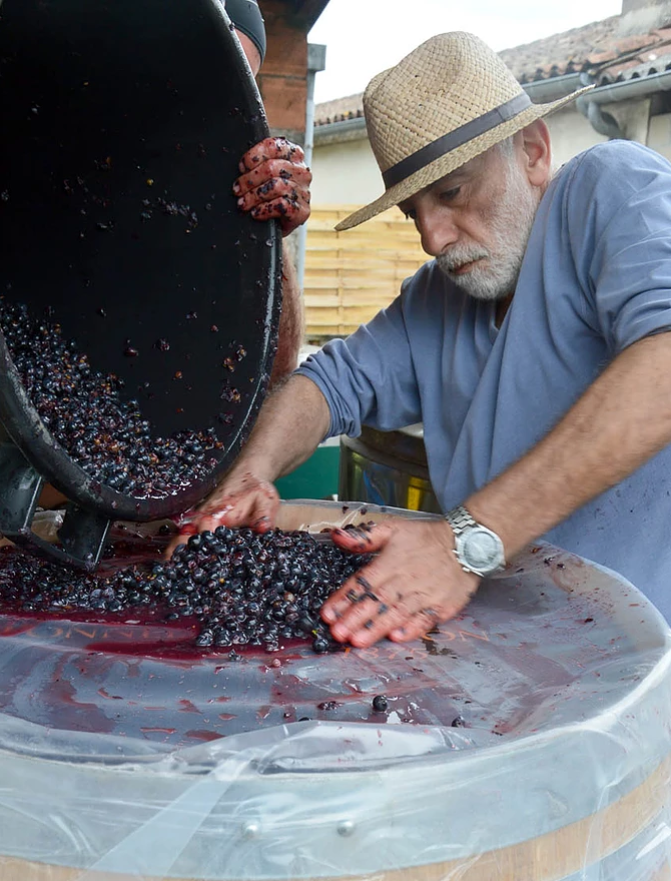
These sweet wines are extremely expensive to make. The production of these wines is relatively higher than most other wines, because the vines are pickes several times at each turn only to pick the grapes that have already been attacked by rot. Furthermore, the grapes are also susceptible to grey rot in rainy periods. However, because the rivers are different temperatures of the rivers Garonne and Ciron, they produce moisture and mist that helps in the formation of Noble rot.
The Sauternes wines are known for their sweetness an the wines have a concentration of sugars and acids and a fantastic balance of alcohol, acidity, and sweetness.
Fresh, elegant and aromatic. Their intense dark golden color gets even darker when these noble rotted wines age and then they also may get more flavourful, more caramel, brioche and also nougat. The fruity notes often come from apricots, coconut, mango, butterscotch, ginger, peaches, nuts and honey and toasted spices. These wines also have a long lasting finsh at the end. The wines are very age-worthy. From 5 up to 40 years is not unheard of.
Due to their high levels of sugar, Sauternes wines are not really considered dessert wines, still people try these wines with desserts and cakes, ice cream, fruits, soft, salty and blue cheeses and terrine, foie gras, spicy foods. In case of desserts, the wine should really e sweeter than what is on the plate. Other food pairings with Sauternes is fish like shellfish, lobster, crab or other seafood. Do try with spicy roasted chicken, veal or pork.
Château Les Remparts is located in the municipality of Preignac. The 10-acre estate is owned by Eli Ragimov and the winery is run by the oenologist and professional master taster Igor Solomon. Here, sustainable agricultural techniques are used, such as mechanical weed control and extremely few chemical pesticides. Here, it is all about low yields and excellent quality. Therefore, annual production is estimated to be approximately 30,000 bottles. The latest vintages have received 90+ grades from wine critics such as Neal Martin, Lisa Perrotti-Brown, Jancis Robinson, Chriss Kissack, Yves Beck, Tim Atkin and Andreas Larsson.