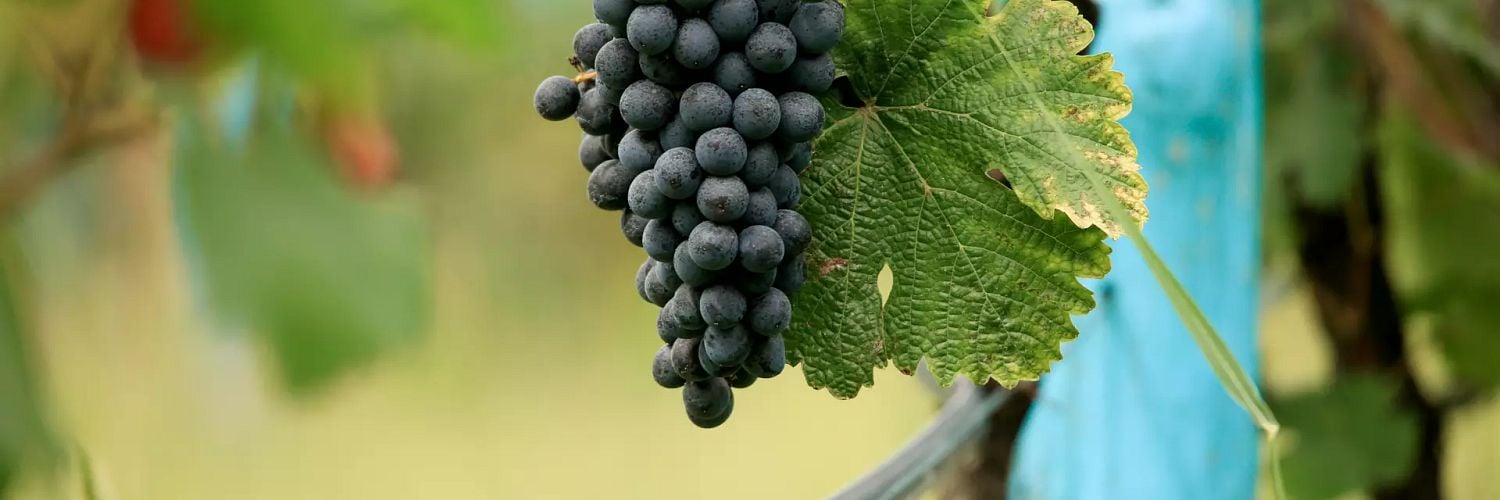

Saperavi is Georgia's signature red wine grape — deep, inky, full-bodied, and high in both tannin and acidity. It's the backbone of some of the world's oldest wines, made in a country often called the birthplace of winemaking.

This guide covers what Saperavi tastes like, its characteristics and styles, the dishes it pairs with best, and — because reading about it only gets you so far — where to taste it at the source in Georgia's Kakheti region.
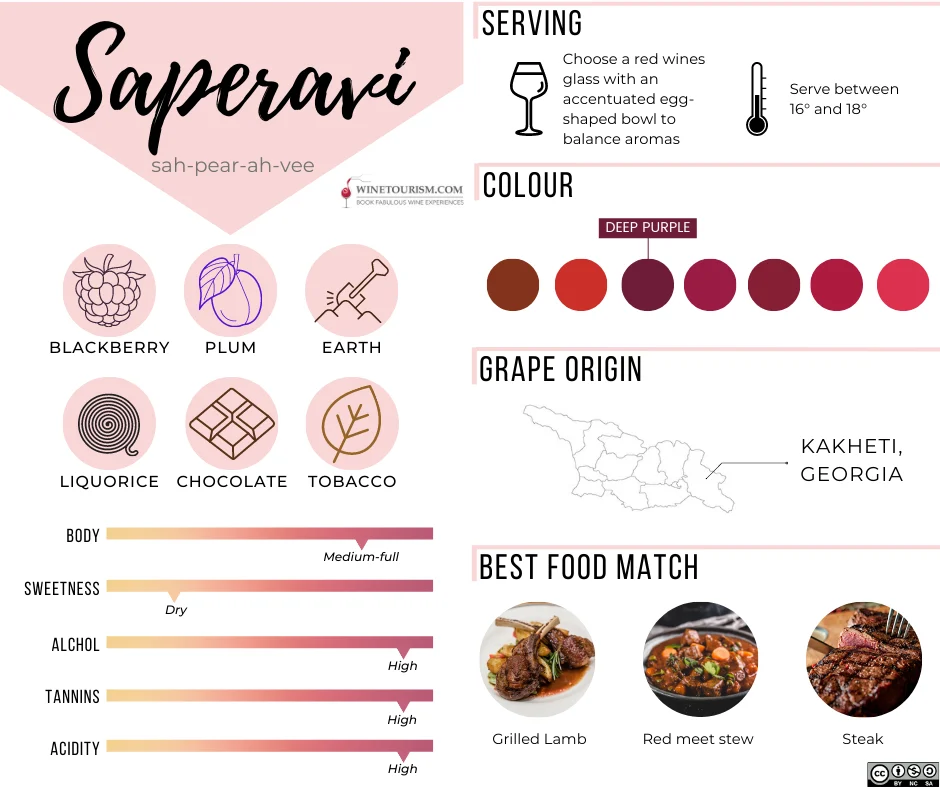
Saperavi Grape Infographic

Where Is Saperavi From?

Saperavi comes from Georgia, and its heartland is Kakheti, the country's main wine region in the far east. It is Georgia's most widely planted red grape and the foundation of a huge share of the country's red wine. The name itself means "dye" or "paint" — a nod to how darkly the grape stains everything it touches.

While Saperavi now grows in places as far apart as Australia, Moldova, Ukraine and the United States, its history and finest expressions still belong to Georgia, where it has been cultivated for thousands of years.

Saperavi Wine Characteristics: Taste, Color & Body

Saperavi is a teinturier grape — one of the rare varieties with both red skin and red flesh — which is why its wines are so intensely colored. It's full-bodied, firmly tannic, and bright with acidity, and it's hardy enough to survive harsh, cold winters that would damage most other vines.

Here's Saperavi at a glance:

CharacteristicSaperavi
ColorDeep, inky purple
BodyFull-bodied
SweetnessUsually dry (also made semi-sweet)
TanninsHigh
AcidityHigh
AlcoholAround 12–14%
Typical flavorsBlackberry, plum, earth, liquorice, dark chocolate, tobacco
Serving temperature16–18°C (60–65°F)

What Does Saperavi Taste Like?

Saperavi leads with dark fruit — ripe blackberry and plum — wrapped in firm tannins and a fresh streak of acidity that keeps it lively rather than heavy. Underneath the fruit you'll often find earthy, savory notes, a touch of liquorice and spice, and in older or oak-aged bottles, hints of dark chocolate and tobacco. It's bold and structured, closer in spirit to a Rhône Syrah or a Spanish Tempranillo than to a soft, easy-drinking red.

Saperavi Wine Styles: Dry, Semi-Sweet & Qvevri

Most Saperavi you'll meet is dry, but the grape is versatile: Georgia also produces semi-sweet versions (Kindzmarauli and Mukuzani are well-known appellations), along with rosé and even fortified styles.

The style worth seeking out is qvevri Saperavi. Qvevri are large clay vessels buried underground, where the wine ferments and ages at a naturally stable temperature. This ancient, UNESCO-recognized method gives the wine extra depth, texture and complexity, and it's part of what makes Georgian Saperavi distinct from versions made elsewhere. Thanks to its tannin and acidity, good Saperavi also ages beautifully, often improving for 10–15 years or more.

Saperavi Food Pairings

What To Pair With Saperavi

Saperavi's high tannins and bold flavor make it a natural partner for rich, savory food. The acidity cuts through fat, and the structure stands up to strong flavors that would overwhelm a lighter red.

Pair Saperavi with:

  • Grilled steak and other red meats
  • Roasted lamb
  • Hearty stews and braises
  • Georgian dishes like khinkali (meat dumplings) and mtsvadi (grilled skewers)
  • Aged, hard cheeses

Where to find the best Saperavi wines

Untitled Design (7)61f3d89b62dca

Kakheti

The best way to understand Saperavi is to drink it where it's grown. Most of Georgia's standout Saperavi comes from Kakheti, and these wineries are great places to taste it:

Maka - Kakheti

Frequently Asked Questions about Saperavi

Is Saperavi a sweet wine?

Most Saperavi is dry. Georgia also makes well-known semi-sweet styles (such as Kindzmarauli), but the classic version is a dry, full-bodied red.

Can Saperavi age well?

Yes. Its high tannin and acidity give it strong aging potential, and quality Saperavi can develop and improve for 10–15 years or more.

What does Saperavi taste like?

aperavi tastes of dark fruit — blackberry and plum — with firm tannins, high acidity, and earthy, spicy notes. Aged examples add dark chocolate and tobacco.

Where can I taste Saperavi wines?

Saperavi wines are available in wine stores and online. While Georgian Saperavi might be a bit harder to find, the best way to experience it is to visit Georgian wine regions, especially Kakheti. 

How should Saperavi be served?

Serve Saperavi slightly below room temperature, around 16–18°C (60–65°F). Decanting helps soften the tannins and open up the aromas.

Saperavi vs Cabernet Sauvignon — how do they compare?

Both are bold, tannic, age-worthy reds, but Saperavi is typically higher in acidity and has a darker color and more savory, earthy character, whereas Cabernet leans toward cassis and cedar.

Related articles

Tempranillo Around the World: Iconic Regions Every Wine Traveller Should Explore

Tempranillo Around the World: Iconic Regions Every Wine Traveller Should Explore

If there’s a red wine that embodies Spain, it’s Tempranillo — the noble grape behind many of the country’s most revered reds. Its name literally comes from temprano (“early”), because this variety ripens sooner than most in Iberian vineyards. Tempranillo forms the backbone of iconic Spanish...

Syrah Wine Regions and Wineries to Visit

Syrah Wine Regions and Wineries to Visit

Syrah — Bold, Complex, and Globally Celebrated Syrah — also known as Shiraz in many New World regions — is a red wine grape variety that’s as expressive as it is versatile. From the rustic hills of France’s Rhône Valley to the sun-baked vineyards of Australia and the dynamic landscapes of...

Merlot Wine: Discover the Best Regions and Wineries to Visit

Merlot Wine: Discover the Best Regions and Wineries to Visit

Introduction: Merlot — A Journey Worth Taking Merlot isn’t just one of the world’s most widely planted grape varieties; it’s a passport to some of the most inviting wine landscapes across the globe. Originating in Bordeaux — where it often plays a leading role in the region’s rich blends — Merlot...

Cabernet Sauvignon: From Bordeaux to Napa

Cabernet Sauvignon: From Bordeaux to Napa

Bold, iconic, and globally adored — Cabernet Sauvignon isn’t just a grape variety, it’s a reason to plan a trip. From the historic châteaux of Bordeaux to the sun-drenched estates of Napa Valley and the striking landscapes of Stellenbosch, Cabernet has found a home in some of the world’s most...

Saperavi Wine Grape: From Kakheti, Georgia to the World’s Vineyards

Saperavi Wine Grape: From Kakheti, Georgia to the World’s Vineyards

From Kakheti to the World: The Story of Saperavi Deep, dark, and unapologetically bold, Saperavi is more than just Georgia’s most iconic red grape—it is a living link to one of the world’s oldest wine cultures. Born in the Caucasus and shaped by thousands of years of winemaking tradition,...

Learn About Moscato Wine and Its 5 Primary Styles

Learn About Moscato Wine and Its 5 Primary Styles

Moscato wine is one of the most versatile and beloved wines, known for its sweet, fruity flavours and aromatic appeal. Whether you're a seasoned wine enthusiast or a casual drinker, Moscato has something to offer everyone. From its floral notes to its light bubbles, this Italian wine comes in...

Pinotage

Pinotage

Pinotage, a distinctive South African grape variety, is a captivating fusion of Pinot Noir and Cinsault. Developed in the early 20th century, it thrives in the nation's diverse terroirs. Known for its inky hue and complex flavors, Pinotage offers a medley of red and dark fruits—cherry, plum, and...

Nero d'Avola

Nero d'Avola

Nero d'Avola, a prominent Sicilian grape variety, yields wines brimming with rich character. Native to the sun-drenched island, this red grape produces wines with deep color, robust body, and a medley of dark fruit flavors such as plum, black cherry, and blackberry. Often referred to as "Sicily's...