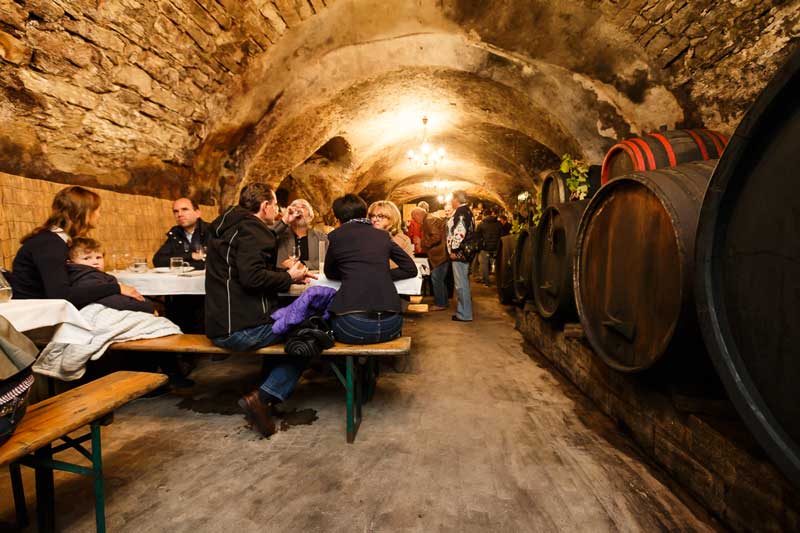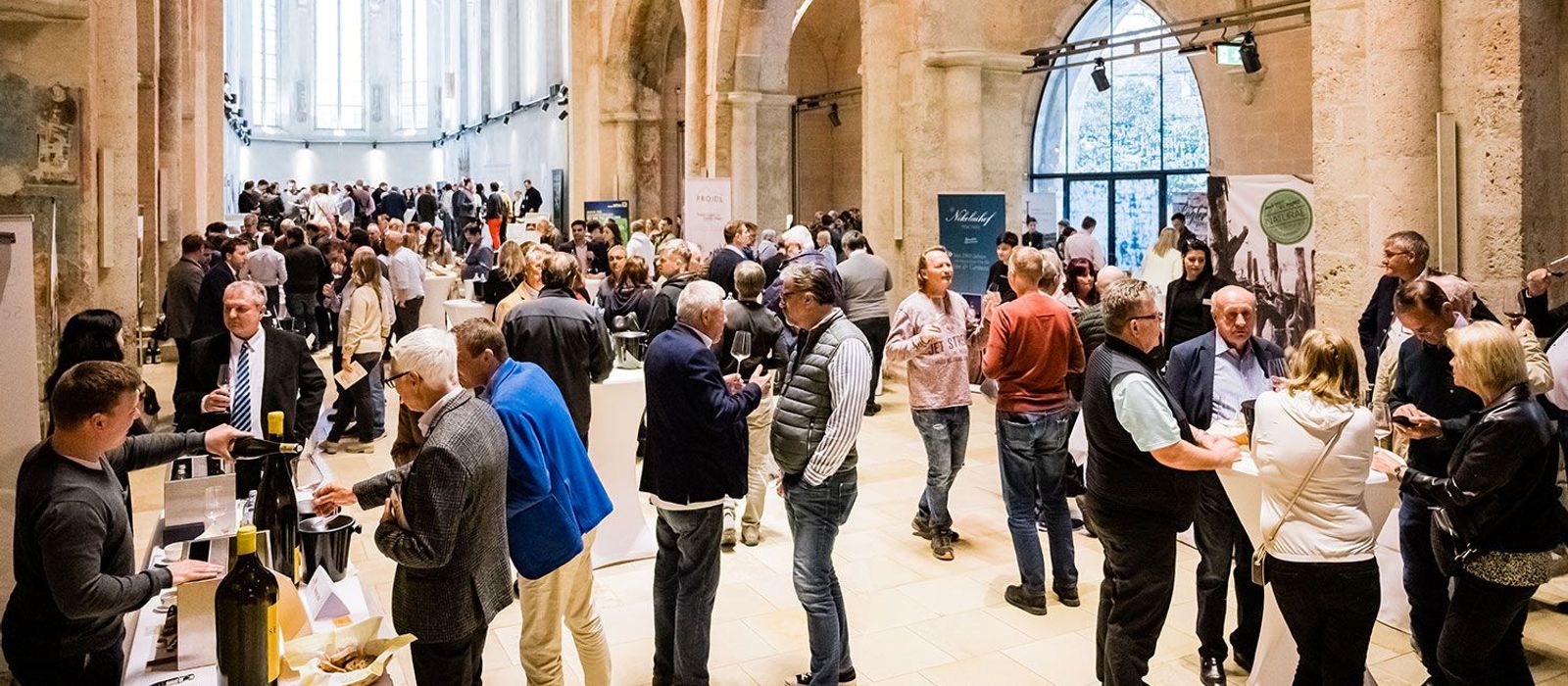
Wachauer Weinfrühling (Wachau Wine Spring) is one of the wine festivals that anchors the Lower Austria calendar, drawing both local visitors and international wine travellers each year. It is held at various wineries across Wachau (Mautern in Rossatz-Arnsdorf), in the heart of one of Austria's most distinctive wine areas. It is an annual event with an established local audience and a consistent place in the regional calendar.
~100 Vinea Wachau wineries participate; wristband €40 includes tastings + free use of Wachau buses, Wachaubahn railway and Danube ferries; first presentation of new Smaragd wines. Austrian wine release events showcase the new vintages from the country's tightly drawn DAC (Districtus Austriae Controllatus) appellations. Programmes combine producer tastings of Grüner Veltliner, Riesling, Blaufränkisch, Zweigelt, Sauvignon Blanc and the region's other key varieties, masterclasses on the vintage and on the DAC system, sommelier-led comparisons of single-vineyard Rieden bottlings, and food pairings with Austrian specialities. Trade and press attendance is strong, but most events include public days during the run of the programme for wine enthusiasts willing to register in advance. The event is organised by Vinea Wachau Nobilis Districtus, which sets the tone and direction of the programme each year.
Lower Austria (Niederösterreich) is Austria's largest wine region, accounting for around 60% of national vineyard area, and home to the country's most internationally celebrated whites. The region divides into eight distinct DAC sub-zones along the Danube and its tributaries: Wachau (the small but world-famous river-gorge zone, with terraced vineyards on Urgestein primary rock), Kremstal and Kamptal (producing some of Austria's finest Grüner Veltliner and Riesling on loess and Urgestein), Traisental, Wagram, Weinviertel (Austria's largest sub-region, defined by peppery Grüner Veltliner), Thermenregion (the southernmost, with indigenous Zierfandler and Rotgipfler whites) and Carnuntum (red-focused, with Zweigelt and Blaufränkisch). Grüner Veltliner is the regional flagship grape, accounting for around half of all plantings.
The 2026 edition is scheduled for 2-3 May 2026. Cost details are best confirmed directly with the organiser ahead of travel. Full programme, ticketing and updated information are published on the official site at https://www.vinea-wachau.at/en/activities/wachau-wine-spring. Visitors are advised to check directly with the organiser for the latest schedule, as festival programmes are sometimes updated close to the event date.
Lower Austria is reached most easily via Vienna airport (the entire wine region sits within 1-2 hours of the capital). Krems and Dürnstein in the Wachau, Langenlois in the Kamptal, and Mistelbach in the Weinviertel are the main wine-tourism bases. The Wachau Danube gorge between Melk and Krems is itself a UNESCO World Heritage cultural landscape. Lower Austrian cuisine pairs the wines with Wiener Schnitzel (Austria's national dish, originating in this region), Tafelspitz (boiled beef), Marillenknödel (apricot dumplings, especially with Wachau apricots), Bauernschmaus, and the area's strong Alpine cheese traditions. The Wachau apricot harvest in late July is itself a major regional event.