
A Guide to Brazilian Wines
Every wine connoisseur desires unique experiences. For those hoping to find the labels that will amaze the globe today, Brazilian wines are the greatest bet. Bottles that give the lightness, freshness, and energetic spirit that is distinctive of Brazil, but with quality that has been tested by critics and in international competitions.
This upbeat and joyous attitude is exemplified notably by sparkling wines, a product in which the country has excelled for more than a century. Brazilian red wines stand out as an island of grace and alcoholic moderation amid a sea of robust South American wines. This identity is a legacy of European immigrants who brought viticulture to Brazil and established the country's southern region as a grape growing benchmark.
Brazilians, on the other hand, are spreading wine culture across the country, delivering opportunities for all consumers and arousing global interest.
Let yourself be surprised: Brazilian Wine
Climate, soil, topography, technique, and historical plurality provide wine, like the locals, a variety of accents. All of the country's wine-producing regions share a common characteristic: quality. Beginning in the south, every wine aficionado will be introduced to Brazilian wine: Rio Grande do Sul, Brazil's southernmost state, borders Argentina and Uruguay and produces 90% of the country's wine. Brazilian wines are distinguished by elegant fruity aromas and a moderate alcohol content, which may be found not only in reds but also in award-winning sparkling wines.

One of the elements that led to the development of the country's first Geographical Indication in 2002 was the exceptional quality of Merlot in the country, particularly in Serra Gaúcha. This grape is the only one used in regionally permitted red varieties, hence the wines made in the Vale dos Vinhedos Appellation of Origin (DO) are largely based on it. In the case of mixes, it accounts for at least 60% of each bottle. Brazilian Merlots are pleasant, authentic, and surprising, and they belong in the cellar of any wine enthusiast, novice or experienced.
Sparkling wine has become an important part of Brazil's winemaking identity, and it is now produced in a range of styles across the country, from north to south. The Serra Gaúcha region, where an Italian immigrant in what is now the city of Garibaldi created the first sparkling wine in the early 1800s, served as a testing ground for this national fascination.
Wineries that blend conventional techniques with cutting-edge technology produce dry and semi-dry sparkling wines. The mix of varied grape maturity periods, grape varieties used, winemaking styles (white, rosé, and even red), and geographical diversity means that Brazil may provide different product profiles in the segment, which is currently the world's fastest rising consumption. The lively and delicious taste profile of Brazilian Muscats shines through here. Pinot Noir, Chardonnay, and Italian Riesling are currently the most popular grapes in the country's sparkling wines, effectively forming a uniquely Brazilian ensemble. Despite the fact that the benefits of combining the first two are well-known due to French history, the addition of Italian Riesling (also known as Welschriesling) adds its own characteristics while increasing acidity and freshness of Brazilian wine.
Wine Regions of Brazil
Viticulture in Brazil is mostly concentrated in six regions. Each one developed its own style, focusing on its most popular wines while also investing in new crops, techniques, and products.
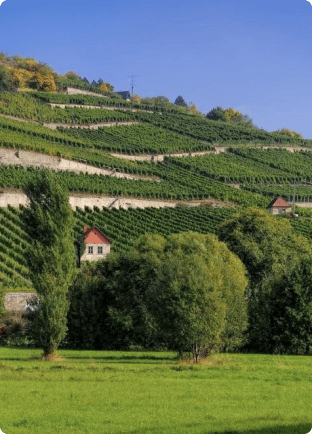
Serra Gaúcha
Anyone who wants to learn more about Brazilian wine should begin here. It is the birthplace of the majority of traditional vineyards and the hub of the country's wine tourism, accounting for 80% production. Because of the basaltic soil and mountain topography, which are synonymous with minerality and superb drainage, the sparkling wines in this region have reached a high level of excellence. With an average height of 600 meters, it provides outstanding adaptability to the early harvest of grapes such as Chardonnay and Pinot Noir.
Red: Merlot, Pinot Noir, Tannat, Cabernet Franc, Cabernet Sauvignon
White: Chardonnay. Italian Riesling, Moscato, Glera
Campos de Cima da Serra
The region's potential for fruit growth has long been noted, since it is a major producer of peaches and apples. Grape cultivation began a little more than ten years ago, but it quickly gained popularity as a result of corporate investments in vines and wineries. Sauvignon Blanc and Pinot Noir thrive here, but remarkable results with Viognier and Merlot demonstrate that local enterprises' commitment is paying off.
White: Sauvignon Blanc, Chardonnay, Viognier, Gewürztraminer
Red: Pinot Noir, Merlot, Cabernet Sauvignon, Petit Verdot

Serra do Sudeste
In the 1980s, when the Serra Gaúcha wineries realized their vineyards were too small for the promise of Brazilian wine, they sought out the Serra do Sudeste areas for growth. The research resulted in the discovery of what is today recognized as one of the country's most promising wine regions. Keeping in mind that Serra Gaúcha still processes the majority of the produce, this does not weaken the region's characteristics, which include fine and clear aromas in white wines and structured red wines. The grapes' overall health is aided by the low-fertility granite soil and low-lying slopes that allow the wind to blow freely.
White wines: Chardonnay, Moscato, Gewürztraminer, Malvasia de Cândia
Red wines: Cabernet Franc, Merlot, Cabernet Sauvignon, Pinot Noir
Campanha
Campanha's position is comparable to that of other well-known producing locations in Chile, Argentina, South Africa, and Australia. This terroir was identified in the 1970s when multinational firms in the field began to seek and migrate to Brazil in order to grow their market. Some of these vineyards are still in operation today, putting the Campanha region in an unusual position: it is home to historic grapes while still being the focal point of modern Brazilian wine investments.
The sandy soil with good drainage but low fertility, the contrast between hot summers and cold winters, and the little rainfall throughout the harvest period all stimulate the corporations' interest. Gentle slopes allow for mechanization and good terroir adaptation of international varieties.
White: Sauvignon Blanc, Chardonnay, Viognier, Gewürztraminer
Red: Pinot Noir, Merlot, Cabernet Sauvignon, Petit Verdot
Planalto Catarinense
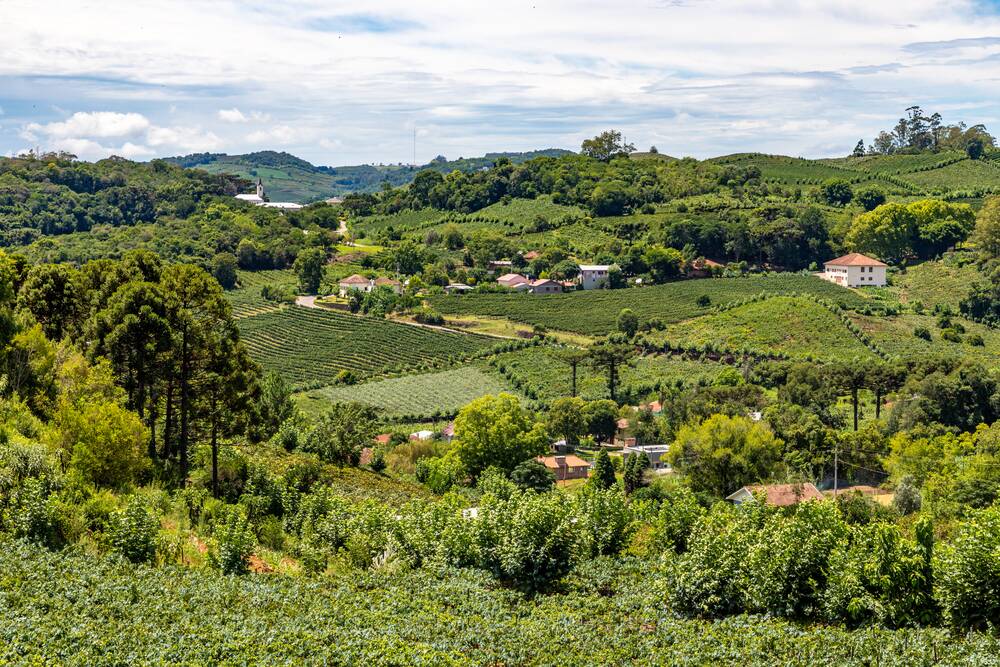
Wines from vineyards in the harshest climates and highest altitudes in Brazil have delicate tastes and a youthful freshness. Under these conditions, white wines and sparkling wines garner the most attention, however superb red wines can still be discovered. The land is divided into three zones: So Joaquim, Caçador, and Campos Novos, each with rocky and acidic soils. Low temperatures – the lowest in all of Brazil, with regular snowfalls in the winter — slow the grape's development cycle, and while other regions are closing up their harvests, Planalto Catarinense is just getting started. This extended cycle, combined with optimal sun exposure, results in optimal fruit ripening.
White: Sauvignon Blanc, Chardonnay
Red: Cabernet Sauvignon, Merlot, Pinot Noir, Syrah, Tempranillo
Vale do São Francisco
This region offers wine lovers a one-of-a-kind experience by offering all four climatic seasons at the same time.
The key is a combination of the semi-arid climate, which naturally induces the vines to produce all year, and a modern irrigation system that regulates the various stages of the plant. The system is based on the region's advantageous location, which includes irrigation from the São Francisco River. Because there is no winter, the vine hibernates due to a shortage of water. As a result, wineries establish harvesting schedules in their vineyards, with each plant providing two harvests per year
Among the red grapes, Syrah has excellently adapted to this system, as well as Moscato, which concentrates sugar owing to the hot environment and produces delightful and sparkling wines (dry and sweet).
White: Moscato, Chardonnay, Chenin Blanc
Red: Syrah, Cabernet Sauvignon, Alicante Bouschet
3000 Awards
Brazilian winemakers now get international honors for red wines made from Ca Berne Sauvignon, Merlot, Tannat, and Pinot Noir, as well as white wines made from Chardonnay, Muscat, and Italian Riesling (more than 3,000 in total). Today, the Brazilian wine industry consists of approximately 1100 small-scaled wineries. Thousands of enthusiastic and dedicated winegrowers and oenologists are on the lookout for new terroirs and wine styles. The total vineyard area inhabited by table and technical types is now approaching 83 000 hectares, and it gradually continues to grow.
Wineries to visit in Brazil
Wineries in Serra Gaúcha
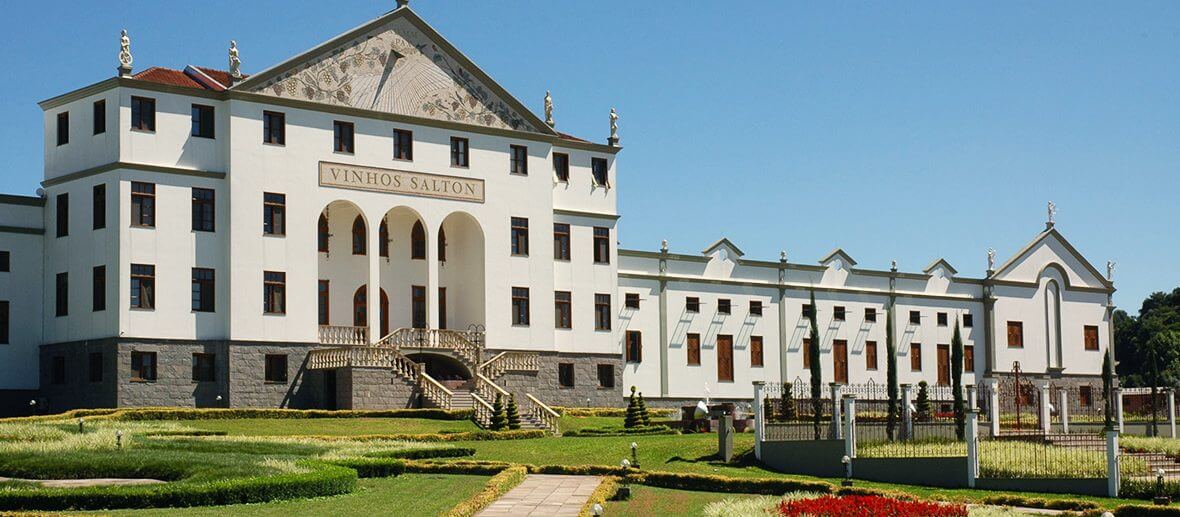
Família Salton
Surrounded by breathtaking gardens and greenery, Família Salton Winery has its root grounded deep in the charming region of Bento Gonçalves, in Vale das Rio de Antas. The winery produces premium wines and offers an extensive range of tourist facilities, such as exhibitions in the garden and aerial walkways.
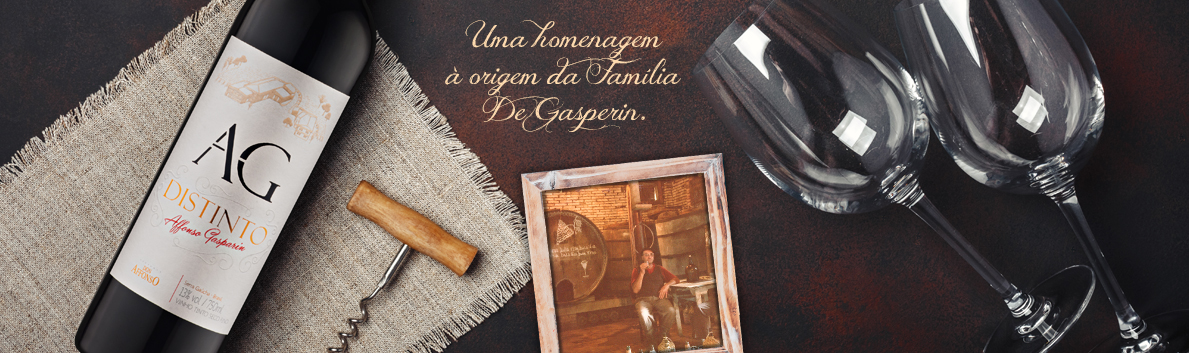
Vinícola Don Affonso
Viti Vínícola Don Affonso is located in the traditional wine-producing region of southern Brazil called the Serra Gaúcha, in the city of Caxias do Sul, State of Rio Grande do Sul. With its own headquarters and modern facilities, it combines historical tradition with the most modern technologies of cultivation and winemaking, always respecting the principles of nature and sustainable production.

Lidio Carraro Boutique Winery
Moved by the idea of sharing a vibrant life in every bottle and creating a wine with integrity, Lidio Carraro Wines was born. It is a boutique winery on the family property of Italian immigrant descendants dedicated to viticulture for more than five generations in Brazil. Their winemaking methods consist of minimal intervention to maximize the grape’s natural expression and terroir origin.