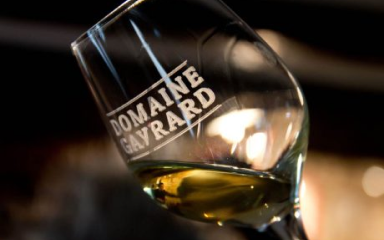
Rosso di Cerignola wine region is an exciting wine-growing district producing rare red wine. Although the size of the region is large, the region produces limited high-quality wines that are very rare. Annually, only 100 hectolitres of wines are released in the market which barely leaves its territory and is very difficult to find in the international marketplace. The regulator requires at least 55% of Uva di Troia grapes and permits Negroamaro, Montepulciano, Barbera, Sangiovese, Malbec, and Trebbiano Toscano as accessory grapes. Although viticulture is done on a large scale, its production is just a fraction compared to olive production.
Check out the best wine tastings and tours in Rosso di Cerignola!
Where is the Rosso di Cerignola wine region?
Rosso di Cerignola wine region is located in the northern area of Puglia in the province of Foggia. The region is centered around the city of Cerignola including communes of Cerignola, Stornara, Stornarella, and part of Ascoli Satriano in the province of Foggia. This spectacular region is around 37km southeast of Foggia town, 100km west of Bari, and 130km northwest of Altamura. The region extends along the homonymous river to the Tavoliere. The region is bounded by Rosso de Barletta DOC from the east and Orta Nova from the north and west. The region is just 20km from the Adriatic coast to the east.
History of the Rosso di Cerignola wine region
The town of Cerignola was built on the site of Furfane, an ancient Roman station located at the intersection of the route between Cenasium, Herdoniae, and Traiana. The region was the major commercial hub during Roman times. The region was annexed by the Kingdom of Naples and was handed over to the Caracciolo family in 1418. The fief was passed to the Pignatelli family in the 17th century. The city of Cergnola was rebuilt in 1731 which was severely damaged by the earthquake. Rosso di Cerignola wine region was created in June 1974.
The terroir and geography of the Rosso di Cerignola wine region
The area is distinguished by the highland in southeast Italy that borders the Puglia plains. Mediterranean weather is hot and dry, especially close to the coast where the sun beats down on the land, where Rosso di Cerignola DOC is produced. Around 20 degrees Celsius on average per year, which is 4.8% warmer than the national average for Italy. The majority of the soil is composed of limestone, which is clearly discernible on satellite pictures of the area as a hard, white splotch. The majority of the sunshine is reflected by these white soils, echoing in the vine canopy and assisting in the ripening of the grapes. The soil, sometimes known as albedo, is extremely similar to that of Jerez in southern Spain.
Popular grape varieties from the Rosso di Cerignola wine region
Uva di Troia grape is the key grape variety in the Rosso di Cerignola wine region. The wines are often produced with red wine blends including grapes like Negroamaro, Sangiovese, Montepulciano, Malbec, Trebbiano Toscana, and Barbera. Rosso wines require at least 55% of Uva di Troia grapes, 15-30% of Negroamaro, and a maximum of 15% of Barbera, Malbec, Montepulciano, Sangiovese, and Trebbiano Toscano. Reserva wines are aged in an Oak barrel for a minimum of 2 years.
Food to pair with Rosso di Cerignola wine
Pecorino cheese
Pecorino cheese is a hard, aged Italian cheese made from sheep's milk. It has a sharp and salty flavor that makes it a great addition to many dishes. Pecorino cheese has been around for centuries and is still popular today. It can be used in many ways, from grating over salads to melting on top of pizzas. Pecorino cheese is also used to make some of the most famous Italian dishes, such as pasta alla carbonara or cacio e pepe. Whether you like it in its raw form or cooked into your favorite dish, Pecorino cheese is sure to add flavor and texture to any meal!
Stewed beef
Beef stew is a classic comfort food that has been enjoyed for generations. It's a hearty dish made with chunks of beef, vegetables, and a flavorful broth. It's a great way to make use of leftovers, and it can be cooked in one pot or slow cooker for easy preparation. Beef stew is perfect for cold winter days, or as an easy weeknight dinner. With its savory flavor and tender ingredients, it's sure to become a family favorite!
Braised meat
Beef braising is a popular cooking technique that has been used for centuries. It involves slowly simmering beef in liquid, usually a broth or stock, until it is tender and juicy. The result is a flavorful and succulent dish that can be served as an entrée or as part of a larger meal. Braised beef can be cooked in the oven, on the stovetop, or even in a slow cooker. It's an excellent way to make use of tougher cuts of meat while still creating something delicious. With just a few simple ingredients and some patience, you can create an amazing dinner that will impress your family and friends! Beef braised is one of the most popular dishes in many cultures around the world. Pair this with the exciting red wines from Rosso di Cerignola wine region.
Places to visit in the Rosso di Cerignola wine region
Piano delle Fosse granarie
Located in the southern area of Cerignola town, Piano delle Posse granarie demonstrates the ancient way of storing wheat in the Capitanata region. It is a flat land with several pits to store wheat. There are around 600 pits in 26,000 sq meters. The practice has been continuing since Roman times and there are some pits dating back to the Roman period. Most of the pits here were built around the 15th century. The pits consist of bell-shaped white-washed holes so the wheat doesn't contact the soil. The outer layer of the pit is made of local stone and the lid is made from wooden beams.
Castel del Monte
Southeast Italy's Apulia area is home to the 13th-century fortress "Castel del Monte," which is built on a hill at 540 meters above sea level and provides views over the town of Andria. In the 13th century, Frederick II, a holy Roman emperor, constructed the Castel del Monte as a fortification and fortress to rule the kingdom of Sicily on territory he inherited from his mother. Due to its octagonal shape and setting, the castle is distinctive. Instead of being a military fortress, the major goal of the castle was to encourage people to create art and architecture. This beautiful location is one of Puglia's most visited cultural attractions.
Cathedral of St. Peter the Apostle
Under the direction of Alvino and Giuseppe Pisanti, work on this stunning church started in 1873 and was finished in 1876. In the center of Cerignola in Apulia's Piazza Duomo is where you'll find this Romanesque church. On November 23, 1980, there was an earthquake that caused damage to the church, which was later repaired and reopened to the public.
Check out the best wineries in Rosso di Cerignola!
Frequently asked questions about Rosso di Cerignola
The Foggia province in northern Apulia is home to the Rosso di Cerignola wine region. The communes of Cerignola, Stornara, Stornarella, and a portion of Ascoli Satriano in the province of Foggia make up the area, which is centered on the city of Cerignola. This breathtaking area is located about 37 kilometers southeast of Foggia, 100 kilometers west of Bari, and 130 kilometers northwest of Altamura. The area stretches to the Tavoliere along the same river. Rosso de Barletta DOC and Orta Nova form the eastern and northern and western boundaries of the area, respectively. The eastern Adriatic coast is only 20 kilometers away from the area.
Cantine Paradiso, 1954 Primitivo Puglia IGP
The main grape variety in the Rosso di Cerignola wine region is the Uva di Troia vine. Red wine mixes with grapes like Negroamaro, Sangiovese, Montepulciano, Malbec, Trebbiano Toscana, and Barbera are frequently used to make wines. A minimum of 55% Uva di Troia grapes, 15–30% Negroamaro, and a maximum of 15% each of Barbera, Malbec, Montepulciano, Sangiovese, and Trebbiano Toscano are needed to produce rosé wines. Reserva wines spend at least two years in oak barrels aging.
Rosso di Cerignola is a unique full-bodied red wine that has a deep ruby red color which changes to a brick color with aging. The aromas are fabulous with notes of ripe red berries, spices, and balsamic vinegar. The wine develops rich flavor with age and requires at least 4 years to have a dense and complex taste profile.