
Gratis
·
4.7
·
18 reseñas
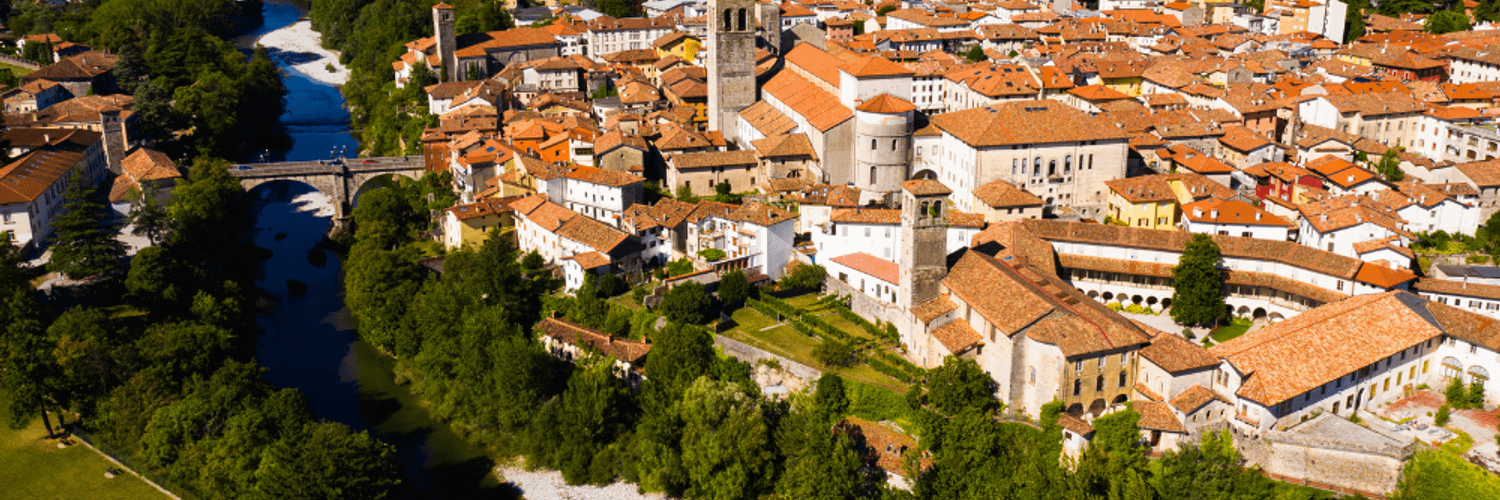
Descubra qué hace que los vinos de Colli Orientali del Friuli en Friuli, Italia, sean tan atractivos
Located in the far northeastern corner of Italy, Friuli Colli Orientali (Colli Orientali del Friuli) is one of the most significant DOC titles in Friuli-Venezia Giulia. Its main cultural and oenological center is Cividale del Friuli, a UNESCO World Heritage medieval town. Friuli's hills are home to some of Northern Italy’s most prestigious vineyards and distinctive grape varieties. It is an astonishing land that tells its story through its unique wines.
Check out the best wine tastings and tours in Colli Orientali del Friuli Wine Region

The land of Colli Orientali del Friuli was occupied by the Celts several centuries ago, and it was them who probably began to appreciate and grow vines. Around 180 BC, when the Romans established the first colony in the countryside around Aquileia, wines were actively produced.
A century later, in 53 BC, Julius Caesar established the Forum Julii (Friuli), and his legionaries began to develop viticulture on the sunny slopes of the Colli Orientali. Over the following centuries, winemaking spread around the Cividale del Friuli, but it saw hard times in the Middle Ages.
After the Romans, the eastern part of Friuli became part of the Serenissima Republic of Venice and became part of Italy only in 1870. In the 1970s, white wines from Friuli started to receive international awareness because of the innovations in winemaking techniques that made it possible for local winemakers to produce more vibrant wines. This change affected the progress of viticulture in the region that it never stopped even today. The cultivation and the production of famous, high-quality wines represent a heritage for this area, which has deep roots in the winemaking of the Colli Orientali of Friuli.
The Friuli Colli Orientali DOC area stretches from the Friuli-Venezia Giulia region, along the Slovenian border in the east, to the southern mountains close to Corno di Rosazzo and Buttrio.
The Colli Orientali mountains are the outcome of millions of years of alpine tectonics that created complex, stratified, mineral-rich soils. The Colli Orientali appellation sub-region has very detailed geomorphology known as Ponca in the Friulano dialect. Ponca is a rock type created by repeated sedimentary processes, resulting in layers of marl and sandstone.
Vineyards of Colli Orientali del Friuli enjoy increased altitude and are terraced on rolling hills, which is perfect for high-quality viticulture. Also, the area is surrounded by the Julian Pre-Alps that protect the vineyards from the cold winds of the north. Vineyards that are planted higher have lower yields and produce higher-quality wines.
Thanks to its terroir and location, this land is quite suitable for grape growing. It is approachable to the southern mild sea breeze of the Adriatic Sea. As a result, Colli Orientali del Friuli wines, especially whites, have become famous worldwide.
Top Friuli Colli Orientali subzones:
Thanks to the five subzones of Friuli Colli Orientali, there are more than 30 distinct DOC(G) wines, most of them also available as barrel-aged types, requiring 2 years of aging. Friuli Colli Orientali has four interesting DOCG wines, Colli Orientali del Friuli Picolit, Rosazzo, Ramandolo and Lison.
Friuli Colli Orientali delivers basically twice as much white wine as red wine. Although white wine is believed to be the best in this wine region, some red wines can impress wine lovers just as much. Red wines account for around 35% of the region's production and are produced in the towns of Cividale del Friuli, Buttrio, and Manzano.
Because of this proportion, white grape Friulano accounts for nearly a third of the region's vineyard plantings. Friulano boasts a combination of rich texture, full-body, and delicate flavors. Wines from this grape variety carry a rounded, almost fatty mouthfeel. Other essential white wine varieties include Sauvignon blanc, Pinot grigio, Verduzzo, Pinot bianco and Ribolla Gialla. The Picolit grape is the main grape for sweet wines.
As for the red wines, Merlot does not give up its leadership. Other grape varieties include Cabernet Sauvignon, Pinot noir, Pignolo, Refosco, Refosco dal Peduncolo Rosso and Schioppettino. Most of the red wines deliver incredible blackberry fruit intensity that is underpinned by a strong line of minerality.
Frico is a national dish from the Italian region of Carnia. It is made with a local treat known as Montasio cheese. There are two versions of Frico, the first is frico friabile and the second is frico morbido. Both of them are made with cheese but the first one is crunchy, while the second one is softer.

Frico was invented in the 15th century as a creative way to use leftovers from cheese production. Like with numerous popular traditional recipes, we can come across a lot of varieties enriched with pancetta, mushrooms, or tomatoes.
The aging time of the cheese can change the whole flavor of the dish. Frico made with fresco and mezzano is not as extreme as the one prepared with stravecchio. It can be enjoyed sliced and paired with a glass of Friuli red wine.
Gnocchi di prugne are potato dumplings covered with an assortment of breadcrumbs, sugar, and cinnamon. They are very popular in the Italian wine region of Colli Orientali del Friuli.
Over time, some part of Italy was governed by the Austro-Hungarian Empire, so it is no wonder that this food can also be seen in the cuisines of other European countries. The interesting fact is that in all these countries, Gnocchi di prugne are considered to be desserts but in Italy, they are often served at the beginning of a meal. We recommend you try this dish with white wine from Friuli.
Goulash Triestino originates from Trieste, the capital of Friuli-Venezia Giulia. This dish is made with Hungarian paprika, among other ingredients. Other essential ingredients include onions, beef, Hungarian hot paprika, olive oil, tomatoes or tomato paste, and flour. In addition, they use herbs such as rosemary, thyme, marjoram or oregano, and bay leaves.
Once prepared, the dish is served with polenta, gnocchi, or potatoes. It is always a good idea to taste it with local white wines.
Cividale’s history begins in 50 BC, when the area was inhabited by the Celts. However, it became an official city when Julius Caesar named it Forum Julii. Nowadays as a Unesco World Heritage Site, Cividale del Friuli has a bunch of history and art to offer its visitors together with some amazing classic food and unique white wines.
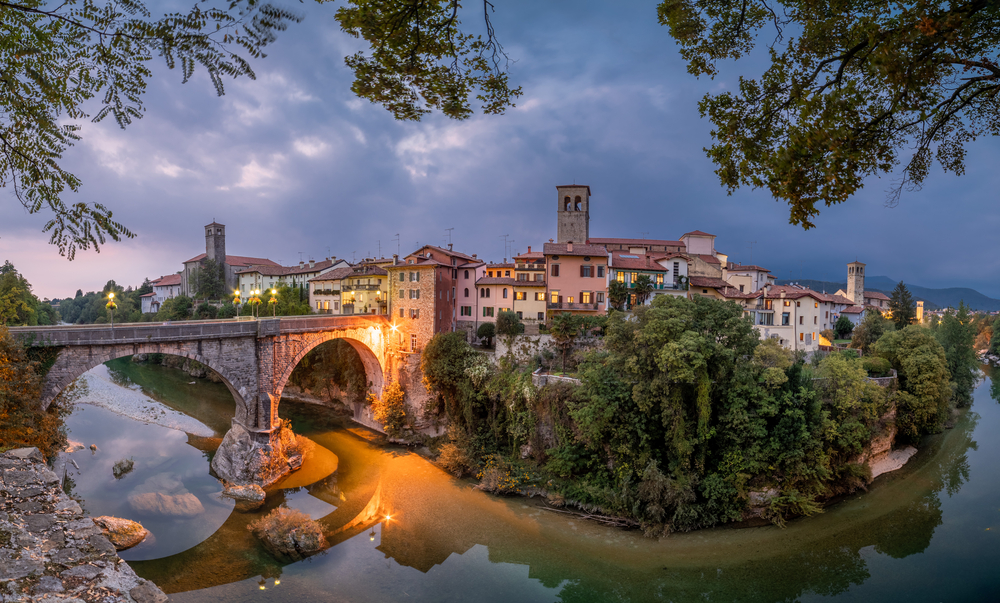
The documented interior of the town is dominated by Piazza del Duomo, which is where the National Archaeological Museum of Cividale del Friuli is located. Not far away you will find the Palazzo dei Provveditori Veneti, constructed in 1565 and designed by Andrea Palladio. Cividale is divided in two by the Natisone River, which is spanned by the Devil's Bridge.
Tarcento is a small town and municipality in the province of Udine, in the Friuli-Venezia Giulia region. It settles a strategic location at a bridging point on the River Torre.
Archaeological finds point to a very early date for its first human occupation. Tarcento first appears in the documented history around the year 1126 CE. In 1219 the Caporiacco family took over as feudal overlords.
Nowadays, the corner of the tower of the castle on the hill of Coia can still be seen. While you visit this tiny town, you can walk down the middle age streets and drink local wines.
¿Estás empezando tu viaje por el vino o estás volviendo a intentarlo?
Eche un vistazo a nuestra colección de excelentes bodegas
Mostrando 1-10 de 20 bodegas


¿Estás empezando tu viaje por el vino o estás volviendo a intentarlo?
Eche un vistazo a nuestra colección de excelentes bodegas


Descubra la ubicación de las bodegas en Colli Orientali del Friuli
Únase ahora a nuestro boletín para recibir nuestra guía gratuita sobre cómo planificar el tour de vinos perfecto
