
Friuli-Venezia Giulia Wine Region Guide
Top wines, picturesque towns and culinary highlights
- Appellations
- 9 Appellations
- Wineries
- 53 Wineries
- Experiences
- 58 Experiences
- Local Guides
- 5 Local Guides
Explore Appellations in Friuli-Venezia Giulia


About Friuli-Venezia Giulia Wine
- Surface
- 30,297 ha
- Soil
- Ponca (marl and sandstone), gravel, limestone
- Climate
- Continental with Alpine and Adriatic influences
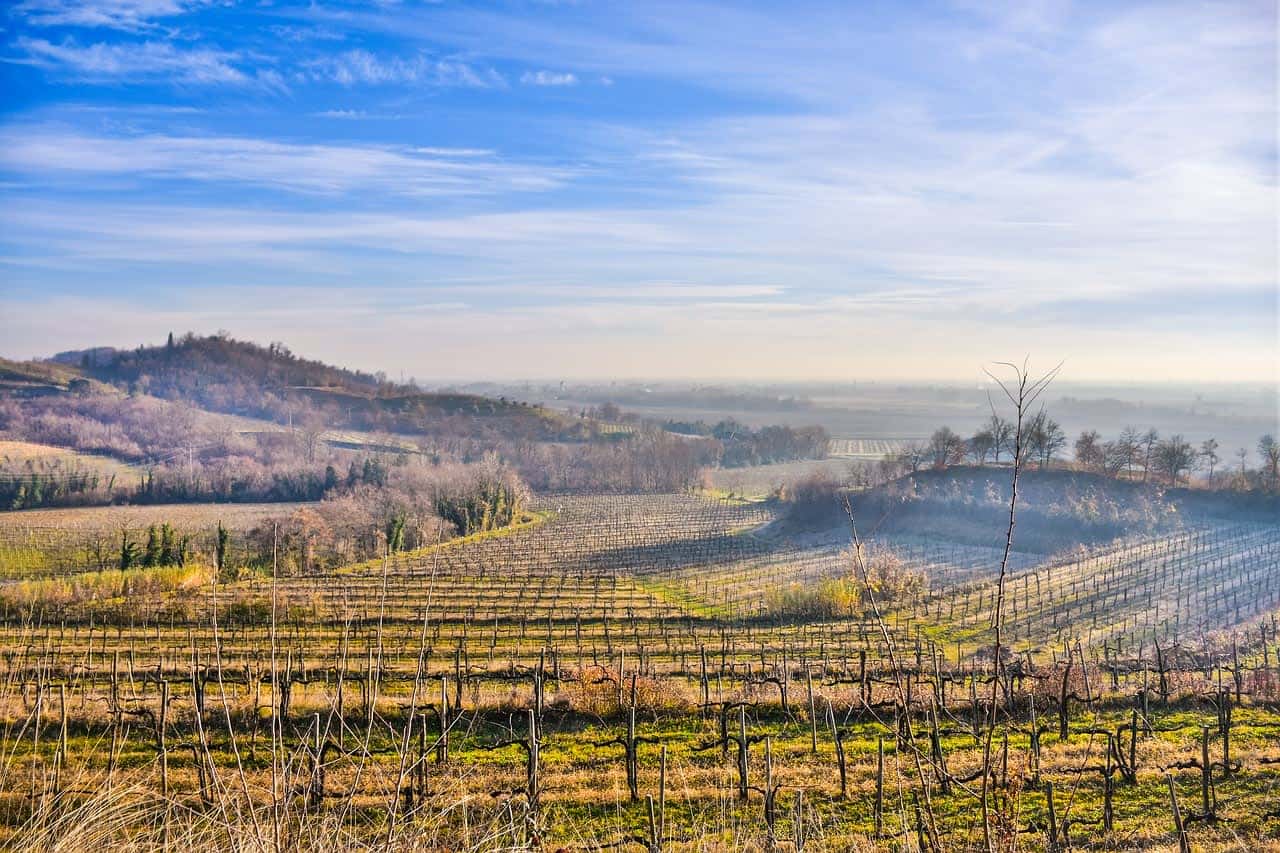
Friuli-Venezia Giulia wine is a rather unknown and very diverse region in the northeast of Italy between the Alps and the Adriatic, bordering Austria and Slovenia. The wines of the region stand out from other Italian wines. Light-bodied, refreshing white wines are something exotic and foreign for many Italians. Due to its location, the region got a bag of cultural influences that are worth to be explored. Mountains of Friuli-Venezia Giulia wine region inspire and its charming towns, culinary delights, and wines take you somewhere different, but still in Italy.
Travel Guide To Friuli-Venezia Giulia Wine Region
Have a look at the list of wine tastings & tours in the Friuli-Venezia Giulia wine region and discover what local wineries have to offer!
Check out more about Friuli-Venezia Giulia Wine Region through our travel guide:
White wine world to Friuli Venezia Giulia
Wineries with open cellar door
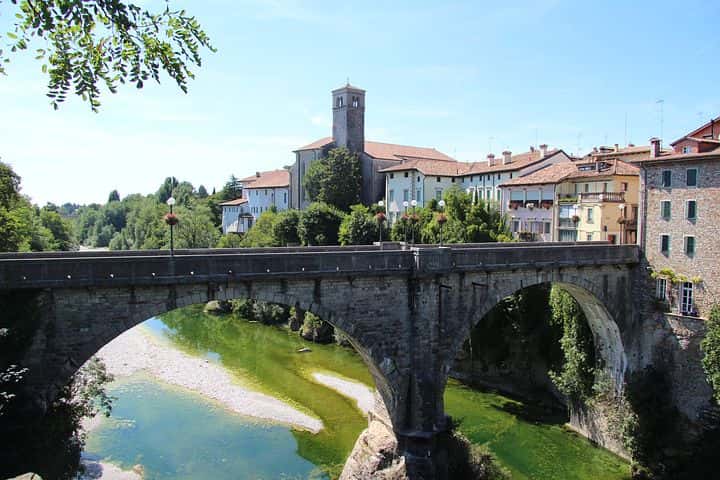
Cities with mixed cultural heritage

So, let's take a look at the distinctive characteristics of Friuli-Venezia Giulia wine and Its natural and cultural heritage. Find your own personal reasons why you should include this region in your travel itinerary! Because this region has it all!
HISTORY BOX: The name Friuli dates back to Roman times and draws its origin from Forum Iuli (Cividale del Friuli) which was established by Julius Caesar in mid-1st century B.C. Venezia Giulia also dates back to Roman tradition and is associated with famous figures of the Roman Empire - Julius Caesar and Caesar Octavianus Augustus, both belonging to Gens Julia.
Heaven for White Wine Lovers
When it comes to white wines in Italy, this northeast corner of the country has much to offer. Friuli-Venezia Giulia wine region is the most important white wine producer covering 20 000 ha of Friuli vineyards and producing wines under 4 DOCG, 12 DOC, and 3 IGP.
Grappa is also highly valued here as a high-proof speciality of the region and, after a deliciously hearty bean soup with local bacon, also has a very pleasant effect.
Friuli-Venezia Giulia Wine Region Map

What are the wines of Friuli-Venezia Giulia like?
The white wines from Friuli-Venezia Giulia wine region impress with their freshness, clear structure, and elegance. This applies in addition to the common varieties for dry Friuli Italian wines from the Malvasia grape. Italian white wine made from malvasia is rich in flavours and a little dry.
Friuli-Venezia Giulia wines received a big boost when temperature-controlled fermentation was introduced in the 1960s. Since then, fresh and decidedly fruity white wines have been produced here, making the region today the Italian white wine centre.
Climate: Friuli-Venezia Giulia wine region is particularly determined by two climatic factors: on the one hand, the mild Mediterranean climate, and on the other hand, the cold air currents from the Alps. Ideal conditions for white wines, which are predominantly grown here.
Complexity also convinces the wines of the micro-vintners from the rocky Carso Mountains, who produce intense, acid-accented white wines which grow on hard stone. The West serves the sophisticated everyday taste. Lighter wines are also produced between Palmanova and Aquileia near the sea, where sandy soils and larger wineries predominate.
Grape Varieties of Friuli-Venezia Giulia Wine Region

In Friuli-Venezia, DOC wine is produced from 26 different grape varieties. Half of them are native varieties, which means they have their origin in the region. A niche is a sweet wine from Picolit and Ramandolo as DOCG wines, each of which grows on only 60 hectares of Friuli vineyards.
Red grape varieties:
Refosco
Ribolla
White grape varieties:
Friulano
Pinot Bianco
Riesling
Picolit
Let's Have a Look at Every Corner of Friuli-Venezia Giulia Wine Region
Sub-Regions: Four Distinctive Territories
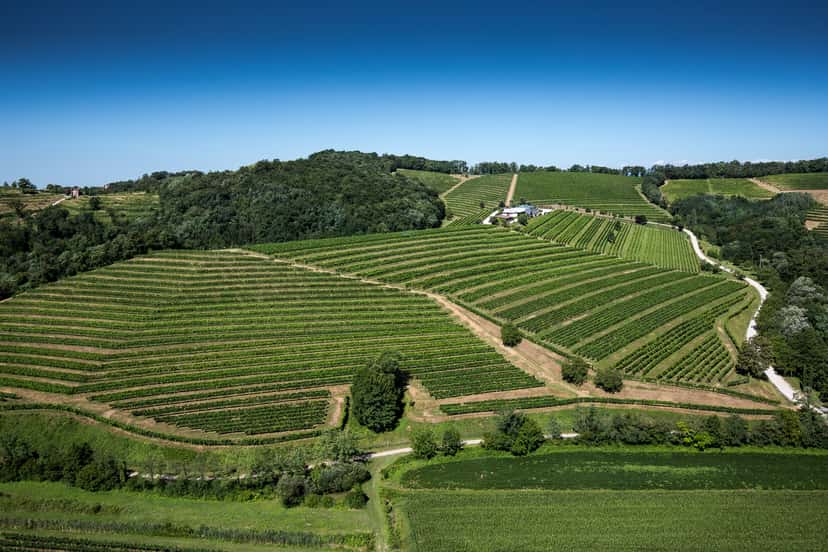
Friuli-Venezia Giulia wine region is divided into four sub-regions: the two high-quality regions Colli Orientali and Collio and the region of Grave del Friuli, where simpler wines grow on alluvial soils along with Carso.
Colli Orientali del Friuli is one of the most significant titles from Friuli-Venezia Giulia wine region. The best Friuli Italian wines come from the hills of Colli Orientali. Friulano grape variety is the hero of this territory. However, you can also find some Sauvignon Blanc, Chardonnay, and Pinot Grigio. Wines from local white grape Ribolla Gialla are also in higher demand expressing more higher acidity and restrained fruity style.
Something special from the sub-region: Have a taste of Ramandolo and Picolit sweet wines from Colli Orientali characterized by flavors of honey and acacia with some mineral aromas.

Collio was one of the first DOCs in Italy given status in 1968. Area of rolling hills, small villages vineyards offer premium quality wines.
Collio sub-region produces high-quality white wines mainly from Pinot Grigio and Bianco grape varieties. You will also be able to find Tocai Friulano, Sauvignon, and the renowned Collio Bianco grape varieties in blend wines.
Some international grape varieties such as Sauvignon Blanc, Chardonnay, and Pinot Grigio also express nice character here.
Wines of Collio give nutty aromas, smoky taste, and vanilla because of the use of oak barrels.
Despite the fact that Collio is famous for its white wines, you will be able to find some red wines as well produced from Collio Rosso, Cabernet Franc and Sauvignon, and Merlot grape varieties.
Grave del Friuli is the biggest sub-region of the Friuli-Venezia wine region, accounting for more than half of the production of the region. Grave del Friuli befits from the ultimate climate and terroir to produce high-quality Pinot Grigio and Prosecco wines. Pinot Grigio from here has the potential to best in terms of intensity and body.
As for Prosecco Due to a new law, Prosecco or Glera grape variety can now also be grown in Friuli-Venezia Giulia, not only in Veneto.

Carso is the most northeastern sub-region of the Friuli Venezia Giulia wine region producing both red and white wines. Carso sub-region also produces so-called "Orange Wines" by leaving grape juice with skin contact. The main grape varieties used in orange wine production can be Pinot Grigio, Ribolla Gialla, Malvasia, Vitovska, or a blend of these depending on the winemaker.
Top Wineries to visit in Friuli-Venezia Giulia wine region
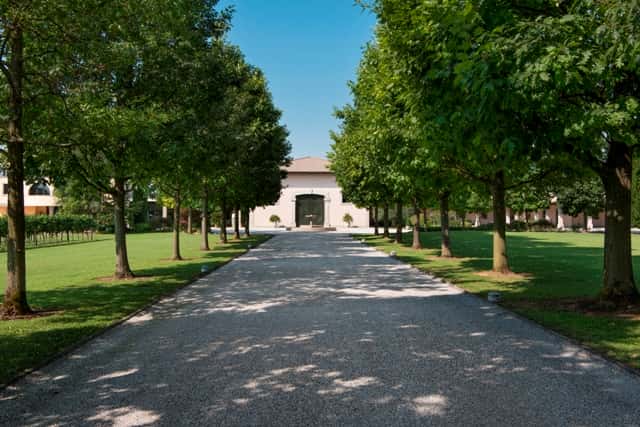
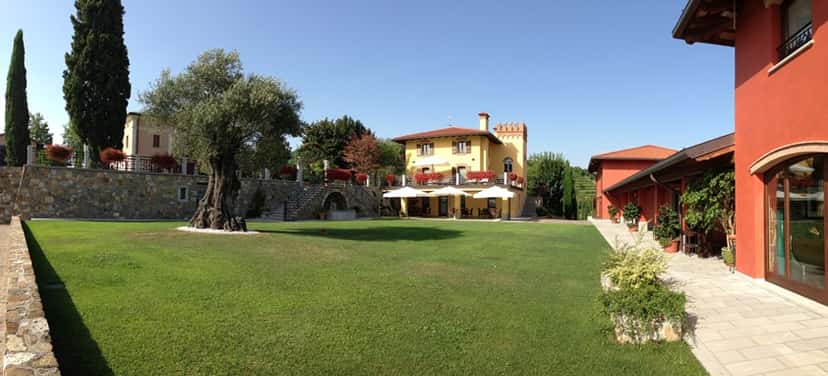
Friuli-Venezia Giulia wine region is one of the fabulous in Italy with hillside vineyards, family-owned boutique wineries, and a hospitable heart.
Discover wineries in Friuli Venezia Giulia with an open cellar doors and plan your memorable trip to this peaceful, mind-blowing corner of Italy!

La Viarte Winery was established in 1973 in the Friuli Colli Orientali DOC region, between the municipalities of Corno di Rosazzo and Prepotto. Their winery expands over an area of 34 hectares and two-thirds of this land is dedicated to growing vines. Check out their excellent wine collection and experience the work put in to creation of their unique expression of both tradition and innovation.

Tenuta Luisa
Tenuta Luisa was established in 1907 by Francesco Luisa on five hectares of land in Mariano del Friuli in the Northeast Italy. If you want to visit Tenuta Luisa, they have multiple packages to choose from based on your preferences. Enjoy this great location, an awesome tradition, and delicious Italian wines.
Cities with Mixed Cultural Heritage
Friuli-Venezia Giulia wine region has much more to offer.
Discover the region through its cities!
Triest - Vienna By The Sea
In the capital of the region, Trieste, the monarchic charm can still be felt. A beautiful historical architecture characterizes the face of the old town and you are guided from one sight to the next. The Grand Canal in the center of the city is a wonderful place to enjoy the pleasant atmosphere and the main square, Piazza dell' Unità d'Italia, is one of the most beautiful in Italy.

Here, you can enjoy a great view from Castello di San Giusto, a well-known historic castle in Trieste. In no case should you miss a visit to the Castello di Miramare and in the best case you choose a boat trip, which is offered in the harbor quite numerous and also offer wonderful views of the city. This castle very well represents the splendid time of the Habsburgs.
Trieste is also considered to be the secret capital of coffee, and it really can be enjoyed almost everywhere in an exceptionally exquisite style.
Udine - The Heart of Friuli-Venezia Giulia
Udine, located between the Adriatic and the Alps, is a very pretty town, entirely in the Venetian style. The impressive beach of "Lignano Sabbiadoro" with its golden, soft sand offers a true bathing paradise. But next to the beach you will find a wonderful historic core that invites you to stroll, shop, and for historical walks.
The "Piazza Della Libertà" is an architectural treasure, one of the most beautiful places in northern Italy and the heart of Udine. Here are the most important monuments of the city; worth seeing is the town hall "Loggia del Lionello".

On the hill rises the castle of Udine, an elegant Renaissance palace. It was created between 1517 and 1595. It is wonderfully embedded in the green of the hedges and climbing plants. However, if you are looking for peace, in the area of the old red lighthouse in the eastern part of the village you can enjoy silence.
Aquileia - Paradise For History Lovers

The importance of Aquileia lies in its historical role: founded as a military colony of the Romans in the second century BC, it became one of the most important cities of the Roman Empire and an important river port.
In two museums and in an open area, significant finds from the strategically important location in Roman times can be visited.
The mosaic floors in the Romanesque basilica Santa Maria Assunta of Aquilea, which bears the title of a Minor Basilica and was also declared a UNESCO World Heritage Site, are also phenomenal. The mosaics are partly from the time of Bishop Theodorus around 300 AD and they can be visited.
Find the best Wine tour guides in Friuli-Venezia Giulia and embark on Guided wine tours in the region.
Versatile Nature of Friuli-Venezia Giulia Wine Region
High Mountains Overlooking Adriatic Sea

The northern part is characterized by a very impressive alpine landscape, which offers excellent conditions for hiking, climbing, mountain biking, and skiing. The Dolomites with their spectacular rock formations, the Carnic Alps and the Julian Alps with their lush alpine meadows and imposing peaks promise in summer and in winter a multifaceted mountain life. Idyllic relaxing villages, intact nature and extremely warm hosts are present everywhere in the Friuli-Venezia Giulia wine region.
Bicycle Path from Tarbis to Grado - a tour for Everyone
A real highlight is the bike path Alpe-Adria from Tarvis to Grado. This is pure enjoyment and the drive through the channel valley is an unforgettable highlight amidst in a beautiful landscape. In the area to Venzone, the route is characterized by particular originality and leads through numerous tunnels on an abandoned railway line. Always flat or even downhill, this route is a breeze even for the less sporty and with so much relaxation, the landscape, and the hospitable atmosphere can be enjoyed to the fullest.
Natural Park Estuary Isonzo - True Birdwatching Paradise
The nature park at the Isonzo estuary near Staranzano offers a particularly intense nature experience, especially the variety of birdlife is worth mentioning.
Freshwater swamps, but also large saltwater wetlands, reeds, forests, and meadows: the natural park of the Isonzo estuary is the ideal habitat for numerous species of animals and especially for native and migratory birds. It is no coincidence that it is the best area in Italy for birdwatching. At its heart, Cona Island is the visitor center, considered to be one of the most important international didactic, scientific and naturalistic centers. Pack the binoculars!
Riserva Cornino - hike to the emerald-colored lake
The 487-hectare nature reserve is located on the extreme southeastern edge of the Carnic foothills in the municipality of Forgaria nel Friuli and Trasaghis.
The area is characterized by a very varied landscape and a high natural value. The nature and location of the hills, the river, as well as the great biogeographical importance of the eastern foothills of the Alps require an extremely interesting fauna and flora, with animal and plant species, which are often at the edge of their usual range.

One of the highlights is certainly the extremely turquoise Cornino lake. This crystal-clear lake gets its emerald color from the very calcareous soil. Pack the hiking stuff and off you go!
Wonderful Hearty Cuisine of Friuli-Venezia Giulia Wine Region
Gourmets will already know - Friuli-Venezia Giulia wine region is a real paradise when it comes to culinary specialities to melt away. In the northern mountain regions, more hearty meals dominate, which, with sophisticated refinement, become an impressive palate experience.
Local gastronomy of Friuli-Venezia Giulia represents a great mix of Slavic, Central European and Italian cuisine and It varies from the sea to the mountains
Of course, the South also knows how to use the gifts of the sea to make excellent dishes. It is, on the one hand, a simple, rural, hearty, hearty cuisine with a long local tradition, and on the other hand also clearly influenced by the geographically close neighbours Austria, Slovenia, and Veneto.
Art of Polenta Making
The polenta is "the national dish" of Friuli-Venezia Giulia par excellence.
The maize porridge used to be eaten by the poorer population, but today is a treat in restaurants. Many gourmets claim that the polenta of Friuli Venezia Giulia is the best in the world. The polenta is stirred, baked, even grilled, and refined with cheese, fish, meat, milk, or sausage. Polenta serves as a side dish to meat or fish but is also eaten alone. The overpowering position of the polenta is the reason why noodles, which otherwise have the function of saturating in Italy, rather lead a shadowy existence.

Proschiuto San Daniele - Friulian Delicacy
San Daniele is the product of excellence from Friuli Venezia Giulia wine region. The product is attached to its roots and is still made with a centuries-old tradition in the small village of San Daniele.
Ham is salted, massaged, and pressed into shape according to a prescribed procedure. After, they have to dry for 3 months and then, coated with a mixture of flour, lard, salt, and pepper, mature at least 8 months. The entire production of a San Daniele ham takes at least 12 months.

Tip: Pair San Daniele ham with a wonderful glass of Friulian wine.
Salute!
Frico - The Savory Pancake
Frico, one of the most famous dishes from the region, is an Italian version of a potato pancake consisting of potatoes and above all a special cheese of the region: Montasio.
Montasio is the DOP cheese from the Carnic Alps, which you can find with different maturity on the market.
- Young(fresco) has two months of maturity;
- Medium ripe (semistagionato or mezzano) - six months;
- Mature (stagionato or stravecchio) - ten and more months.
In Friuli-Venezia Giulia wine region the cheese is almost always used instead of Parmesan or Grana Padano as grated cheese. Incidentally, Frico is often eaten as a "Piatto Unico" due to its fat and calorie content, so as a single dish outside of the traditional food sequence.
Plan your visit in Friuli-Venezia Giulia


Best Wineries in Friuli-Venezia Giulia



Best Wine Tastings in Friuli-Venezia Giulia


Tailor-Made For You
Your perfect wine trip, planned for you
Tell us what you're dreaming of and a local wine expert will build a personalized itinerary — no obligation, no service fee.
Top Rated Local Guides in Friuli-Venezia Giulia



Frequently Asked Questions
What is Friuli-Venezia Giulia known for?
What are the main grape varieties grown in Friuli-Venezia Giulia?
When is the best time to visit Friuli-Venezia Giulia for wine tasting?
How do I get to Friuli-Venezia Giulia?
What is ponca?
Join our newsletter now to receive our free guide on how to plan the perfect wine tour.