

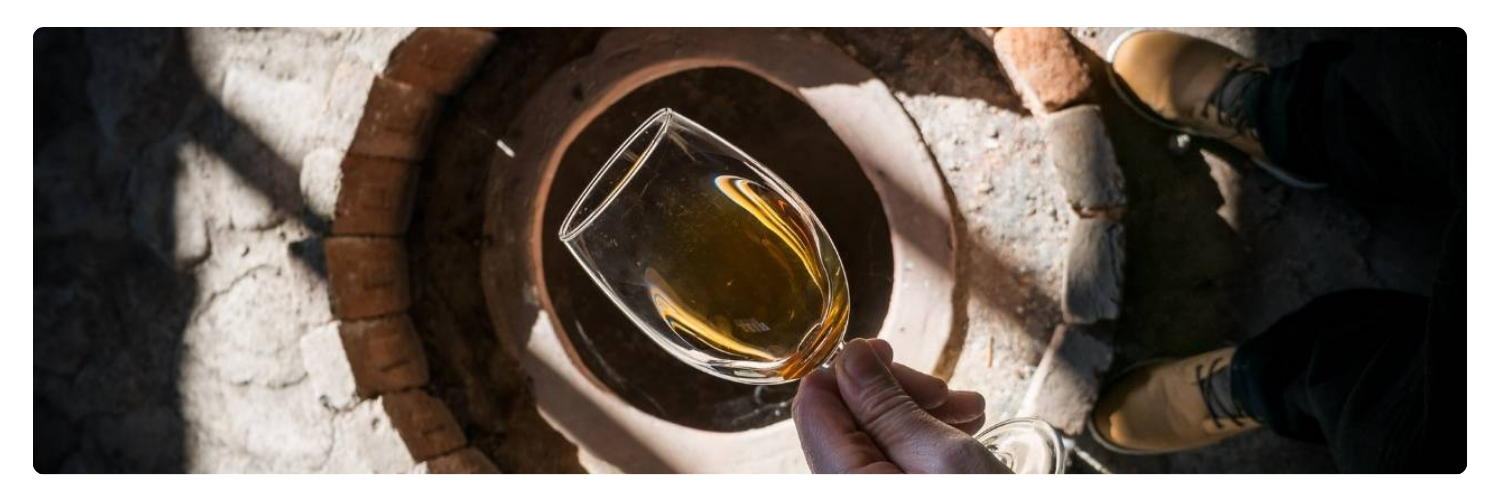
Pour a glass of amber wine into good light and the first thing you notice is that the color is wrong. It should be pale straw, or green-gold, or the buttery yellow of a Chardonnay. Instead it is amber — the color of tea steeped too long, or of honey held up to a window. Take a sip and the second thing you notice is that the wine has tannin, like a red. It has structure. It grips the sides of the mouth. It tastes of dried apricot, walnut, orange peel, and something almost salty at the finish.
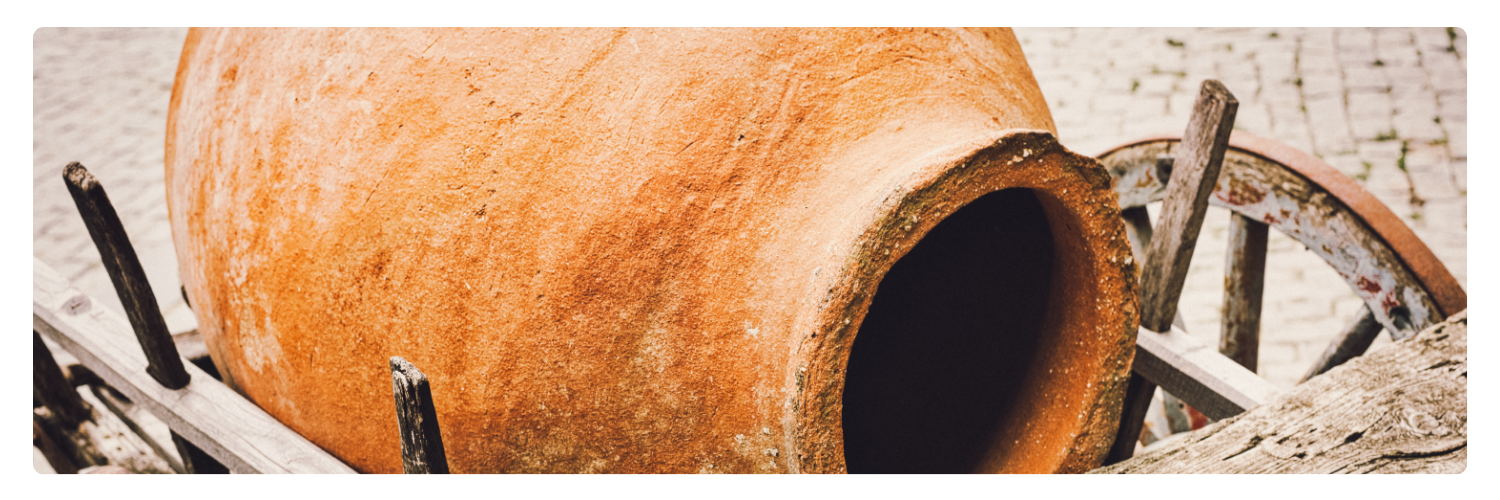
This is amber wine. It has been made this way in Georgia for around 8,000 years — longer than there has been a written word for wine. It nearly disappeared from Europe in the second half of the twentieth century, replaced by the fresh, technically correct white wines produced in stainless steel. And it has come roaring back over the last two decades, driven by winemakers in Slovenia, Italy, Croatia, and Portugal who see in it something the modern wine world had forgotten.
For travelers, amber wine is one of the most interesting things you can taste right now — and one of the most rewarding to seek out at the source.
At a glance: amber wine
Amber wine is a white wine fermented in contact with its own grape skins — the same method used to make red wine, but with white grapes. The extended skin contact adds tannin, structure, and the characteristic amber-to-orange color that gives the wine its name. Made most historically in Georgia, where it has been produced in buried clay qvevri vessels for around 8,000 years and was recognized by UNESCO in 2013. Now widely made in Slovenia (Goriška Brda), northeast Italy (Friuli), Croatia (Istria, Dalmatia), Portugal, and Spain. The wines are complex, textural, food-friendly, and increasingly linked to organic and natural winemaking. Also known as skin-contact wine or orange wine.
What is amber wine, exactly?
Conventional white wine is made by pressing the grapes and quickly separating the juice from the skins before fermentation. Amber wine reverses the process. The white grapes are fermented on their skins — sometimes for days, sometimes for months. The skins release tannin, color pigments, and a range of aromatic compounds that never make it into a standard white.
The result is a wine that occupies a middle ground the modern wine world had forgotten. It is not red, not rosé, not white — it is its own category. The color varies from pale gold to deep orange-brown depending on the grape and how long the skins stayed in contact. The texture is often surprising: firm, gripping, tannic. The aromas run to dried fruit, tea, spice, nuts, and citrus peel rather than the fresh floral notes of conventional white wine.
The term "orange wine" was coined by British wine importer David Harvey in 2004. In Georgia, the same style is called karvisperi ghvino — literally "amber wine" — a phrase that appeared in a 1920 poem by Sandro Shanshiashvili. Both names refer to the same thing.
Georgia's 8,000-year amber wine story
Amber wine's spiritual home is Kakheti, in eastern Georgia, at the foot of the Greater Caucasus. Georgian farmers have been fermenting white grapes on their skins in buried clay vessels called qvevri for around 8,000 years — the longest continuously practiced winemaking tradition in the world. Ancient qvevri fragments have been dated to 6,000 BCE. In 2013, UNESCO recognized the qvevri method as an intangible cultural heritage of humanity.
The process is essentially unchanged. Farmers harvest their Rkatsiteli, Mtsvane, or Kisi grapes and pour them — juice, skins, stems, seeds, everything — into large clay vessels buried up to the neck in the earth. Fermentation begins with wild yeasts. The wine rests on the skins for around six months. When it emerges, it is amber, structured, and tannic — an intact tradition older than the pyramids.
Kakheti today is the best place in the world to taste amber wine at its source. Small family estates around Telavi and Napareuli welcome visitors year-round, and many combine tastings with home-cooked Georgian meals.
The modern amber wine revival
Outside Georgia, the modern amber wine story starts in one specific place: Goriška Brda, on the Slovenian-Italian border, in the terraced flysch limestone hills between the Adriatic and the Julian Alps. In the 1990s, a small group of winemakers — Radikon and Gravner on the Italian side, Movia and Marjan Simčič on the Slovenian side — began fermenting their white grapes (particularly Ribolla Gialla, known locally as Rebula) on the skins for weeks or months, drawing on a nearly forgotten peasant tradition.
The wines shocked. Then they were embraced. By the mid-2000s, the movement had spread to Friuli in northeast Italy, Istria in Croatia, and increasingly to the natural wine scenes of Portugal, Spain, France, and California. Today, amber wines are made everywhere from the Vinho Verde region of northern Portugal to Rioja in Spain to the natural wine circuits of Paris and Copenhagen.
Nearly all serious amber wine producers work organically or biodynamically. The style is intrinsically about minimal intervention — long fermentations, wild yeasts, no additives, extended skin contact, and often little to no sulfur. Amber wine and natural wine are not synonymous, but they are close relatives.
What amber wine tastes like — and what to eat with it
The flavor profile is dramatically different from conventional white wine. Expect dried apricot, orange peel, walnut, chamomile, honey, and often a briny, tea-like edge. Tannin gives the wine grip and structure. The finish is usually savory rather than fruity.
Amber wine's tannic backbone makes it uniquely versatile at the table. It handles food that overwhelms both white and light red wines — Middle Eastern spice, Indian curry, aged hard cheeses, cured meats, roasted lamb, mushroom-forward dishes, and Georgian cuisine (of course). It is not a sipping wine. It is a food wine, designed to be drunk at the table with something substantial.
Featured WineTourism.com amber wine experiences
Six bookable estates that show the range of the modern amber wine world.
Sesikeli Winery (Kakheti, Georgia). A family estate near Telavi following the full 8,000-year qvevri tradition. Six-month skin-contact fermentations produce amber Rkatsiteli, Mtsvane, and Kisi. Winemaker Simon Sesikashvili's Rkatsiteli won silver at the 2020 Qvevri Wine Competition. Best for travelers wanting the ancestral version.
Zurab Kviriashvili Vineyards (Napareuli, Kakheti). An organic Kakhetian family estate offering guided qvevri tastings across Saperavi, Rkatsiteli, Kisi, and Mtsvane, plus a taste of Georgian chacha spirit. Zurab himself guides most visits. Home-cooked meals available.
Vineria Kakheti (Telavi, Kakheti). A structured 10-wine tasting that covers both qvevri and modern methods, showing exactly how the tradition and innovation coexist. Chacha aperitif to start. Best for travelers new to Georgian wine.
Temi Community Winery (Kakheti). A social-enterprise winery producing organic qvevri wines with an off-the-tourist-trail atmosphere. Multilingual tastings (English, Georgian, German, Russian). Small and intimate.
Cattunar Winery (Istria, Croatia). Family-run estate in Croatia's Istrian peninsula — a region that borders Slovenia and shares the amber wine tradition. Produces reds, whites, orange, and amber wines alongside on-site accommodation with a wellness area.
Bodegas Tritium (Rioja, Spain). A historic Rioja winery unusual for producing both traditional Tempranillo-based reds and modern amber and orange wines. Design by architect Francesc Rifé; guided tastings by Javier and Francisco. Best for travelers wanting to see amber wine outside its usual homelands.
When to visit and what to look for
The best time to visit amber wine regions is late spring (May and June) and September through October, when winery activity is highest. In Georgia, September brings rtveli — the traditional harvest — where visitors can help crush grapes with their feet and see qvevri wines poured into their vessels. In Slovenia and Italy, October is also peak season for tastings at working cellars.
When tasting amber wine for the first time, ask three questions of your host: how long the skin contact lasted, what grape variety was used, and whether the wine is qvevri-aged or in another vessel. The answers explain almost everything you'll taste in the glass. And do not expect it to taste like white wine. It is not.
The amber wine renaissance
Amber wine is not a novelty. It is one of the oldest and most complete ways of making wine — practiced in Georgia for 8,000 years, kept alive in a handful of European corners through the twentieth century, and now flowering into a global movement. For travelers, it is one of the most rewarding categories to explore right now, because the wines taste unlike anything else, and the estates making them tend to be small, family-run, and deeply committed. Book one of the tastings above for your next wine trip. You will remember the color of the wine long after you have forgotten what you paid for the flight.
Frequently Asked Questions
What is amber wine?
What is amber wine?
Where does amber wine come from?
What's the difference between amber wine and orange wine?
What does amber wine taste like?
What do you eat with amber wine?
Which countries make amber wine?
Featured WineTourism.com amber wine experiences
Bookable estates referenced in this guide:
- Sesikeli Winery, Kakheti (Georgia) — https://www.winetourism.com/winery/sesikeli-winery/
- Zurab Kviriashvili Vineyards, Napareuli (Georgia) — https://www.winetourism.com/experience/wine-tasting-and-tour-at-zurab-kviriashvili-vineyards/
- Vineria Kakheti, Telavi (Georgia) — https://www.winetourism.com/experience/taste-10-georgian-wines-including-qvevri-selections-at-a-family-winery-in-kakheti/
- Temi Community Winery, Kakheti (Georgia) — https://www.winetourism.com/experience/wine-tasting-at-the-temi-community/
- Cattunar Winery, Istria (Croatia) — https://www.winetourism.com/winery/cattunar/
- Bodegas Tritium, Rioja (Spain) — https://www.winetourism.com/winery/bodegas-tritium/


