
Top 5 underrated Italian white wines to try
There is an amazing wealth of outstanding Italian white wines that can shake your world and quench your thirst. Unfortunately, most of them are very underestimated or completely overlooked. But wine lovers can take advantage of this! Let's take a look at some great Italian white wines that deserve a day in the sun.
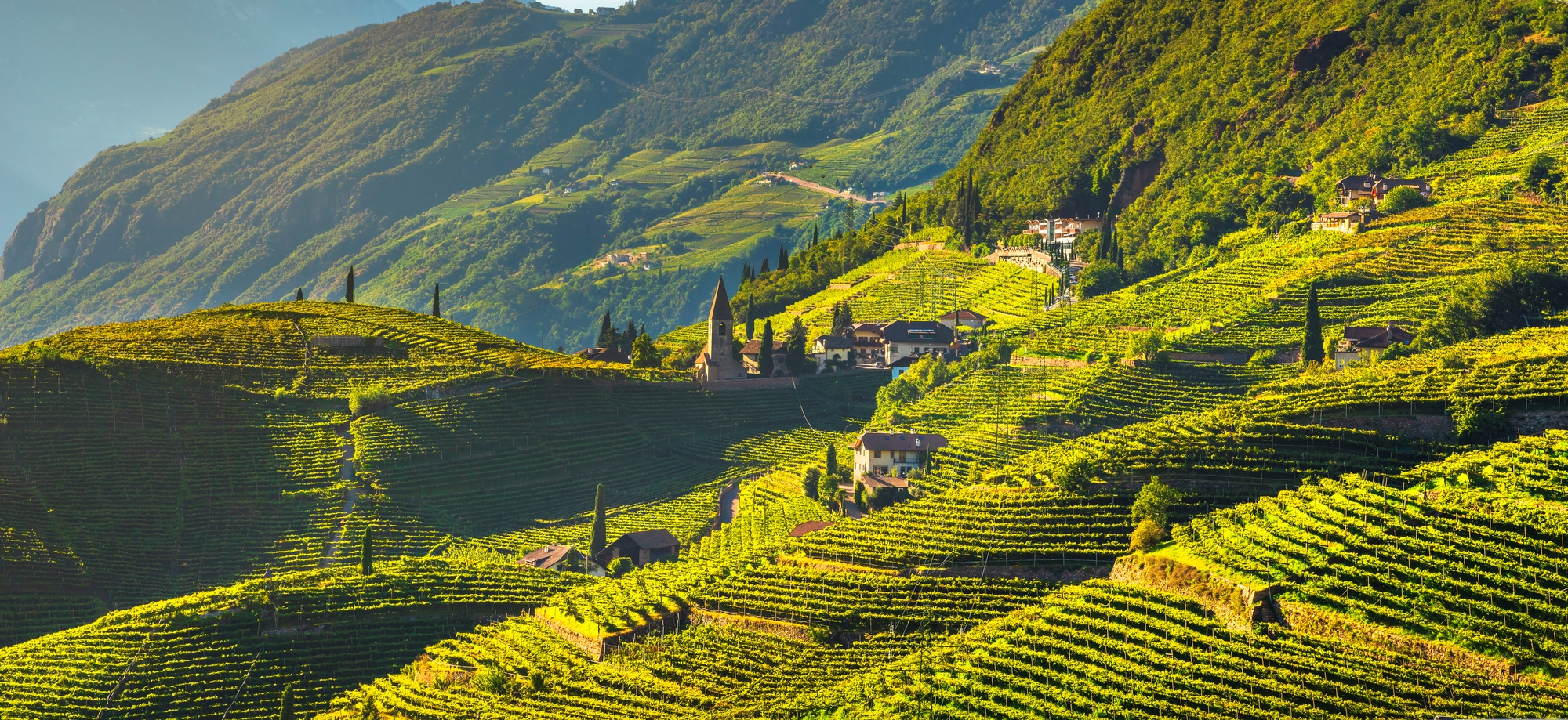
What is so special about Italian white wine?
The Italian peninsula stretches from the Alps to Africa in the north and south. There are many vineyards in Italy, which are surrounded by the Mediterranean Sea. When the ancient Greeks arrived in Southern Italy, bringing with them their vines and sophisticated viticulture methods, they encountered the indigenous Etruscans, who had already developed their own viticulture methods. Later, Roman tribes from central Italy arrived, bringing with them this complex wine culture, and expanded their empire - and wine knowledge - throughout the peninsula and most of Europe. Then, as Christianity spread, wine production was moved to monasteries. Separate city-states (polis) arose over time, and distinct viticultural traditions emerged, which persisted after Italy's reunification in 1861.
As a result, Italy has more local grape varieties, wine types, and unique winemaking practices than any other country on earth.
1. Friulano - that shiny wine from Northeast Italy
The white wine grape Friulano, formerly Tokai Friulano and also known as Sauvignon, is best known for its use in the white wines of Friuli, in northeastern Italy.
The grape is regarded as being indigenous to the southwest of France, where it is known as Sauvignon or Green Sauvignon. But it left its native place and migrated to northeastern Italy, where it quickly established itself as a cornerstone. Many regional vintners think this is Tokay Friulano.
The Friulano grape ripens early in the vineyard. Due to its thin skin, and susceptibility to different types of rot and mold, it is frequently harvested before any risk happens. Since rain can be a problem in Friuli, the region's winemakers prefer to grow grapes in drier vineyard regions. It is used to produce wines of various styles, and the use of oak is hotly debated. Some claim that oak aging gives wines more structure, while others claim that oak detracts from the distinctiveness of Friulano.
Wine we recommend you to try:
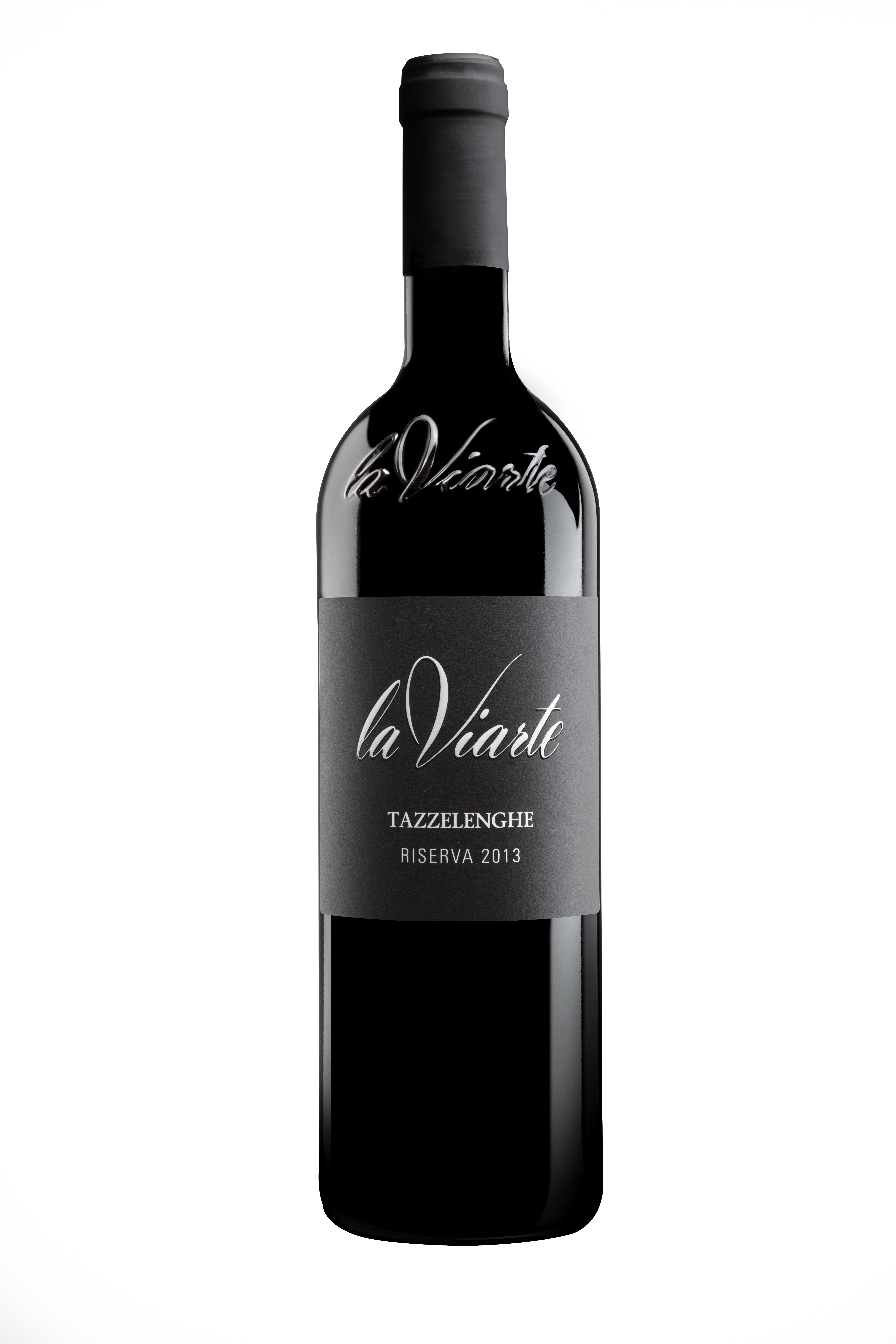
Arteus by La Viarte is the blend of Friuliano, Chardonnay and Riesling Renano. The wine has a straw yellow colour and the aromas of ripe, candied fruit together with dried flowers and lemon cream. It is a creamy and complex wine with a velvety long finish.
Tasting notes of Friulano: This wine's alluring aromas are what initially draw people to it. Green apples, dried figs, orange peel, and the scents of jasmine and narcissus are also present. besides that hints of salty sea and wet rocks. Its silky flavor and subtle aroma, which are followed by a faint bitter almond aftertaste, are what will keep you coming back to this wine, though.
Synonyms of Friulano: Sauvignon Vert, Tokay Friulano, Tai, Sauvignon Nace.
Food pairing with Friuliano: Fried white fish with lemon oil and capers, prosciutto with mozzarella fried chicken with thyme filling.
2. Orvieto - the wine of popes
In central Italy, there is a beautiful region Umbria. Since time immemorial, the location, climate, and soil composition of this territory have served as a source of life and taste for grapes and olives, which have been grown here by locals for many centuries. In this region, there is also the city of Orvieto, whose name is derived from the Latin "Urbs Vetus," which means "old town." And it is primarily here that the wine with the same name, which has become synonymous with Umbria, is produced.
Not far from the city is an extinct volcano that has created a unique ecosystem that has significantly influenced the current soil composition. It has a high concentration of tuff limestone and volcanic products. The composition of the soils greatly influences the taste of wine, imparting musk and almond aftertaste. The evolution of this wine was lengthy, and the uniqueness of Orvieto was formed in the Middle Ages - even back then, it was a sweet white wine with a light golden hue.
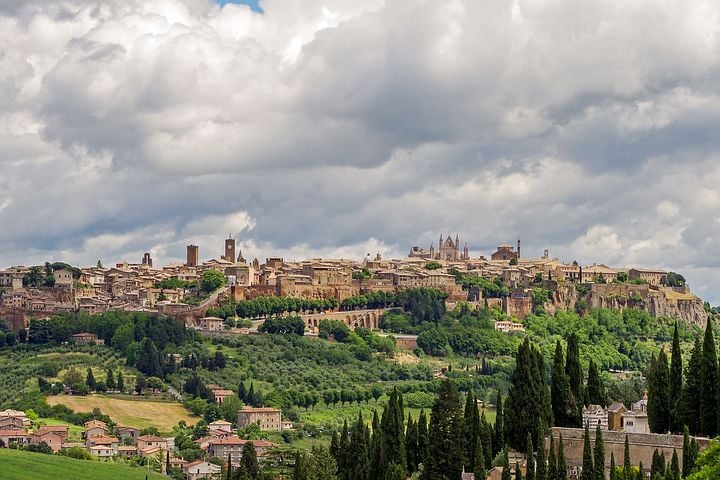
Sweet Orvieto fell in love quickly with those who could afford it. This wine was highly regarded by Pope Gregor XVI's entourage, and the Pope himself, according to legend, was obsessed with it. Orvieto is now mostly dry white wine, but there are variations in sweetness ranging from dry to dessert. According to the accepted classification, a wine produced since 1971 falls under the DOC category, which is equivalent to the French AOC category. This implies a noble wine with a controlled origin name (Denominazione di Origine Controllata).
Grapes and wine formula
You can think a lot about the uniqueness of Orvieto, but honestly, the source of its flavor is not in technology as much as it is in the grape variety itself. The Grechetto grape, whose name suggests Greek origin, makes up the majority of almost every variety of Orvieto. This is an autochthonous variety, which means that it evolved within a single wine-growing zone, resulting in the highest quality. It is responsible for the aromas of apples, almonds, citrus fruits, vanilla, and white flowers in the wine. In addition to Umbria, Grechetto is grown in Marche, Tuscany, and Lazio. However, Grechetto wasn’t the only grape used in the production of Orvieto wine. The formula changed frequently until the Italian wine consortium established the "official" proportions in 2003: at least 40% Grechetto, Trebbiano variety or similar Procanico - at least 20 and no more than 40%, other varieties - at least 20 and no more than 40%.
3. Vernaccia - Dante's muse and a favorite of the Italian nobility
In Tuscany, excellent quality red wines dominate over white, but in the hot summer months, only fresh, cooling white wines are able to quench thirst. Among the unusual and interesting in its taste qualities, there is one, sung in poems, captured by artists on canvases, frescoes, filled the cellars of the Vatican, as well as banquet tables of emperors, nobles – Vernaccia di San Gimignano DOCG, wine, considered one of the best in the Middle Ages.
The first documentary mention of this wine dates back to 1276. A certain winemaker Vieri de Bardi undertook to pay a tax of 3 soldi to the treasury of the city for each export of Vernaccia wine outside the commune. It is obvious that at that time this wine was very popular, and the wine business was prosperous and profitable.
In order to fall in love with Vernaccia, as with many other subtle Italian varieties, you need patience (to find) and culture (to appreciate) drinking. A good Vernaccia is delicate and tender, a very good Vernaccia is rough, and mineral and, as it was recently found out, leaves a feeling of red wine with its light peppery taste. Vernaccia is made today by a small group of winemakers, who in their deep seclusion deserve all the attention of those who love and drink wine.
Tasting notes of Vernaccia: refined, characteristic notes of citrus, herbal, and mineral; dry, fresh, with a light almond aftertaste.
Food pairing with Soave: veal scaloppini, fettuccine Alfredo, fried chicken. It goes well with fish appetizers and dishes, with risotto, as well as with white meat.
Our recommended Varnaccia:
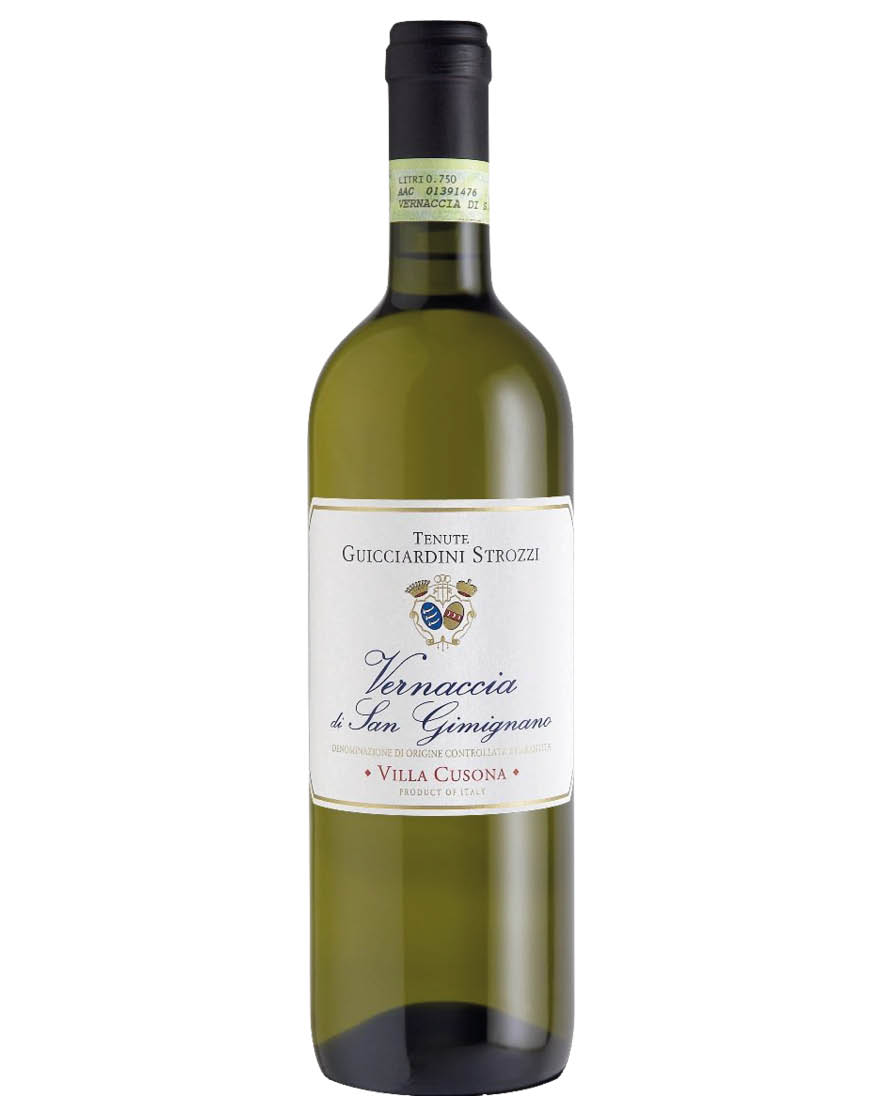
Vernaccia di San Gimignano DOCG by Guicciardini Strozzi
The wine has straw yellow colour with light golden reflections.
It is fruity and floral, structured and warm, with nice freshness and long and elegant aftertaste.
4.Timorasso - on its brink of extinction
Planted in the provinces of Asti and Alessandria in Piedmont, phylloxera almost destroyed the Timorasso behind the Tortona hills. It almost died out until a group of winemakers led by Walter Massa swooped in to stimulate its growth.
Although Timorasso has attracted attention to this little-known area, it has yet to get its own name. In the absence of this, many winemakers prefer to display the word Derthona (the traditional name of Tortona) on their labels.
I understood that a basic, extremely expensive ingredient was required to make this wine. We, as small craftsmen, cannot live without it because industrial production lacks the funding for it. Time. I added time, which aids development, to the ripe grapes and common sense at the winery. So we made, perhaps, the first Italian wine that goes on sale after a year of aging.
Walter Massa
Tasting notes of Timorasso wine: Timorasso is an anomaly with aromas of crushed apple, acacia honey, minerals, dried herbs and lemon confit. The taste is multi-layered, structured, rich, tannic and able to develop for a long time.
It’s even more unusual given that these attributes don't appear to be connected to wine-making techniques. Instead, they show up to be qualities that are built into grapes themselves.
Origin of Timorasso: Southeastern Piedmont, province of Alessandria. In particular, the undulating hills surrounding the town of Tortona. Its sandy, chalky soils are an ideal habitat for Timorasso and some other local varieties.
Food pairing with Timorasso wine: veal chop with wild mushrooms, grilled pheasant breast, ravioli with meat filling with butter and sage.
5. Etna Bianco - bright, volcanic, spectacular
Revered by the ancient Greeks as a wine-growing area, Etna fell into decline centuries ago. But over the past decade, winemakers have been working to realize the huge potential of Etna, focusing on local grape varieties, growing conditions and terroir.
In 2011, the old system of geographical division called "countergrade" was revived. This allows you to specify the name "Contrada" when all the grapes come from one of the registered subzones.
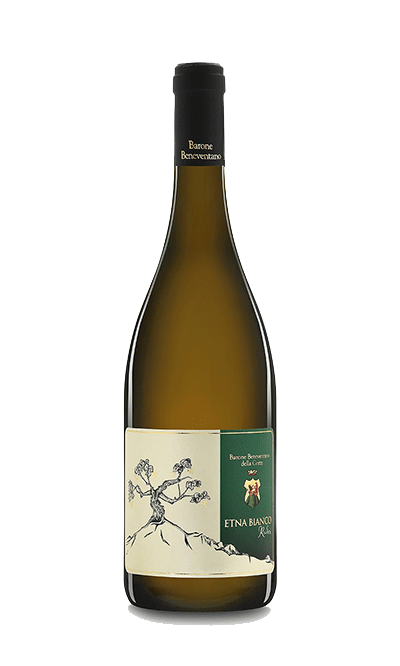
The wine we recommend you to try:
Etna White - Barone Beneventano
This wine expresses a purity and the peculiarities of the varieties of the Etna territory, giving fresh aromas of citrus fruits and crunchy yellow berries. Its great evolutionary ability enriches it over time with very complex and fascinating aromas.
Tasting notes of Etna Bianco: pronounced mineral-smoky taste with a hint of jasmine. Colorful acidity and notes of mandarin, prickly pear and bitter melon, as well as a moderately long aftertaste with a soft ashy finish.
Origin of Etna Bianco: Etna is the highest volcano in Europe and one of the most active stratovolcanoes in the world. The volcanic soil of Etna varies depending on the mixture of different materials and the age/degree of decomposition. The altitude and the warm Mediterranean breeze soften the hot southern temperatures.
Food pairing with Etna Bianco wine: tuna carpaccio, grilled chicken with herbs, dried olives and hard cheeses.
There are many wonderful wines in Italy that you may not have discovered yet. Check out our website for more wine travel in Italy.


