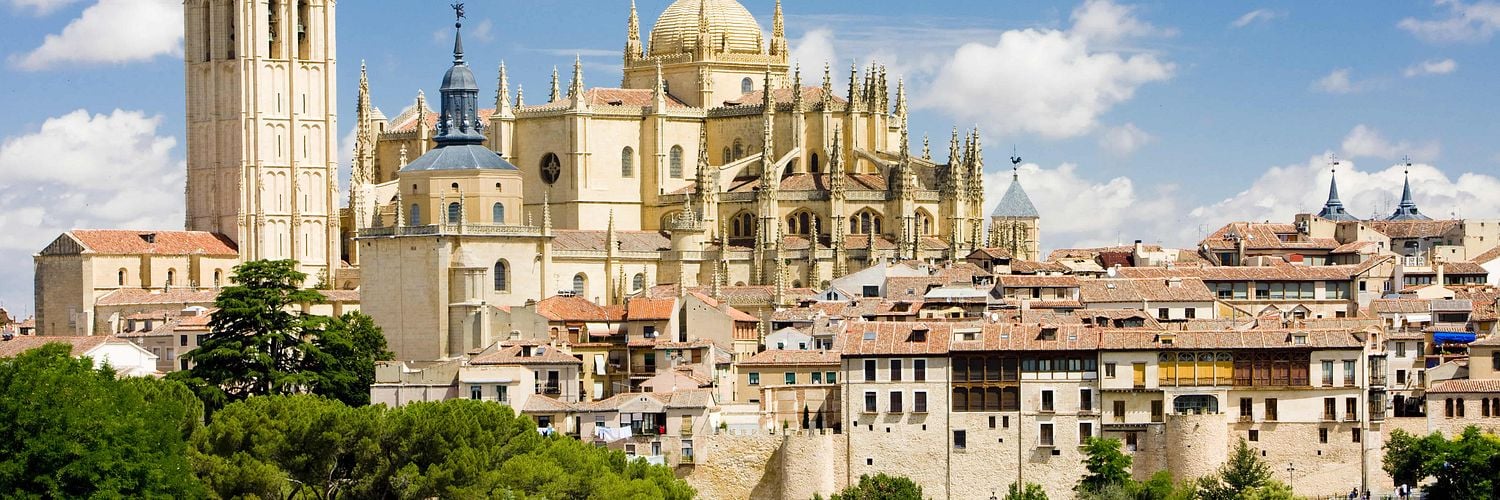
Découvrez le meilleur de l'œnotourisme à Castille et León
La Castille-et-León séduit les amateurs de vin par son riche patrimoine et la diversité de ses crus. Berceau d'appellations prestigieuses telles que Ribera del Duero et Rueda, la région met en valeur des cépages autochtones comme le Tempranillo et le Verdejo. Explorez des paysages époustouflants et visitez de charmants domaines viticoles où vous pourrez vivre des expériences de dégustation exceptionnelles. Découvrez la riche culture de cette région historique, où chaque gorgée raconte une histoire de tradition et de passion pour la viticulture.
Les meilleures villes à visiter en Castille et León, Espagne


Soria: Famous for its Black Truffles
Soria is known for its black truffles, which are highly prized in the culinary world. The truffles are harvested in the forests of the region and are used to enhance the flavors of various dishes, such as scrambled eggs, pasta, and risotto. Soria is also famous for its traditional dish called "torrezno," which is made from crispy fried pork belly.
León: Home of the Botillo
León is famous for its traditional dish called "botillo," which is a type of cured meat sausage. The botillo is made from pork ribs, tail, and other cuts of meat, which are seasoned with garlic, paprika, and other spices. It is typically served with potatoes and cabbage. León is also known for its "cecina," which is a type of cured beef.
Ávila: Famous for its Roast Suckling Pig
Ávila is famous for its roast suckling pig, which is a delicacy in the region. The pig is roasted whole and seasoned with salt and other spices to create a crispy and flavorful skin. The meat is tender and succulent, making it a must-try dish for meat lovers. Ávila is also known for its "yemas de Santa Teresa," which are sweet egg yolk candies.
Burgos: Home of Morcilla
Burgos is famous for its "morcilla," which is a type of black sausage made from pig's blood, rice, and spices. The morcilla is typically grilled or fried and is often served as a tapa or as part of a larger dish. Burgos is also known for its "queso de Burgos," which is a fresh cheese made from sheep's milk.
Salamanca: Famous for its Hornazo
Salamanca is famous for its traditional pastry called "hornazo," which is made from a flaky dough filled with various ingredients, such as chorizo, ham, and hard-boiled eggs. The hornazo is typically eaten during the Easter season and is a popular dish for picnics and outdoor gatherings. Salamanca is also known for its "farinato," which is a type of sausage made from pork and breadcrumbs.
Valladolid: Home of the Lechazo
Valladolid is famous for its "lechazo," which is a type of roast suckling lamb. The lamb is roasted whole and seasoned with salt and other spices to create a tender and flavorful meat. The lechazo is a specialty of the region and is often served with roasted potatoes. Valladolid is also known for its "queso de Villalón," which is a type of cheese made from sheep's milk.
Palencia: Famous for its Mantecadas
Palencia is famous for its traditional pastry called "mantecadas," which are small sponge cakes made from flour, eggs, sugar, and butter. The mantecadas are typically flavored with lemon or cinnamon and are a popular treat in the region. Palencia is also known for its "cecina de León," which is a type of cured beef.
Zamora: Home of the Zamorano Cheese
Zamora is famous for its "queso zamorano," which is a type of cheese made from sheep's milk. The cheese has a strong and distinctive flavor and is often enjoyed with bread and wine. Zamora is also known for its "tostón," which is a type of roasted suckling pig.
Segovia: Famous for its Cochinillo
Segovia is famous for its "cochinillo," which is a type of roast suckling pig. The pig is roasted whole and seasoned with salt and other spices to create a crispy and flavorful skin. The meat is tender and succulent, making it a must-try dish for meat lovers. Segovia is also known for its "judiones de La Granja," which are large white beans cooked with pork.
Salamanca: Famous for its Hornazo
Salamanca is famous for its traditional pastry called "hornazo," which is made from a flaky dough filled with various ingredients, such as chorizo, ham, and hard-boiled eggs. The hornazo is typically eaten during the Easter season and is a popular dish for picnics and outdoor gatherings. Salamanca is also known for its "farinato," which is a type of sausage made from pork and breadcrumbs.
Ávila: Famous for its Roast Suckling Pig
Ávila is famous for its roast suckling pig, which is a delicacy in the region. The pig is roasted whole and seasoned with salt and other spices to create a crispy and flavorful skin. The meat is tender and succulent, making it a must-try dish for meat lovers. Ávila is also known for its "yemas de Santa Teresa," which are sweet egg yolk candies.
Burgos: Home of Morcilla
Burgos is famous for its "morcilla," which is a type of black sausage made from pig's blood, rice, and spices. The morcilla is typically grilled or fried and is often served as a tapa or as part of a larger dish. Burgos is also known for its "queso de Burgos," which is a fresh cheese made from sheep's milk.
León: Home of the Botillo
León is famous for its traditional dish called "botillo," which is a type of cured meat sausage. The botillo is made from pork ribs, tail, and other cuts of meat, which are seasoned with garlic, paprika, and other spices. It is typically served with potatoes and cabbage. León is also known for its "cecina," which is a type of cured beef.
Soria: Famous for its Black Truffles
Soria is known for its black truffles, which are highly prized in the culinary world. The truffles are harvested in the forests of the region and are used to enhance the flavors of various dishes, such as scrambled eggs, pasta, and risotto. Soria is also famous for its traditional dish called "torrezno," which is made from crispy fried pork belly.
Valladolid: Home of the Lechazo
Valladolid is famous for its "lechazo," which is a type of roast suckling lamb. The lamb is roasted whole and seasoned with salt and other spices to create a tender and flavorful meat. The lechazo is a specialty of the region and is often served with roasted potatoes. Valladolid is also known for its "queso de Villalón," which is a type of cheese made from sheep's milk.
Palencia: Famous for its Mantecadas
Palencia is famous for its traditional pastry called "mantecadas," which are small sponge cakes made from flour, eggs, sugar, and butter. The mantecadas are typically flavored with lemon or cinnamon and are a popular treat in the region. Palencia is also known for its "cecina de León," which is a type of cured beef.
Zamora: Home of the Zamorano Cheese
Zamora is famous for its "queso zamorano," which is a type of cheese made from sheep's milk. The cheese has a strong and distinctive flavor and is often enjoyed with bread and wine. Zamora is also known for its "tostón," which is a type of roasted suckling pig.
Segovia: Famous for its Cochinillo
Segovia is famous for its "cochinillo," which is a type of roast suckling pig. The pig is roasted whole and seasoned with salt and other spices to create a crispy and flavorful skin. The meat is tender and succulent, making it a must-try dish for meat lovers. Segovia is also known for its "judiones de La Granja," which are large white beans cooked with pork.
These are just a few of the gastronomical specialties that you can enjoy in Castilla y Léon wine region. Each province has its own unique dishes and flavors, making it a food lover's paradise. Whether you're a fan of meat, cheese, pastries, or truffles, you're sure to find something delicious to satisfy your taste buds in this diverse and flavorful region.
Conclusion
Castilla y Léon wine region is a treasure trove of natural beauty, historical monuments, and delicious cuisine. Whether you're a nature lover, a history buff, or a foodie, this region has something to offer you. From exploring the stunning landscapes and protected natural areas to visiting the majestic cathedrals and archaeological sites, there is no shortage of things to see and do in Castilla y Léon. And let's not forget about the food! The region's gastronomical specialties, such as roast suckling pig, black sausages, and truffles, are sure to delight your taste buds. So, if you're planning a trip to Spain, make sure to include Castilla y Léon wine region in your itinerary. You won't be disappointed!
For more information about Castilla y Léon wine region and to plan your visit, check out our Castilla y Léon Wine Region Guide.
Safe travels and enjoy your wine adventures in Castilla y Léon!
Discover more about Castilla y Léon wine region through our travel guide:
Cultural and natural places to visit
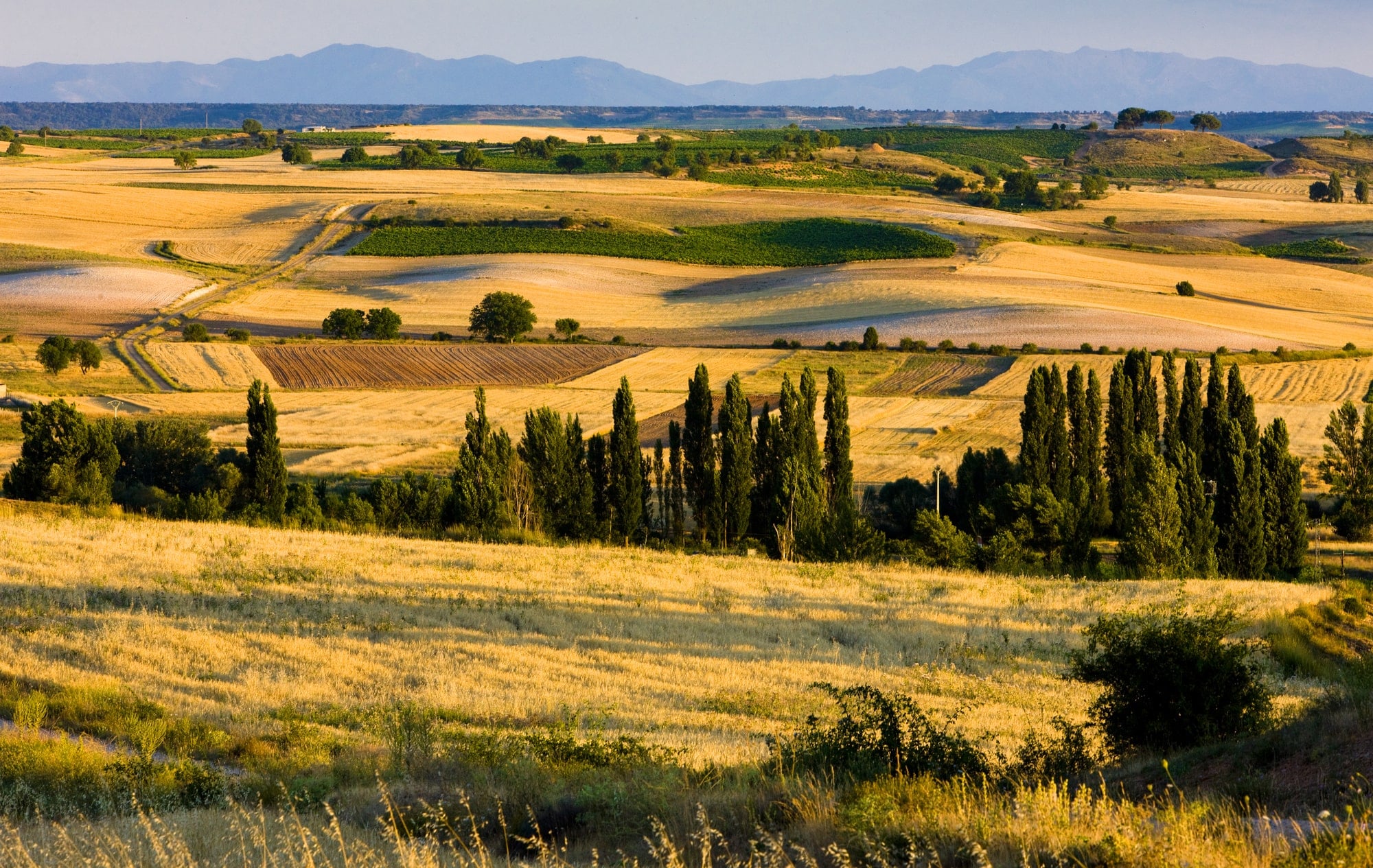
What You Should Know About Castilla y Léon Wine Region
Where is Castilla y Léon Wine Region Located?
Castilla y Léon wine region is located in northwest Spain and it is a landlocked region. Castilla y Léon is bordered by the Spanish autonomous communities of Asturias, Cantabria, and Basque Country to the north; La Rioja and Aragon to the east; Castile–La Mancha, Madrid, and Extremadura to the south; and Galicia to the northwest.
Castilla y Léon Wine Map

Appellations & Climate
Castilla y Léon wine region is one of the most important in Spain, which combines notable DOs (Denominaciones de Origen) such as Ribera del Duero, Toro, Rueda and Bierzo.
The Castilla y Léon Vino de la Tierra title covers the entire wine region. It has much less restrictive regulations, and a wide range of grape varieties are permitted, which also gives winemakers a chance to work on less-traditional wine styles.
HISTORY BOX: The history of wine production in the Castilla y Léon wine region can be dated back to Roman times although the wines of the region started gaining importance only during the eleventh century. Although the region's economy has traditionally focused on cereal crops, viticulture has been a significant economic activity in the area for more than 2000 years.
In terms of climate, Castilla y Léon has a remarkably strong continental feel, given how close it comes to the Atlantic Ocean. Hot, dry summers here are followed by sharp, cold winters when temperatures regularly drop well below freezing. Diurnal temperature shifts are equally pronounced, and play a vital part in the local wine styles. Cool nights refresh the vineyards after long, hot days.
''This region (Ribera del Duero) is famous for its soil, extreme climate, and red grapes, which produce wines from medium to high tannins, alcohol, and colour.''
SORAYA GUERRA VILLAR– LOCAL SOMMELIER FROM RIBERA DEL DUERO
Check out the full interview with Soraya.
Castilla Y Léon Wine Region, Land of Red Wines
Red wines rule in Castilla y Léon wine region, and Tempranillo grape variety is unquestionably the king. It is known here by various synonyms including Tinta del Pais, Tinto de Toro, and Tinto Fino. Tempranillo is behind all of the region's finest wines and it is believed that monks of Cluny who came here through Santiago way brought this vine here. Generally, Tempranillo produces complex, full-bodied red wines with spicy and fruity flavours. In addition to Tempranillo, they also produce fruity mineral red wine Bierzo from the Mencia grape variety. The supporting cast includes the French varieties Cabernet Sauvignon, Merlot, and Syrah.
White wines of Castilla y Léon wine region are far fewer in number than the reds, but only marginally less prestigious. They are made mostly from the white grapes Verdejo and Viura.
DO Wines you Can Taste in Castilla y Léon Wine Region
DO Arlanza of Castilla y Léon wine region extends its vineyards from the southeast of Palencia to the west of Burgos. The grapes used are Tinta del País, Mencía, Garnacha and Cabernet Sauvignon in reds; Albillo and Viura in whites. The red wines of this DO should be made with at least 80% of Tinta del País while in rosé wines limit is 60%.
DO El Bierzo is in the northwest of the León province, in the valley of the Sil river. The main varieties of grapes are Mencía for the reds and Doña Blanca and Godello for the whites. Six different types of Castilian wines are produced in DO El Bierzo.
Our Partner Wineries in Castilla y Léon Wine Region
Visit some of our local partner wineries in DO El Bierzo. Bodegas Arrocal, Bodega Martin Berdugo and Bodegas Y Viñedos Gancedo are having open cellar doors for visitors and offer the diversity of experiences.
Check out the full list of Wineries in the Castilla y Léon wine region!
DO Arribes lies in the northwest of the province of Salamanca and in the southeastern province of Zamora. DO Arribes produces red, white and rosé Castilian wines and the grape varieties allowed are Juan García, Rufete, Tempranillo, Mencía and Garnacha for the reds and Malvasía, Verdejo and Albillo for the whites. The types of wines they produce are Crianza, Joven, Rosé, and White.
DO Cigales was established in 1991, but winemaking has been part of the day-to-day of this region since the 10th century. The grape varieties allowed are Tinta del País, Garnacha Tinta and Garnacha Gris in red and Verdejo and Albillo in whites. The vines of Tinta del País occupy at least 70% of the whole plantation, which makes it the most used variety.
Top Places to Visit in Castilla y Léon Wine Region
Salamanca - A City Well Worth Discovering
Salamanca lies in central Spain, 212 kilometers from Madrid. The historic center of the city is a World Heritage Site protected by UNESCO.
Having one of the oldest universities in Europe with exceptional Renaissance architecture turns Salamanca into a vibrant student. In its heyday, it was one of the most highly regarded European universities. For this reason, it has been attended by some of the greatest Spanish thinkers, artists, and writers.
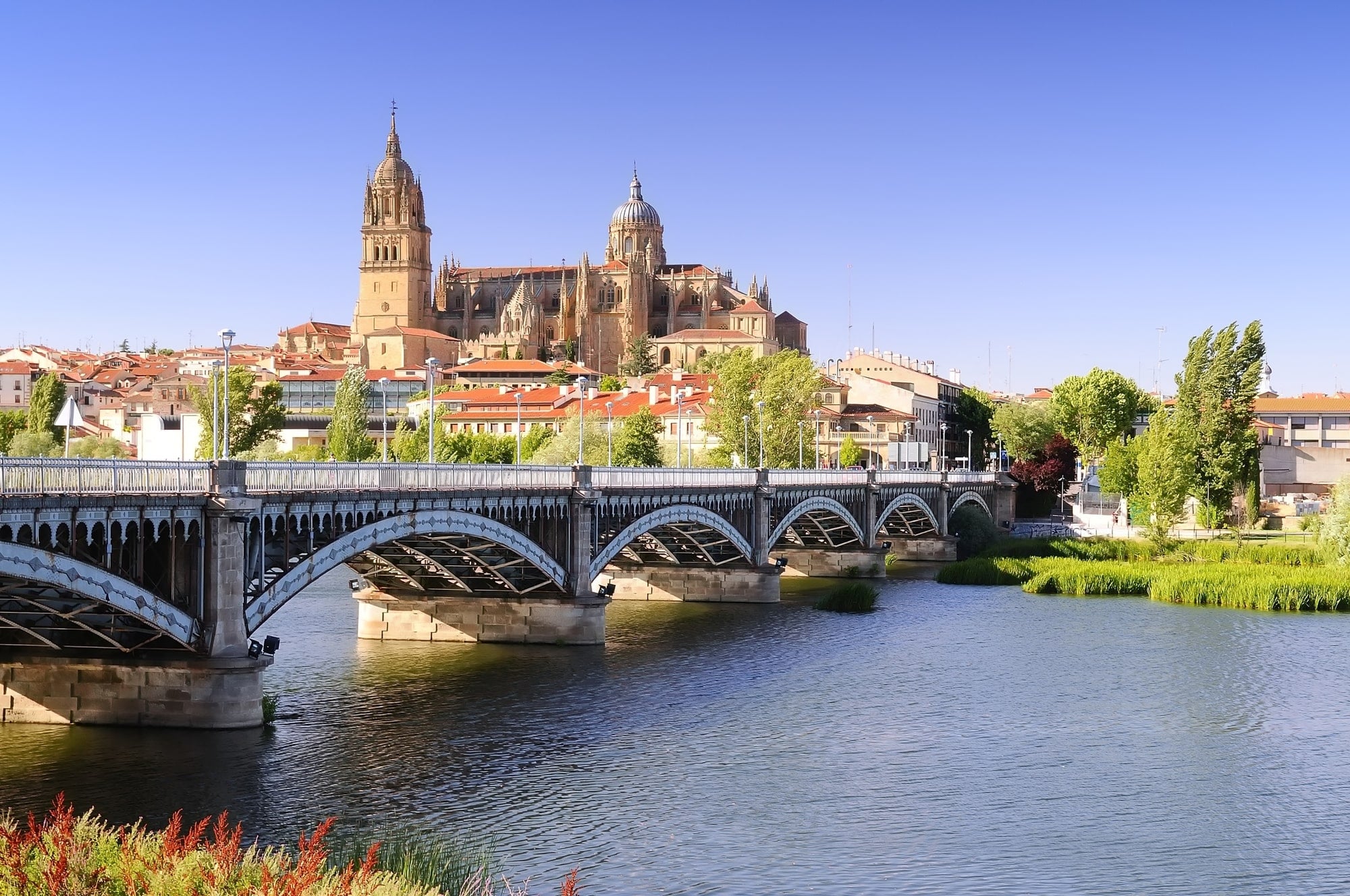
The Vía de la Plata (Silver Way), the old Roman road linking northern and southern Spain, passes through Salamanca. It is a good base for exploring interesting towns and villages nearby, also on the path of this ancient road, such as Guijuelo and Béjar. Salamanca is rich in history, but it’s also modern, lively, and fun. Thanks to the students, this city is full of life and movement 24 hours a day. Salamanca should be seen by day and by night, but especially at sunset when the sun gives a golden hue to the stone from Villamayor used to build it centuries ago.
Avila - A Hidden Gem in the Sierra Gredos Mountains
Ávila, a UNESCO World Heritage Site and capital of Castilla y Léon, is surrounded by the Sierra Gredos Mountains. Behind the city walls, you will find the set of churches and Renaissance palaces which proves the past prosperity of the city as a textile centre.
The symbol of the city is already mentioned wall, which is one of the most well-preserved walls in Europe. It is two and a half kilometres long and consists of 2,500 battlements, 100 towers, 6 doors, and 3 secondary entrances together with the main entrance of the old town called Los Leaves Gate. Don't miss visiting the city cathedral(12-14th century), which looks like a fortress. While there are superimposed Gothic and Baroque elements on the façade, inside there are intricate reliefs in the retrochoir, and the tomb of El Tostado is made of alabaster.

The Plaza del Mercado Chico is the center of the city, where the old Roman forum used to be situated. The façades of the Town Hall and of the Church of San Juan are facing the center. Throughout its history, Ávila was the birthplace of famous Spanish mystics such as Santa Teresa de Jesús and San Juan de la Cruz. This is why there are many churches and convents scattered round the city. There are important towns in the province of Ávila, such as Arévalo, a beautiful example of Mudejar style from Ávila, designated a Historic-Artistic Site; Some of the archaeological findings that are worth seeing in the province are Castro de Cogotas, one of the most important sites in Spain, and Toros de Guisando, Celtic stone sculptures. And finally, the Sierra de Gredos Regional Reserve, a great alternative for nature lovers.
Aranda de Duero – a capital of Ribera del Duero appelltion
Aranda de Duero is located in the southern part of Burgos, and its underground wine cellars give it a unique identity. Wine clubs or 'Peñas' use these cellars to organize exclusive parties and events. Aranda de Duero is a great place to visit and explore. Visitors can discover the Santa María la Real Church, Town Hall, San Juan Church, Plaza Mayor and take in the sights of spectacular stairs cut into rock that lead to an ancient wine cellar. Therefore, you can enjoy both culture and wineries in and around Aranda de Duero.
Cuidad Rodrigo - A Quaint Italian Cathedral City
Ciudad Rodrigo is a small cathedral city in the province of Salamanca, in western Spain. The site of Ciudad Rodrigo, perched atop a rocky rise on the right bank of the River Águeda, has been occupied since the Neolithic Age. Known also as Mirobriga by those who wish to associate the city with an ancient Celtic village in the outskirts of the modern city. Ciudad Rodrigo has a Mediterranean climate characterized by hot and dry summers, and cool, damp winters.
What you should not miss Visiting:
- City Walls - the historic centre of Ciudad Rodrigo is also enclosed by the city walls. The walls were built during the 12th century. In the 17th century, the walls were rebuilt and reinforced by bastions, ravelins and artillery batteries.
- The Cathedral of Santa María is a medieval cathedral situated in the town which was constructed in the 12th century in late Romanesque style and was refurbished in the 16th century by Rodrigo Gil de Hontañón. The cathedral contains many artworks: The Portal of the main façade (Portico del Perdón), the 16th-century choir stalls, baroque retables, medieval sculptures, and tombs.
- There are also several well-preserved Renaissance and Baroque mansions and palaces such as Castro's Palace, and the Palace of the Aguila, with a garden and two courtyards, one of them in Platonesque style.
Explore Guided Wine Tours in Castilla y León with top Castilla y León Wine Tour Guides.
Nature and Adventure Tourism at its best
Castilla y León wine region is home to some simply outstanding natural attractions: a national park, 12 nature reserves, and five designated nature areas. There are so many ways that these attractions can be enjoyed from hot air ballooning or enjoying live music in a national park. This is a new way to experience tourism.
Cave of Franceses - Nature’s Own Work of Art
The Cueva de Los Franceses (Cave of the French) is a finely sculptured natural work of art situated between Covalagua and the Páramo de la Lora. Caves have formed over the centuries through the action of water. During the War of Independence, the cave has been the burial ground for many French soldiers. Inside the cave, there is a beautiful collection of stalactite formations that can be admired along with a distance of 500 meters.
Acebal de Garagueta - Immerse Yourself in an Endless Holly Forest
The Acebal de Garguerta is the largest forest in the Iberian Peninsula and southern Europe. It comprises 406 hectares of forest, of which 180 hectares are pure holly trees that grow in a labyrinth forming vaults in which thrush and deer shelter. The area has extraordinary ecological value. It is thought that its origin is natural and that it comes from the degradation of oak and beech forests, in which holly appeared as accompanying vegetation.
Discover all Spanish wine-growing regions in this article.
Gastronomical Specialties of Castilla y Léon
'After a good dinner, one can forgive anybody, even one's own family'
Nine provinces of Castilla y Léon wine region share flavors and tastes but conserve their own traditions. The historical and artistic richness of the region is clearly reflected in the gastronomy of the area. The region has fondly been given the nickname "España del Asado" (Spain of the Roast). Without a doubt, Castilla y Léon wine region is best known for their roast suckling pig and lamb. These might be the main dishes of the local cuisine, but there are many others well worth trying and prepared with all sorts of ingredients. Here, visitors can witness one of the many gastronomical events dedicated to lamb, pork, wild mushrooms, etc. Take part in the age-old ritual called the "matanza" (home butchering), or visit the international trout week.
Soria: Famous for its Black Truffles
Soria is known for its black truffles, which are highly prized in the culinary world. The truffles are harvested in the forests of the region and are used to enhance the flavors of various dishes, such as scrambled eggs, pasta, and risotto. Soria is also famous for its traditional dish called "torrezno," which is made from crispy fried pork belly.
León: Home of the Botillo
León is famous for its traditional dish called "botillo," which is a type of cured meat sausage. The botillo is made from pork ribs, tail, and other cuts of meat, which are seasoned with garlic, paprika, and other spices. It is typically served with potatoes and cabbage. León is also known for its "cecina," which is a type of cured beef.
Ávila: Famous for its Roast Suckling Pig
Ávila is famous for its roast suckling pig, which is a delicacy in the region. The pig is roasted whole and seasoned with salt and other spices to create a crispy and flavorful skin. The meat is tender and succulent, making it a must-try dish for meat lovers. Ávila is also known for its "yemas de Santa Teresa," which are sweet egg yolk candies.
Burgos: Home of Morcilla
Burgos is famous for its "morcilla," which is a type of black sausage made from pig's blood, rice, and spices. The morcilla is typically grilled or fried and is often served as a tapa or as part of a larger dish. Burgos is also known for its "queso de Burgos," which is a fresh cheese made from sheep's milk.
Salamanca: Famous for its Hornazo
Salamanca is famous for its traditional pastry called "hornazo," which is made from a flaky dough filled with various ingredients, such as chorizo, ham, and hard-boiled eggs. The hornazo is typically eaten during the Easter season and is a popular dish for picnics and outdoor gatherings. Salamanca is also known for its "farinato," which is a type of sausage made from pork and breadcrumbs.
Valladolid: Home of the Lechazo
Valladolid is famous for its "lechazo," which is a type of roast suckling lamb. The lamb is roasted whole and seasoned with salt and other spices to create a tender and flavorful meat. The lechazo is a specialty of the region and is often served with roasted potatoes. Valladolid is also known for its "queso de Villalón," which is a type of cheese made from sheep's milk.
Palencia: Famous for its Mantecadas
Palencia is famous for its traditional pastry called "mantecadas," which are small sponge cakes made from flour, eggs, sugar, and butter. The mantecadas are typically flavored with lemon or cinnamon and are a popular treat in the region. Palencia is also known for its "cecina de León," which is a type
Pork Crackling - La croustade de porc croustillante la plus célèbre au monde
La croustade de porc de Soria, également connue sous le nom de Torreznos, est fabriquée à partir de larges bandes de poitrine de porc. La viande est saupoudrée de sel et frite dans de l'huile d'olive jusqu'à ce qu'elle soit très croustillante. Elle est parfaitement servie chaude ou froide, accompagnée d'une bonne bière fraîche ou d'un vin local. La croustade de porc de Soria est également utilisée dans d'autres plats tels que les migas (à base de pain émietté, d'ail, d'huile d'olive et d'autres ingrédients) et les Patatas Revolconas (un plat similaire à base de pommes de terre).
Palencia - Écrevisses en ragoût
Palencia provient de la ville d'Herrera de Pisuerga. Ici, vous pourrez également visiter le musée des écrevisses et assister au festival de mars. Vous comprendrez rapidement l'importance des écrevisses pour cette ville. Palencia est préparée à partir d'écrevisses du fleuve bouillies. Après les avoir fait bouillir, elles sont assaisonnées d'huile d'olive, de vin blanc, d'ail, d'oignons et de piments guindilla. À vous de les éplucher et de les déguster !
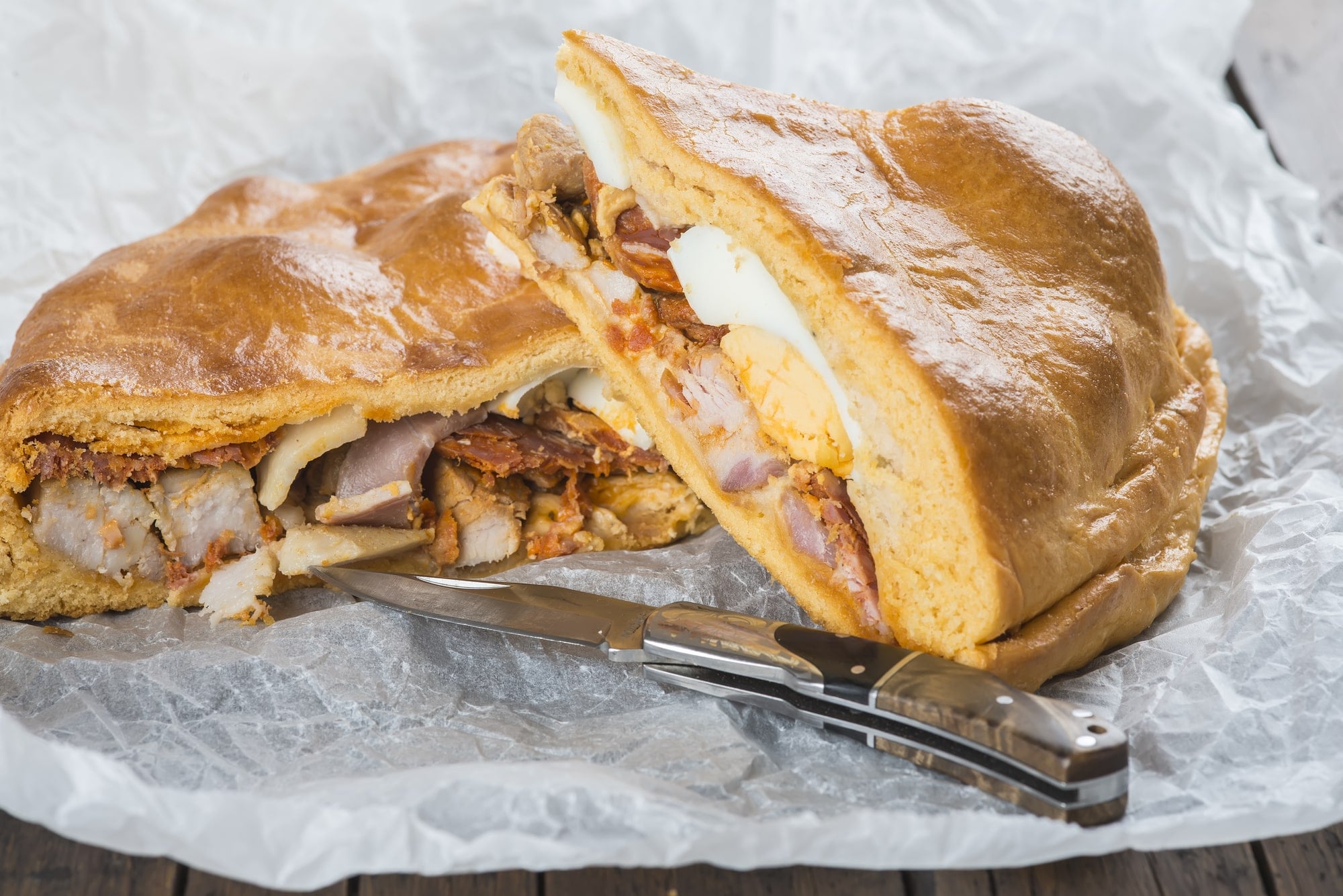
Hornazo - Une nouvelle version de la tourte au porc
Castilla y Léon est célèbre pour ses plats à base de porc et l'une de ses spécialités est le Hornazo. Le Hornazo est une pâtisserie farcie de filet de porc, de saucisse chorizo savoureuse et d'œuf dur. Généralement, ils sont de grande taille et sont servis coupés en tranches. Ils sont délicieux à température ambiante, mais encore plus savoureux lorsqu'ils sont servis chauds, tout juste sortis du four.
La sommelière locale Soraya Guerra Villar nous parle de la région viticole de Ribera del Duero
Pour Ribera del Duero, qu'est-ce qui distingue cette région viticole des autres régions d'Espagne ?
- Ribera est une petite appellation sur le plateau. C'est une ancienne désignation en Espagne près de la rivière Duero. Cette région est célèbre pour son sol, son climat extrême et ses raisins rouges, qui produisent des vins de tanins moyens à élevés, d'alcool et de couleur.
Si vous visitez Ribera del Duero pour la première fois, quel cépage devriez-vous essayer en premier ?
- Je recommande le cépage blanc Albillo mayor et le célèbre cépage rouge de la région - Tempranillo.
Y a-t-il un plat particulier que vous devez essayer lorsque vous séjournez à Ribera del Duero ?
- Je recommande une soupe de légumes et de l'agneau rôti, accompagnés d'un verre de vin rouge, d'acidité moyenne-élevée et de tanins. Je pense que c'est une bonne combinaison.

Questions fréquemment posées sur la région viticole de Castilla y Léon
1. Où se trouve la région viticole de Castilla y León ?
La région viticole de Castilla y León se trouve dans le nord-ouest de l'Espagne, enclavée en Espagne et bordant le Portugal à l'ouest. Castille et León est formée par les villes d'Ávila, Burgos, León, Palencia, Salamanque, Ségovie, Soria, Valladolid et Zamora.
2. Quelles sont les sous-régions et appellations les plus célèbres de Castilla y León ?
Les principales sous-régions qui sont également des appellations dans la région viticole de Castilla y León sont Ribeira del Duero, Rueda, Tierra de León, Bierzo, Toro, Aralanza, Cigales, Arribes, et Tierra de Zamora - toutes ces D.O. (Denominación de Origen).
3. Quels sont les principaux cépages de Castilla y Léon ?
Les cépages les plus plantés de Castilla y León sont les rouges Mencía, Tempranillo, Grenache (Garnacha), Melbec, et Merlot; et les blancs Godello, Verdejo, Sauvignon Blanc, Palomino et Bierzo.
4. Quel est le meilleur vin à essayer à Castilla y Léon?
Les étés chauds, secs et poussiéreux de Castilla y León créent un terroir unique pour les vins de Tempranillo de Ribera del Duero. C'est l'un des meilleurs vins à essayer dans la région viticole de Castilla y León, vous ne serez pas déçu.
5. Quel est le vin le plus célèbre de Castilla y Léon?
Tempranillo est le cépage et le vin les plus célèbres de Castilla y León et le cépage rouge phare de l'Espagne. Les rouges élaborés à partir de Tempranillo sont d'une couleur profonde avec des tanins modérés.
Questions fréquemment posées sur la région viticole de Castilla y Léon
1. Où se trouve la région viticole de Castilla y León ?
La région viticole de Castilla y León se trouve dans le nord-ouest de l'Espagne, enclavée en Espagne et bordant le Portugal à l'ouest. Castille et León est formée par les villes d'Ávila, Burgos, León, Palencia, Salamanque, Ségovie, Soria, Valladolid et Zamora.
2. Quelles sont les sous-régions et appellations les plus célèbres de Castilla y León ?
Les principales sous-régions qui sont également des appellations dans la région viticole de Castilla y León sont Ribeira del Duero, Rueda, Tierra de León, Bierzo, Toro, Aralanza, Cigales, Arribes, et Tierra de Zamora - toutes ces D.O. (Denominación de Origen).
3. Quels sont les principaux cépages de Castilla y Léon ?
Les cépages les plus plantés de Castilla y León sont les rouges Mencía, Tempranillo, Grenache (Garnacha), Melbec, et Merlot; et les blancs Godello, Verdejo, Sauvignon Blanc, Palomino et Bierzo.
4. Quel est le meilleur vin à essayer à Castilla y Léon?
Les étés chauds, secs et poussiéreux de Castilla y León créent un terroir unique pour les vins de Tempranillo de Ribera del Duero. C'est l'un des meilleurs vins à essayer dans la région viticole de Castilla y León, vous ne serez pas déçu.
5. Quel est le vin le plus célèbre de Castilla y Léon?
Tempranillo est le cépage et le vin les plus célèbres de Castilla y León et le cépage rouge phare de l'Espagne. Les rouges élaborés à partir de Tempranillo sont d'une couleur profonde avec des tanins modérés.
Questions fréquemment posées sur la région viticole de Castilla y Léon
Carte des vignobles de Castille et León
Découvrez les emplacements des domaines viticoles à Castille et León
Questions fréquemment posées
1. Où se trouve la région viticole de Castilla y Léon ?
La région viticole de Castilla y Léon se trouve dans le nord-ouest de l'Espagne, enclavée en Espagne et bordant le Portugal à l'ouest. Castille et León est formée par les villes d'Ávila, Burgos, León, Palencia, Salamanque, Ségovie, Soria, Valladolid et Zamora.
2. Quelles sont les sous-régions et appellations les plus célèbres de Castilla y León ?
Les principales sous-régions qui sont également des appellations dans la région viticole de Castilla y León sont Ribeira del Duero, Rueda, Tierra de León, Bierzo, Toro, Aralanza, Cigales, Arribes, et Tierra de Zamora - toutes ces D.O. (Denominación de Origen).
3. Quels sont les principaux cépages de Castilla y Léon ?
Les cépages les plus plantés de Castilla y León sont les rouges Mencía, Tempranillo, Grenache (Garnacha), Melbec, et Merlot; et les blancs Godello, Verdejo, Sauvignon Blanc, Palomino et Bierzo.
4. Quel est le meilleur vin à essayer à Castilla y Léon?
Les étés chauds, secs et poussiéreux de Castilla y Léon créent un terroir unique pour les vins de Tempranillo de Ribera del Duero. C'est l'un des meilleurs vins à essayer dans la région viticole de Castilla y Léon, vous ne serez pas déçu.
5. Quel est le vin le plus célèbre de Castilla y Léon?
Tempranillo est le cépage et le vin les plus célèbres de Castilla y Léon et le cépage rouge phare de l'Espagne. Les rouges élaborés à partir de Tempranillo sont d'une couleur profonde avec des tanins modérés.
1. Où se trouve la région viticole de
La région viticole de Castilla y León se trouve dans le nord-ouest de l'Espagne, enclavée en Espagne et bordant le Portugal à l'ouest. Castille et León est formée par les villes d'Ávila, Burgos, León, Palencia, Salamanque, Ségovie, Soria, Valladolid et Zamora.
Recevez votre dose mensuelle d'inspiration viticole
Rejoignez notre newsletter dès maintenant et recevez gratuitement notre guide pour organiser la visite de vignoble parfaite.
Nous nous soucions de vos données dans notre politique de confidentialité .