
There is a specific hour in October when Nebbiolo makes complete sense. It is dawn, or just before it. You are somewhere in the Langhe hills — Barolo, or Barbaresco, or Roero — and the valleys below have filled overnight with a thick white fog that reaches almost to your feet. Only the tops of the vineyards are visible, floating above the mist like islands. This is nebbia. And this is why the grape is called Nebbiolo. It ripens late, into the fog, drawing something from those cool damp autumnal mornings that no other grape does.
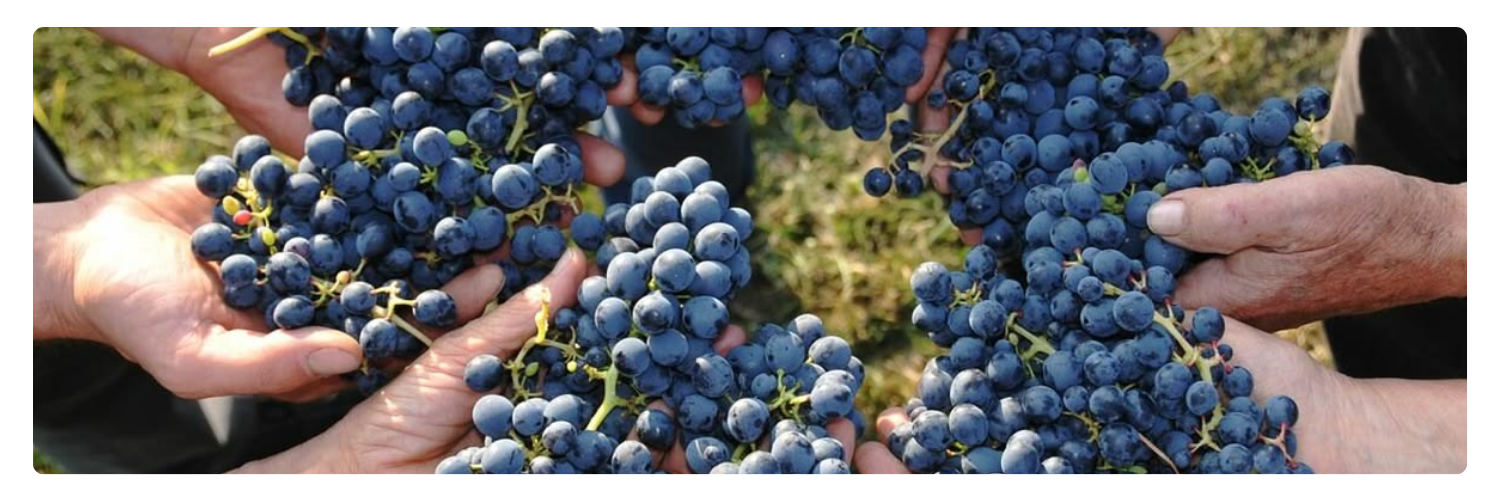
Barolo gets the headlines. It has for two centuries. But the real Nebbiolo story is bigger than one appellation. There is Barbaresco a short drive north, more elegant and less tannic. There is Roero across the Tanaro river, sandier and more perfumed. There is Gattinara in the Alpine north, tighter and more mineral. There is Valtellina, where Nebbiolo is called Chiavennasca and clings to terraced slopes above the Adda river.
This is a guide to those foggy kingdoms — the Nebbiolo wine regions that reward travelers willing to look beyond Barolo, and the WineTourism.com estates that will teach you the difference at the source.
At a glance: Nebbiolo wine regions
Nebbiolo wine is Italy's most demanding and rewarding red — a late-ripening, tannic, aromatic grape almost entirely confined to Piedmont and neighboring corners of Lombardy and the Alps. Beyond Barolo, the reference point, the great Nebbiolo regions include Barbaresco (more elegant, aged less, an easier introduction), Roero (across the Tanaro, sandier soils, more perfumed and lifted), Gattinara and the broader Alto Piemonte appellations (Alpine, mineral, structured), and Valtellina in Lombardy (where Nebbiolo is called Chiavennasca and grown on terraced Alpine slopes). Each region produces a wine recognizably built from the same grape yet distinctly its own. All are within a day or two of Milan or Turin.
What makes Nebbiolo unlike other grapes?
Nebbiolo is one of the most terroir-sensitive grapes in the world. It ripens late — often into late October — which is why it survives only in a narrow band of northwest Italy where autumn stays long and the mornings run misty. The wines it makes are pale in color (surprisingly for their power), high in acid, high in tannin, and remarkably aromatic. Rose, tar, dried cherry, licorice, truffle, and dried herbs are the classical descriptors. Good Nebbiolo needs a decade in bottle before it fully opens.
The grape is also astonishingly sensitive to place. A Nebbiolo from calcareous marl in Barolo tastes different from a Nebbiolo grown on sandy soils in Roero, which tastes different again from one on volcanic porphyry in Gattinara. This is why Nebbiolo wine tourism is worth taking seriously as a comparative exercise. Two glasses side by side tell you more than any book.
Barolo: the king that anchors the story
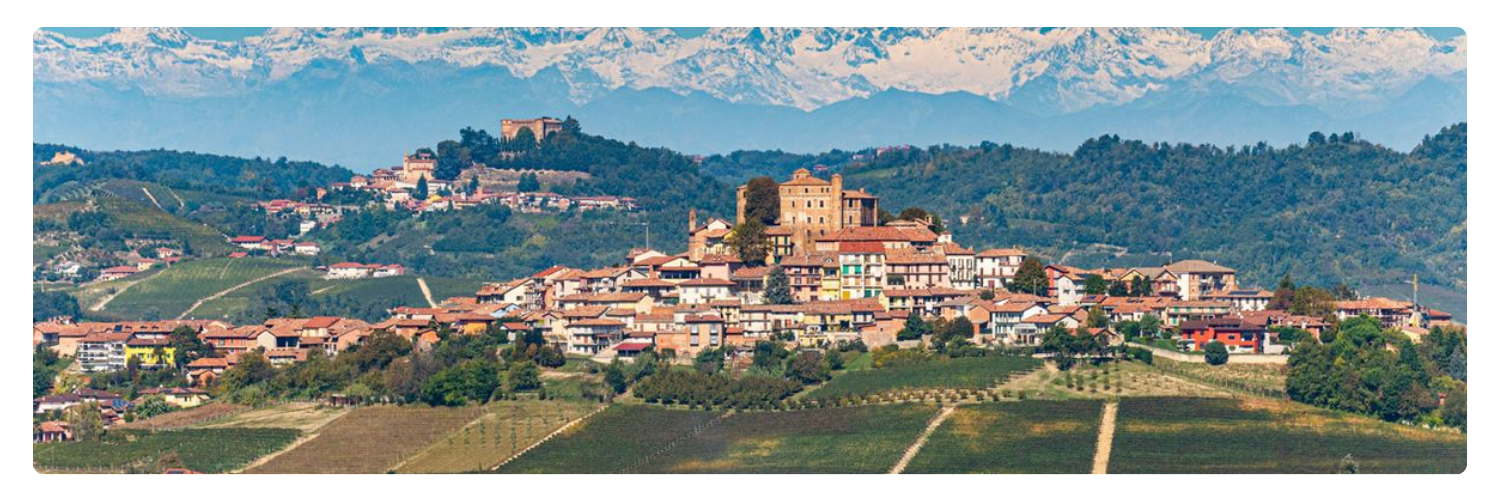
Barolo is where Nebbiolo became "the king of wines and the wine of kings." Eleven communes in the Langhe hills grow it — La Morra, Barolo village, Castiglione Falletto, Serralunga d'Alba, Monforte d'Alba, and the rest — each with its own soil-driven character. The wines are the region's most tannic, most structured, and most ageworthy. A serious Barolo can drink brilliantly at forty years old.
Marchesi di Barolo is the reference point for a first Barolo visit. The estate traces its origin to the early nineteenth century, when Marchesa Giulia and her husband Carlo Tancredi crafted the very first Barolo wines from Nebbiolo grapes. Since 1929, the Abbona family — now in its fifth generation under Ernesto Abbona and his wife Anna — has continued the tradition. The ancient cellars house more than 30,000 bottles including 19th-century vintages, and the estate manages over 200 hectares across the Langhe, Roero, and Monferrato. UNESCO-listed setting, family hospitality, deep-history tour. Best for travelers new to Barolo or wanting to understand how modern Piedmontese wine got here.
Barbaresco: the elegant sibling
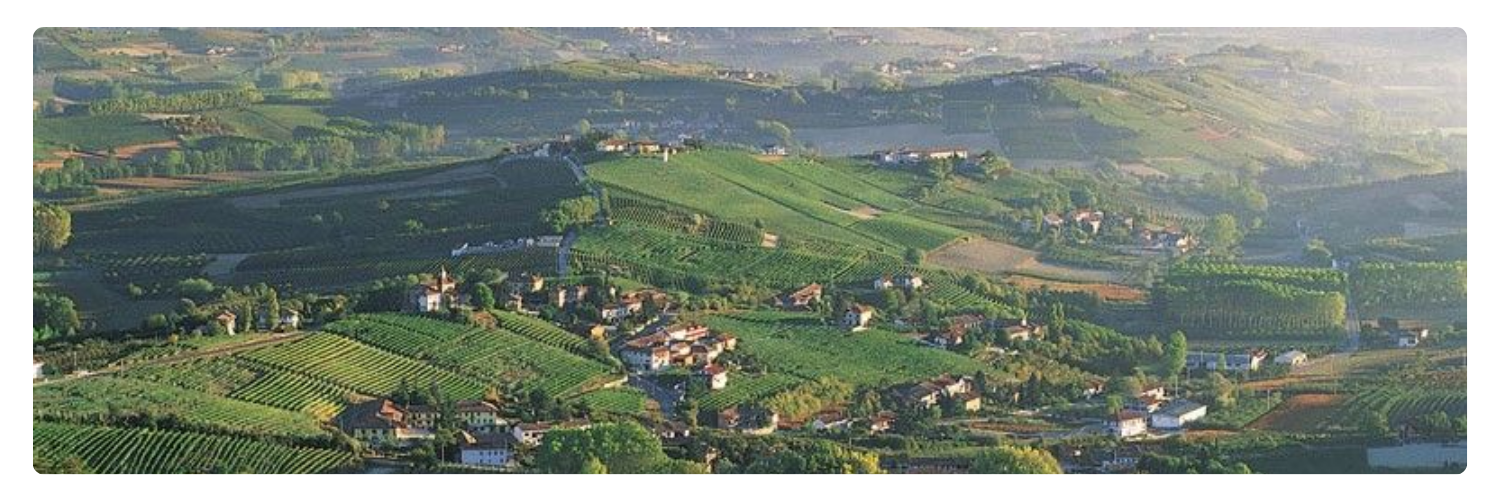
Fifteen kilometers north of Barolo, on the opposite bank of the Tanaro, Barbaresco makes Nebbiolo in a different register. The soils are calcareous but richer in trace elements. The wines are less tannic than Barolo — more elegant, more approachable, ready to drink younger. The villages of Barbaresco, Neive, and Treiso divide the appellation, each producing subtly distinct wines.
Agricola Molino in Treiso is a family estate founded in 1991 by Virginio Molino with sons Tommaso, Franco, and Dario. Their Barbaresco Teorema, made from Nebbiolo planted in 1958, is a benchmark for the appellation's spicy, balsamic style. Guest Francesca is repeatedly named in reviews. Small production, warm hospitality.
Pelissero Ornella, near the Neive Castle, released its first Barbaresco in 1971 under Pasquale Pelissero, and today his daughter Ornella and her son Simone continue the estate. Aging happens in 25 to 30 hl French oak. Guests describe Ornella's tastings — often paired with local cheese, focaccia, and hazelnuts — as one of the warmest visits in Piedmont.
Roero: the sandy third
Cross the Tanaro river from Barolo and you enter Roero, the third of the great Langhe-Roero Nebbiolo zones. Roero's soils are sandier than either Barolo or Barbaresco — a legacy of an ancient sea bed — which lightens the tannic backbone of Nebbiolo and pushes the wines toward perfume and lift. The Roero DOCG requires a minimum of 95% Nebbiolo and at least 20 months of aging. The villages of Canale, Vezza d'Alba, and Montà are the region's centers.
Angelo Negro e Figli has been making wine in the Roero hills since 1670. Sixty hectares of vineyards across Monteu Roero, Canale, Neive, and even Serralunga d'Alba (in Barolo territory) let the family produce wines from all three great Nebbiolo appellations under one estate. Certified sustainable through "The Green Experience" since 2016. The current generation — Giovanni Negro, his sons Gabriele, Angelo, and Giuseppe, and daughter Emanuela — leads visits that often include local pairings and comparative tastings across the appellations.
Gattinara and Alto Piemonte: Nebbiolo in the Alpine north
Two hours north of the Langhe, in the shadow of Monte Rosa, sits Alto Piemonte — a scatter of small Nebbiolo appellations most travelers have never heard of. Gattinara and Ghemme are the DOCG-classified stars; Bramaterra, Boca, Lessona, Sizzano, and Fara are DOC appellations worth a detour. The soils here are volcanic porphyry, radically different from the Langhe. The wines are tighter, more mineral, more structured — often lower in alcohol, with a hardness in youth that ages into something almost Burgundian.
Nebbiolo here is often called Spanna. Historic producers like Antoniolo, Travaglini, Nervi, and Le Piane have carried the tradition through decades when the region was almost forgotten. WineTourism.com's coverage of Alto Piemonte is more limited than in the Langhe — visitors are best served by combining a self-drive route from Milan (Malpensa Airport is 90 minutes away) with direct contact to the small estates.
Valtellina: Nebbiolo above the treeline
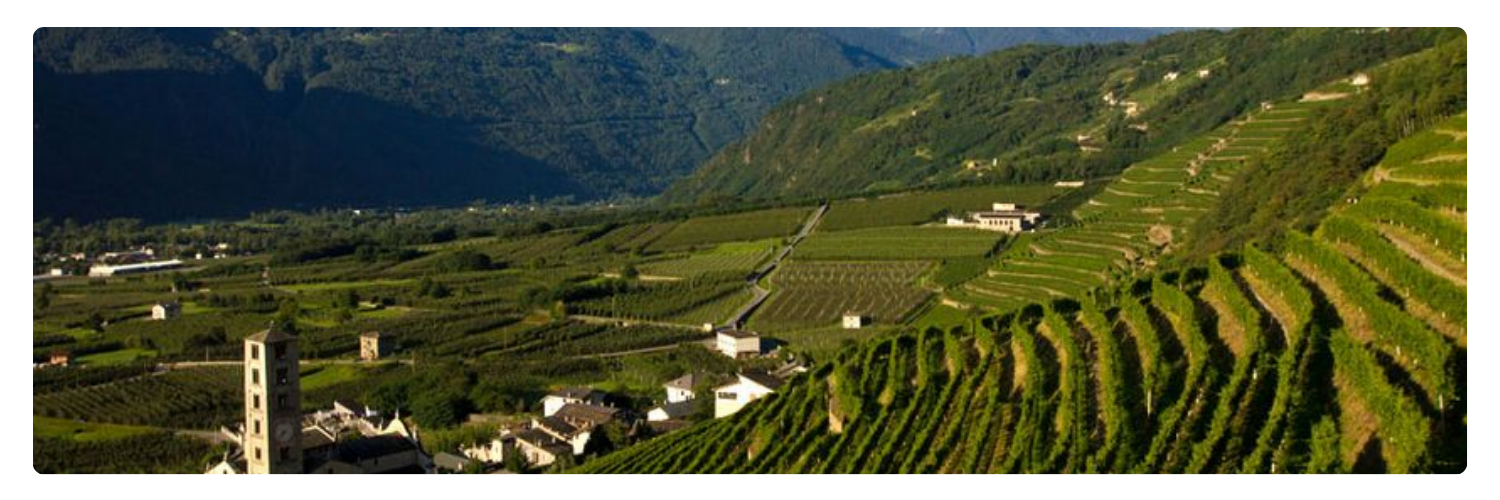
Cross into Lombardy and Nebbiolo becomes Chiavennasca. In the Alpine valley of Valtellina, above the Adda river between Lake Como and the Swiss border, terraced Nebbiolo vineyards climb the south-facing slopes to nearly 700 meters. The wines — labeled Valtellina Superiore, or the concentrated Sforzato made from partially dried grapes — are lighter and more mineral than Barolo, closer to Pinot Noir in weight, with the same lifted rose-and-cherry aromatics that define Nebbiolo everywhere.
Producers to know include Ar.Pe.Pe., Nino Negri, and Sandro Fay. The area is best reached from Milan (two hours' drive to Sondrio, the regional capital) or by train from Milano Centrale.
Food pairings and travel tips
Nebbiolo evolved with the food of Piedmont, and the pairings are deeply local. In Barolo and Barbaresco, tajarin al tartufo bianco (thin egg pasta with white Alba truffles) is the classic, with braised beef or rabbit as the fallback. In Roero, the wines are lighter — try them with grilled meats or the region's famous hazelnuts. Alto Piemonte wines pair beautifully with Alpine cheeses and cured meats. Valtellina calls for pizzoccheri (buckwheat pasta with cabbage and Bitto cheese) — a dish born within sight of the vineyards.
The best season is autumn — September and October — when harvest is happening, fog rolls off the fields at dawn, and the white truffle festival takes over Alba in October and November. May and June are also excellent, with fewer crowds and better hotel rates.
Frequently Asked Questions
What is Nebbiolo wine?
What is Nebbiolo wine?
What is the difference between Barolo and Barbaresco?
What are the other great Nebbiolo wine regions?
What is Gattinara wine?
When is the best time to visit Piedmont for Nebbiolo?
How long should I spend in Nebbiolo country?
Featured WineTourism.com Nebbiolo wine experiences
Bookable estates referenced in this guide:
- Marchesi di Barolo, Barolo (Piedmont) — https://www.winetourism.com/winery/marchesi-di-barolo/
- Agricola Molino, Treiso (Barbaresco) — https://www.winetourism.com/winery/agricola-molino/
- Pelissero Ornella, Neive (Barbaresco) — https://www.winetourism.com/winery/azienda-agricola-pasquale-pelissero-di-pelissero-ornella/
- Angelo Negro e Figli, Monteu Roero (Roero + Langhe) — https://www.winetourism.com/winery/angelo-negro-e-figli/
The foggy kingdoms belong on your wine map
Nebbiolo doesn't ask to be understood on the first visit. It rewards return trips, side-by-side tastings, and the willingness to compare a Barolo with a Barbaresco with a Roero with a Gattinara across a slow week. Do that once, and the grape reveals itself as one of the two or three most compelling reds in the world — every glass a different expression of the same demanding, aromatic, autumnal soul. Book one of the estates above, arrive in October with an open evening, and let the fog do the rest.


