
The complete guide to red wines
Did you know that moderate consumption of red wine is better for your health than no red wine at all? Then what are you waiting for, get yourself a glass and a bottle of nice red wine to increase your lifetime expectation (always drink in moderation, please!). The world of red wines is vast and if you are not familiar with it, it might be kind of confusing. That’s why we’re here to help with our ‘Complete guides to red wines’, a guide we specifically put together for you to get to know more red wines.
How is a red wine made?
Every bottle of red wine that arrives on our tables represents the process and craftsmanship of the winemaker that produced it. Making red wine is quite simple, as it has some fixed steps that need to be executed by winemakers with the highest attention and meticulosity to ensure a great result.
The main difference between red and white wine is that red wines are produced on the skins, which are indispensable during the fermentation process to give the colour, texture and flavour to the wine.
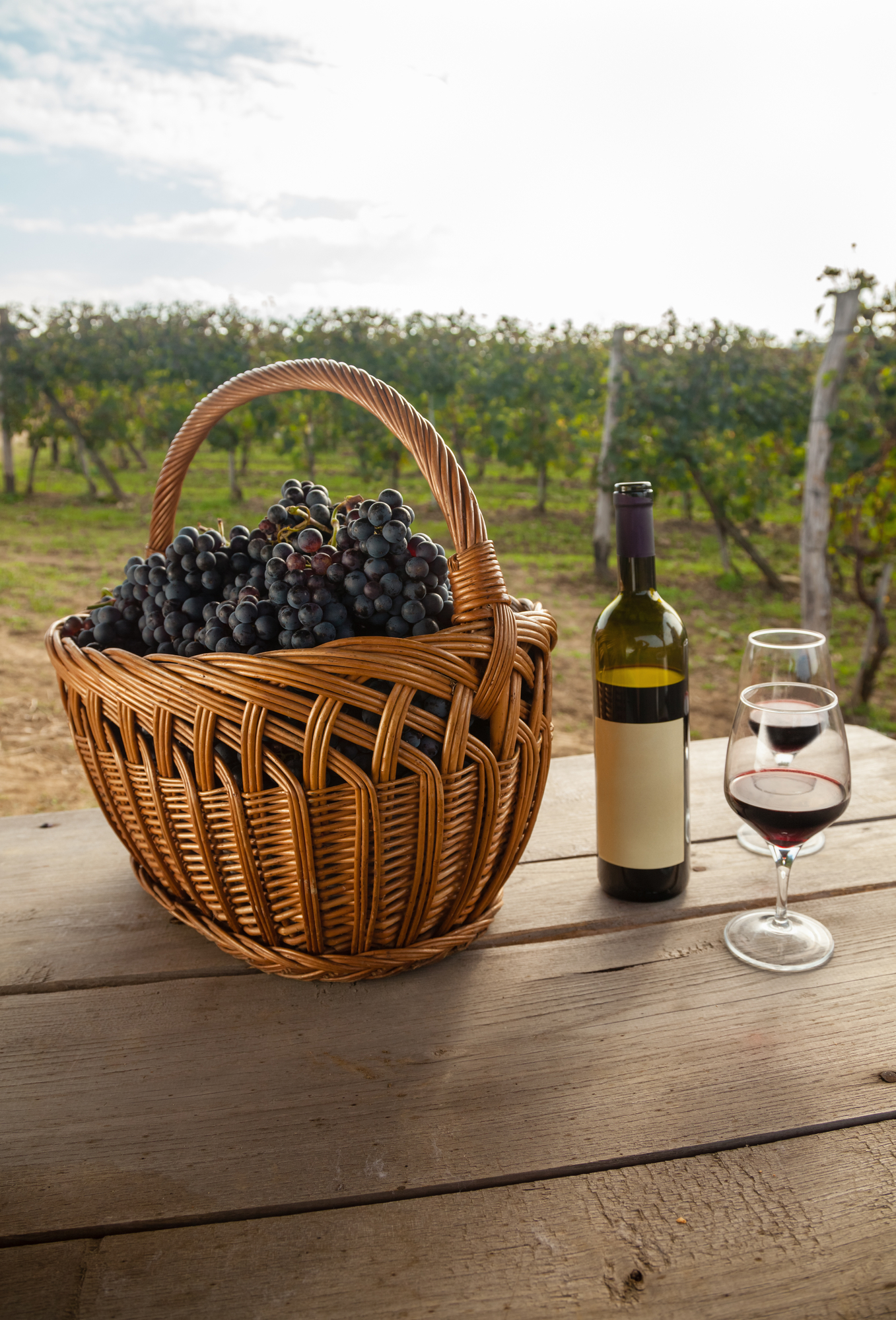
The first step in the production line of red wine is to harvest the grapes and then crush them. After crushing is done, thanks to yeast and sugar, the wine starts fermentation, produces alcohol and releases CO2. After the fermentation process is done the wine is pressed, and the juice (at this point the skins are thrown away) is ready to start the ageing process. This could happen for several years, depending on the appellation and the rules related to the production of each red wine, and it could happen in stainless steel, oak, amphora or concrete. Before being bottled, the wine undergoes a process of racking to get rid of the sediment and a process of filtration. Once the wine is fully ready, it’s time to bottle it, cork it and label it. Some of the world’s most prestigious red wines are then put to age in the cellar for as many years as the disciplinary demands.
Join us on a journey to discover more about red wines, their peculiarities, the best regions to taste them and the best pairings with some delicious food.
For more, you can read our guide to top-10 red wine regions to visit.
Light-bodied red wines
Lambrusco
Lambrusco red wine could be considered as one of the cheapest and easiest red wines to drink, it’s indeed perfect for an aperitivo, but it has a very long history. Lambrusco is indeed made using indigenous grapes to northern Italy that has been around even before the birth of Christ!
Today, the best and most common Lambruscos are dry or semi-dry and they are mostly produced with two grapes: Lambrusco di Grasparossa and Lambrusco di Sorbara.
Lambrusco di Sorbara is the grape that produces the lightest and most aromatic Lambruscos, while Lambrusco di Grasparossa is used to produce boldest wines. The main characteristic of Lambrusco is the bubbles because this light-bodied red wine is sparkling; don’t imagine a Prosecco or a Champagne, the bubbles are light and give the wine its very own personality.

Beaujolais
Gamay is the perfect grape to make light-bodied red wines because its skin is very thin, and it macerates well in sealed tanks with carbon dioxide. This is the procedure used by winemakers in the Beaujolais wine region in France, the number one producer of Gamay red wines.
Beaujolais wines are light, high in acidity but easy to drink, and fruity, perfect to be drunk on a terrace in spring. The main tasting notes are those of red fruits such as cranberries and raspberries, blackcurrant, and flowers like lilacs.
Fun fact: Gamay is native to the Burgundy wine region but during the 14th century it became outlawed. Only winemakers in Beaujolais, a wine region close to Burgundy, had the guts to defy the law and kept producing red wines using the Gamay grape.
Medium-bodied red wines
Zinfandel
Even though Zinfandel is basically the same as the Apulian Primitivo grape, which is actually native to Croatia, the wine that results from this grape is way lighter in the body compared to its Italian cousin. Zinfandel is mostly grown and produced in the California wine region, especially in Napa Valley, Dry Creek Valley, and Sonoma County. The resulting wine is a light to medium body red wine, less tannic and earthy than Italian Primitivo, and with a subtle sweetness.
The main aromas that you can recognise in a glass of Zinfandel are those of red fruits like strawberries, plums, and cherries, together with a spicier and peppery character.
Cabernet Franc
Cabernet Franc is the parent grape of Merlot and Cabernet Sauvignon. Its taste profile presents a medium-body, medium to high tannins and acidity and a certain dryness.
The dominant flavours that can be recognised in all the Cabernet Sauvignon wines produced around the world are those of red fruits, like strawberries and juicy red plums and spices like chilli.
If you are looking for a more acidic Cabernet Franc, look no further than the gorgeous Loire Valley, where red wines present stronger aromas of ripe fruit; on the contrary, Cabernet Francs from Tuscany or California are ‘sweeter’. Of course, the ultimate Cabernet Franc is that from the Bordeaux wine region, where the grape is blended with Merlot and Cabernet Sauvignon to produce the Bordeaux blend.
Chianti
Chianti is a medium-bodied, high in tannins red wine that is produced in the Chianti wine region, an appellation in the gorgeous Tuscany wine region. Chianti red wine is among the most tannic wines produced in Italy and its dry flavour makes it perfect to drink with a Fiorentina steak. Even though most Chiantis are produced using 100% Sangiovese, the discipline allows grapes such as Cabernet Sauvignon, Syrah, Trebbiano and Merlot to be used. The flavour profile of Chianti is characterised by strong red fruit aromas, both on the nose and in the mouth, balsamic vinegar, herbs, and smoke.

Merlot
Merlot wines are among the most popular and most consumed in the whole world, especially because of the wide range of flavours in their bouquet. Merlot as a grape can easily adapt to several climates, and it can result in medium to full-bodied red wines, which are very easy to pair with food.
Merlot is typically a dry, moderate in acidity, high in alcohol but with lower tannins red wine that can present rich flavours of black fruit or an earthier character.
Cool climate Merlots, like those produced in Italy and France, are more structured and present notes of tobacco compared to Merlots produced in California, Argentina and Australia.
Full-bodied red wines
Nero d’Avola
Nero d’Avola is a full-bodied red wine from the beautiful Sicily wine region. The grape used to produce this complex Sicilian wine is autochthonous to the Italian island. In recent years, winemakers from California and Australia started to experiment with the grape’s ability to adapt to other climates and terroirs.
Nero d’Avola’s bouquet immediately showcases aromas of black fruit, such as black plums and prunes. Liquorice is another distinctive note that is easy to spot in a glass of high-quality Nero d’Avola.
Overall, Nero d’Avola is a full-bodied, round and complex red wine that appears perfectly balanced in the mouth.
Syrah/Shiraz
Depending on where you are in the world, you might find bottles of red wine labeled Syrah or Shiraz. Essentially, these two names define the same type of bold, full-bodied red wine that originated in France.
The Syrah grape is very versatile and from France, it spread to New World countries where it has adapted to different climates. The main characteristics of the wine tend to remain the same whether it is called Syrah in France or Shiraz in Australia.
Syrah wines are generally dry, full-bodied red wines with firm tannins and a complex bouquet. The flavours include red and black fruits, pepper and spices, smoke and lilacs. If aged in oak barrels, Syrah can present subtle notes of vanilla as well
Malbec
Malbec originated from France, together with Merlot, but it became famous thanks to bold and full-bodied Argentinian red wines. The first Malbec grapes were brought to Argentina in the 19th century, as the grape did not produce the expected wines in the Bordeaux wine region. Surprisingly, Malbec perfectly adapted to the Argentinian terroir, which enhances all the best characteristics of the grape.
Malbec red wines are dry and full-bodied, with a complex bouquet from which emerge rich flavours of dark fruit. Flavours of chocolate, vanilla and spices are also very recognisable to the nose in a nice glass of Malbec.
Thanks to its moderate tannins, Malbec is very easy to pair with food, especially with red meat and steak.
Red wine food pairings
1. Red wine with steak
Red wine with steak is the ultimate food and wine pairing, the one that everybody knows about. Red wine and red meat are one of those universal unwritten rules, it’s the most classic pairing and one you can never get wrong. But do all red wines perfectly fit a steak dinner? No! Normally, light-bodied reds are less advised with red meat, go for a medium or full-bodied red wine, better if higher in tannins.
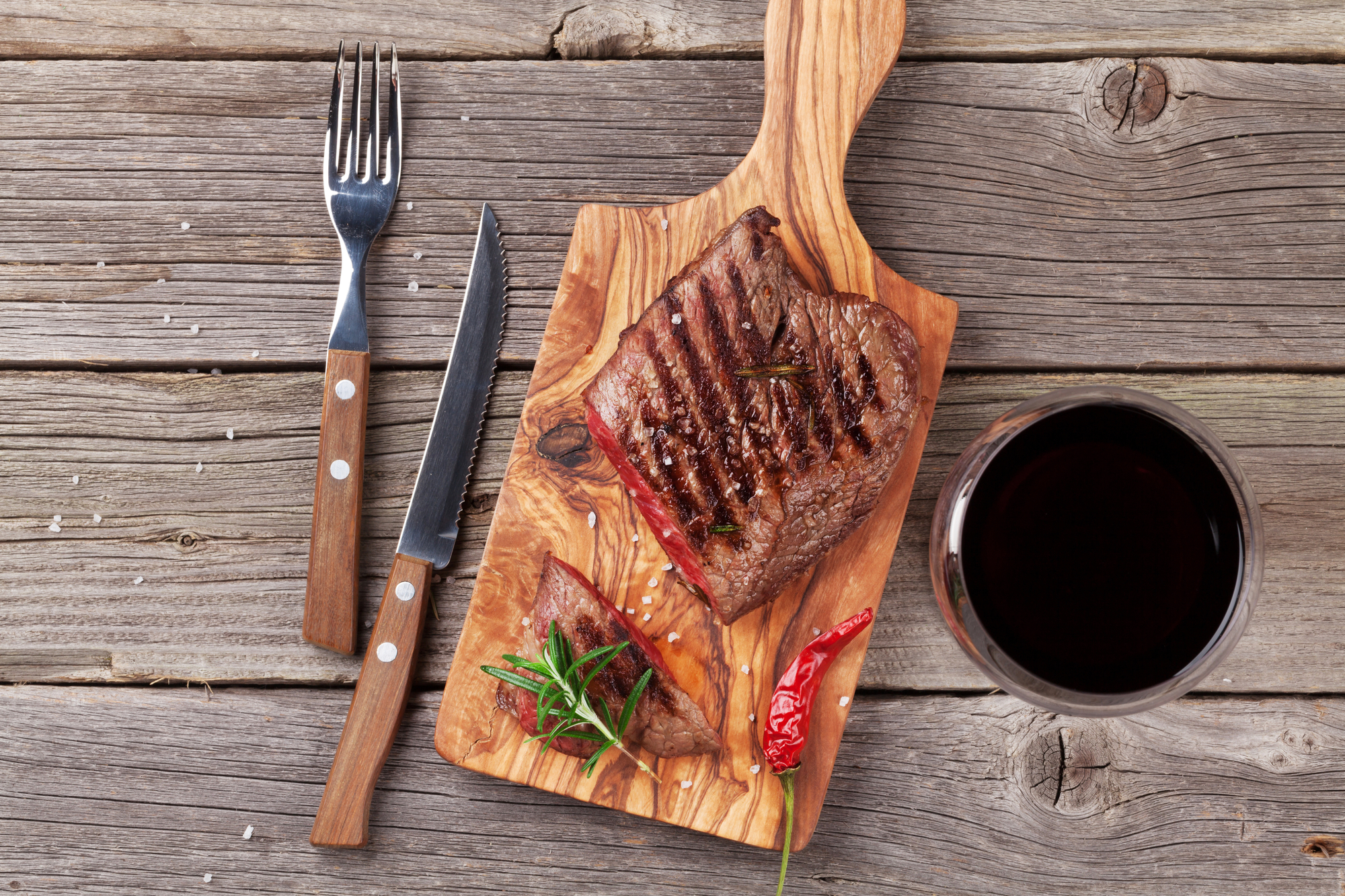
What to pair with steak?
- Cabernets from Chile and Napa
- Malbecs from France and of course Argentina
- Zinfandel from California
- Syrah from Australia and Spain
- Chianti or Sangiovese, from Tuscany
2.Red wine with lamb
Lamb is a very versatile red meat that can be enjoyed in several styles (roasted, grilled) and can have a different taste depending on the age of the lamb or the country where it comes from. There are indeed many different options for you to ace your lamb-wine pairing and serve your guests the best meal they’ve had in a long time.

What to pair with lamb?
- Pinot Noir from Burgundy is perfect with a young lamb
- Bordeaux blends are the ones to choose if you are serving roasted lamb
- Langhe Nebbiolo, Barolo, Barbaresco all the best wines from Piemonte are great with roasted and grilled lamb
3. Red wine with pork
The way to choose the best pork and wine pairing is to consider two elements that characterise pork, fat and salt. Pork is a fatter meat compared to lamb and steak, and that is why it thrives when paired with medium-bodied, high in acidity reds.
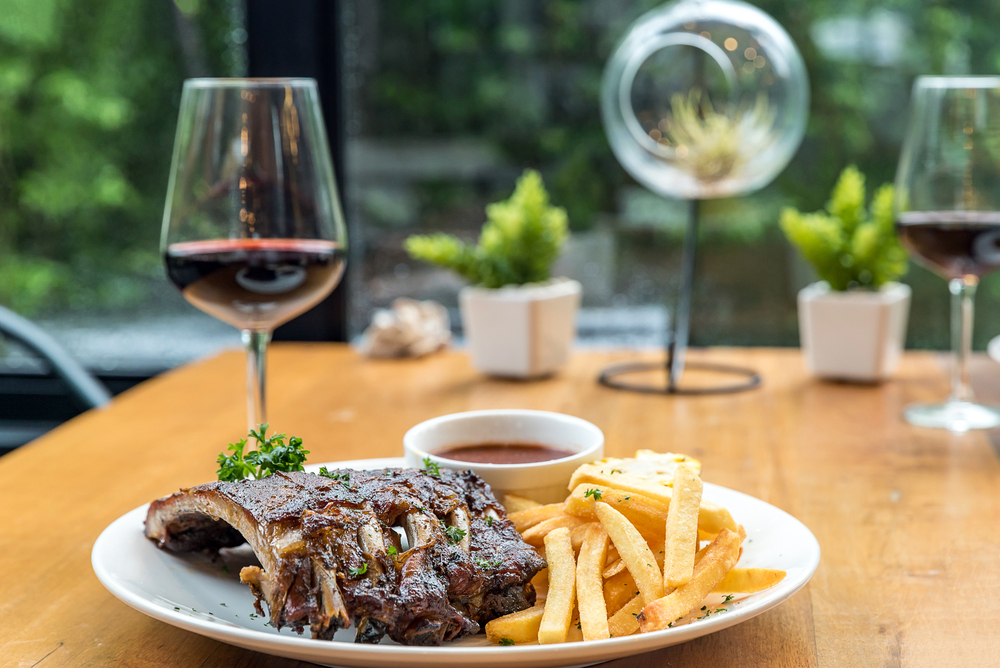
What to pair with Pork?
- Cabernet Franc
- Malbec from Argentina rather than Malbec from France
- Zinfandel from California for pork ribs
- Pinotage from South Africa