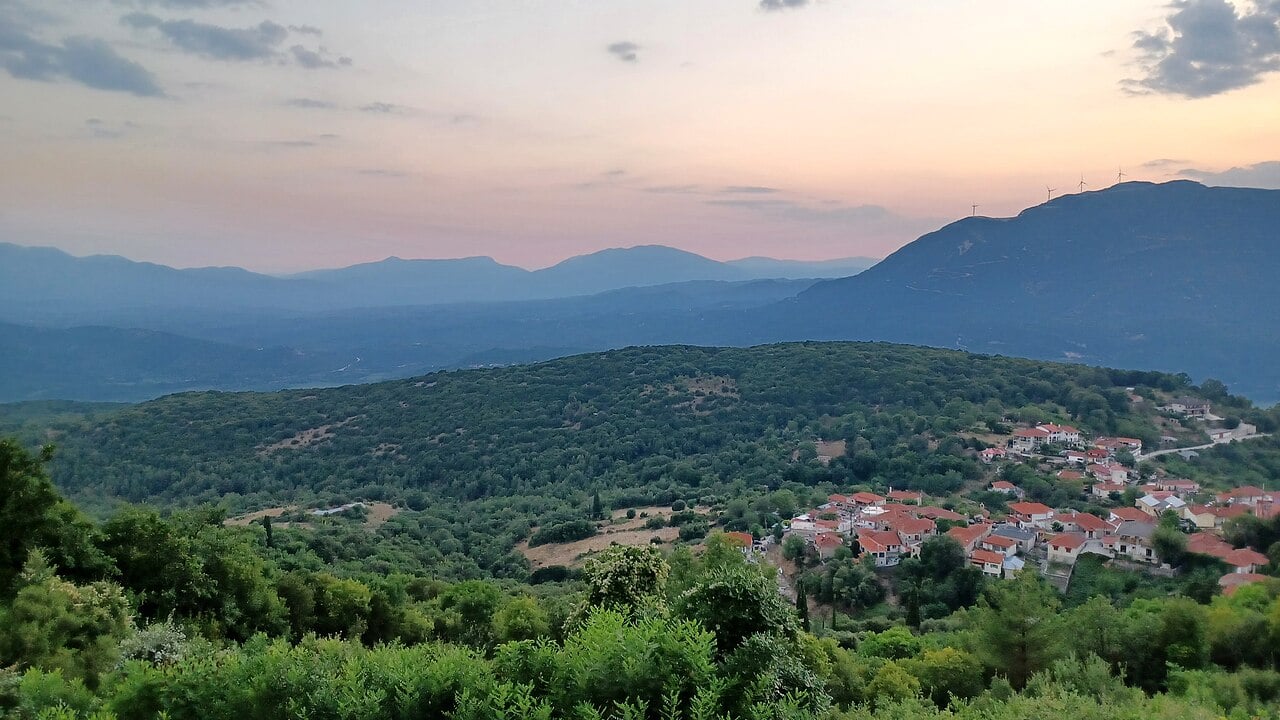
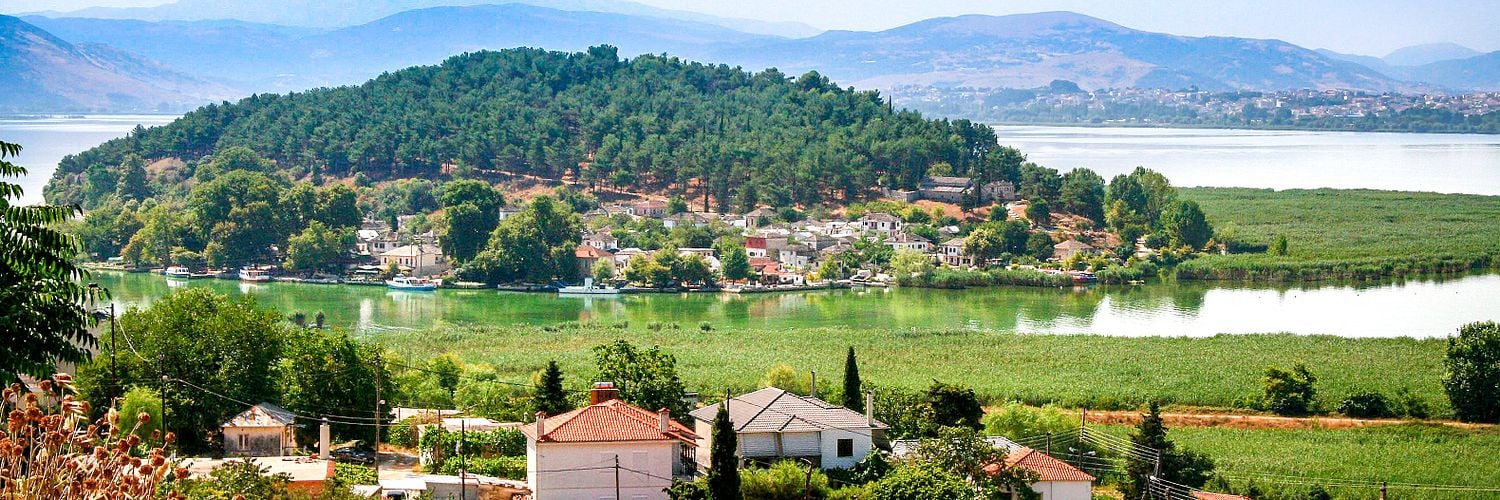
Epirus wine region is in the northwest of mainland Greece and is characterized by its rugged, mountainous landscape. Epirus sits on the Ionian coast and is bordered to the north by Albania and to the south by the administrative region of West Greece. Despite winemaking traditions, Epirus area is rich in cultural and natural resources and has a long history of winemaking. The region’s signature sparkling wine can be tasted while overlooking amazing mountain landscapes or while soaking up some sun on the Ionian coast. The capital of the Epirus wine region, Ioannina is a humble and relaxed university town on the shores of the Pamvotida Lake. The town has a stunning historical heart featuring old monuments, museums and traditional houses as well as cool cafés and plenty of delicious eateries.
Find out about Wine Tasting & Tours in Epirus to enjoy if you visit the region.
Follow our travel guide to Epirus Wine Region to discover more about:

The rocky landscape of the Epirus wine region makes it very hard to have large-scale productions of wine. That is why viticulture mainly happens thanks to small and privately-owned vineyards located on the steep sides of mountains.
The centre of wine production is the capital city of Epirus, Ioannina. Wines produced in this area are labelled under the Ioannina or Zitsa appellation. Plus, the Zitsa appellation is the only PDO one in the Epirus wine region and the only one in Greece given to sparkling white wines. Another regional appellation in the Epirus wine region is Metsovo, the one with the highest vineyards.
You can also check out our interactive map of the Epirus Wine Region to discover wineries with open cellar doors.

Wines produced in the Epirus wine region may be limited, but they have unique and regional-specific characteristics. In Zitsa, the most planted is Debina, a white variety used to produce sparkling white wines. Sometimes, but very rarely, Debina is used together with Vlachiko to produce sparkling rosé.
Vlachiko is hardly ever vinified as a single variety, and it was mostly found in blends. One of the most popular was with another local variety, Bekari. However, in recent years this practice started to be a trend around the Epirus wine region.
Epirus wine region has a more continental type of climate, compared to the majority of the Greek wine regions that have a Mediterranean climate. During the winter, Epirus experiences some pretty heavy snow falls with very cold temperatures. Having a cooler climate means that grapes ripe very slowly and retain most of their acidity. This is the reason why most of the wine produced in Epirus is sparkling.
Limestone is the main soil typology that can be seen in Epirus wine region. The steep mountain sides where vine rows are planted, help the limestone to retain just the right amount of water, especially after a rainfall. This condition results in less leafy vines and less highly concentrated grapes.
Red: Vlachiko, Bekari, Cabernet Franc, Cabernet Sauvignon, Merlot, Vlahiko, Bekari
White: Debina, Traminer, Chardonnay
Debina is the number one grape from the Epirus wine region and its wine is a fresh, high in acidity, light-bodied and aromatic beverage. The most recognisable flavours are those of pear and green apple. Debina is a delicate and dry sparkling white wine.
Vlachiko is an elegant red wine, with a bright ruby colour and is high in acidity levels. Vlachiko normally ages in barrels that give the wine an aromatic and spice aroma, clearly detectible on the nose. Of course, some fresh fruity notes are present in this wine’s bouquet.
Due to its climatic conditions and terroir, Epirus wine region is perfect for the production of sparkling wine and for experimenting with semi-sparkling and semi-sweet wines. Most semi-sparkling and semi-sweet wines are rosés and are produced by blending indigenous varieties. They present an interesting bouquet with a predominant flavour of ripe grapes and spicy notes.
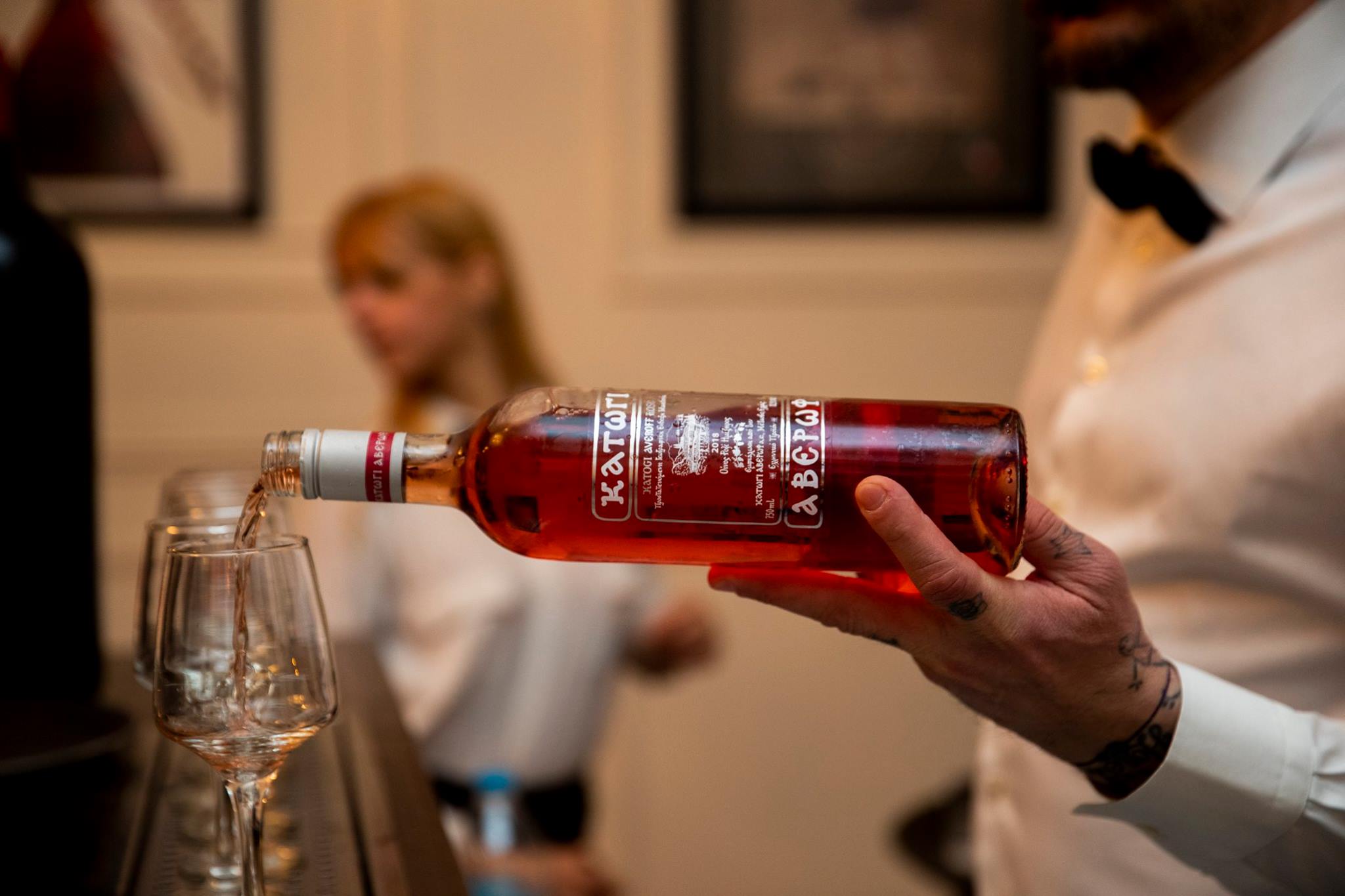
Katogi Averoff is located in the mountainous village of Matsovo of Epirus wine region.
The winery is famous for its unique architecture, rare flora and fauna it is surrounded by and of course, the wines they produce from Cabernet Sauvignon, Merlot, Cabernet Franc, Pinot Noir, Traminer, and Syrah along with lesser-known indigenous varieties.
Read more about Wineries in Epirus wine region to visit during your trip.
Ioannina is the capital city of the Epirus region. The southern part of the city consists of a fortified old town dominated by a castle. This is the oldest Byzantine settlement in the entire of Greece, even though most of it was reconstructed under Ottoman Rule.
The castle of Ioannina is located on a promontory that overlooks the Pamvotis Lake. Under the castle, two citadels form the fortified town. The northeastern citadel was the seat of the local governor, who precisely stayed in the so called “Upper Tower”.
The southern citadel is known with its Ottoman name, Its Kale. In the city’s military hospital, you can visit the Byzantine Museum of Ioannina, to learn more about the history of this multi-cultural fortress town.
The Necromanteion was an ancient temple dedicated to Hades, king of the underworld, and Persephone, queen of the underworld. According to Greek mythology, the Necromanteion was the door to the Hades, the world of the dead.
In 1959, this site in Mesopotamos, was declared as the “official” Necromanteion because of its similarities with the descriptions made by Homer and Herodotus. Of course, it is impossible to know if this is the real door to the underworld, but the mysterious and dark atmosphere that surrounds the site, attracts many tourists.
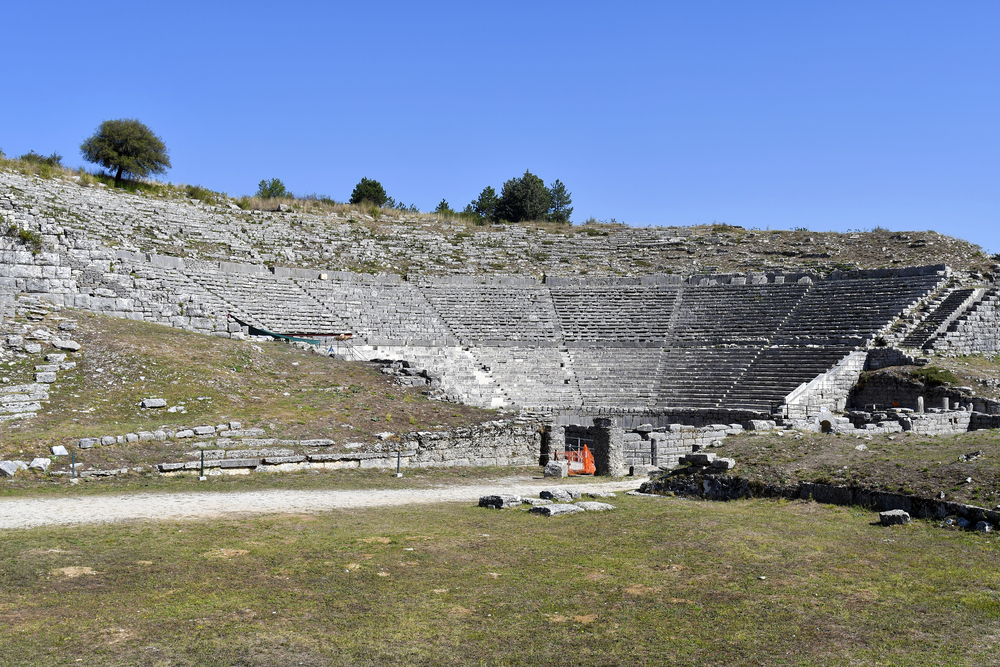
Dedona is a beautiful archaeological site just 22km away from Ioannina. Dedona was well-known in the ancient world because of its sanctuary dedicated to Zeus and Dione, the second most importance oracle in Greece, only after the one in Delphi. Plus, the Naia festival was held in Dedona every year, and it consisted of athletic competitions and theatre performances. The oracle of Dedona was present in many written works from the ancient Greece, from Homer’s Iliad to Aristotle, who said that the Hellens originated in the area around this site. The archaeological site is dominated by the Mount Tomaros.
The Perama Cave is located in the town of Perama, very close to Ioannina. The cave extends for almost 5km below the ground, but only the first km has been studied and explored. The cave is an agglomerate of stalactites and stalagmites. Studies have revealed that the cave is 1.500.000 years old!
The Perama Cave is a magnificent and magical world that was discovered by some inhabitants of the town in 1940. This is one of the most incredible underground caves in the world, and as you move forward in it, you will discover many different rock formations, as well as fossils of bones from cave bears.
Vikos Gorge is a deep and very impressive gorge in the Pindus Montains, more precisely on the southern slopes of Mount Tymfi. It is 20km long and its depth goes from 120m to almost 500m. The width between the slopes is 400m but in some parts is as narrow as 2m. Since 2015 it is included in the UNESCO Global Geopark list.
To get the best view of the Vikos Gorge, go to the Oxia viewing point, close to the village of Monodendri. From Monodendri, you can also engage in an adventurous 5-hours long hike down the gorge, to the Voidomatis River springs.

The Vikos Gorge is listed in the Guinness World Record book as the “deepest relative to its width” gorge.
Papingo Rock Pools, is a chain of natural pools on the Rogovo River. As you get close to the river, wooden signs will guide you to the enchanted world of the Papingo pools.
The route to get to the different pools is not very safe and must be walked with attention as it becomes slippery with the water streams. However, the colour of the water and the peaceful atmosphere, will make you desire of taking a dip in one of the pools. Be careful, the water is always very cold!
Metsovone is a semi-hard smoked cheese, a speciality from the town of Metsovo and its surroundings. In 1996, Metsovone received a PDO and it is similar to the Italian Provolone cheese.
Metsovone is a perfect table cheese with a very savoury and rich flavour. It is best served grilled with some paprika, a very popular serve in local tavernas.
Alevropita is a typical recipe from the Epirus region and it literally means “a pita made with flour”. The ingredients for this recipe are very easy: feta cheese, flour, eggs, and water. All is then mixed and cooked in the oven.
Even though it’s very simple, Alevropita is a very tasty local food. Imagine having a slice of it at a taverna while being caressed by the gentle mountain breeze.
Discover the locations of wineries in Epirus
Join our newsletter now to receive our free guide on how to plan the perfect wine tour