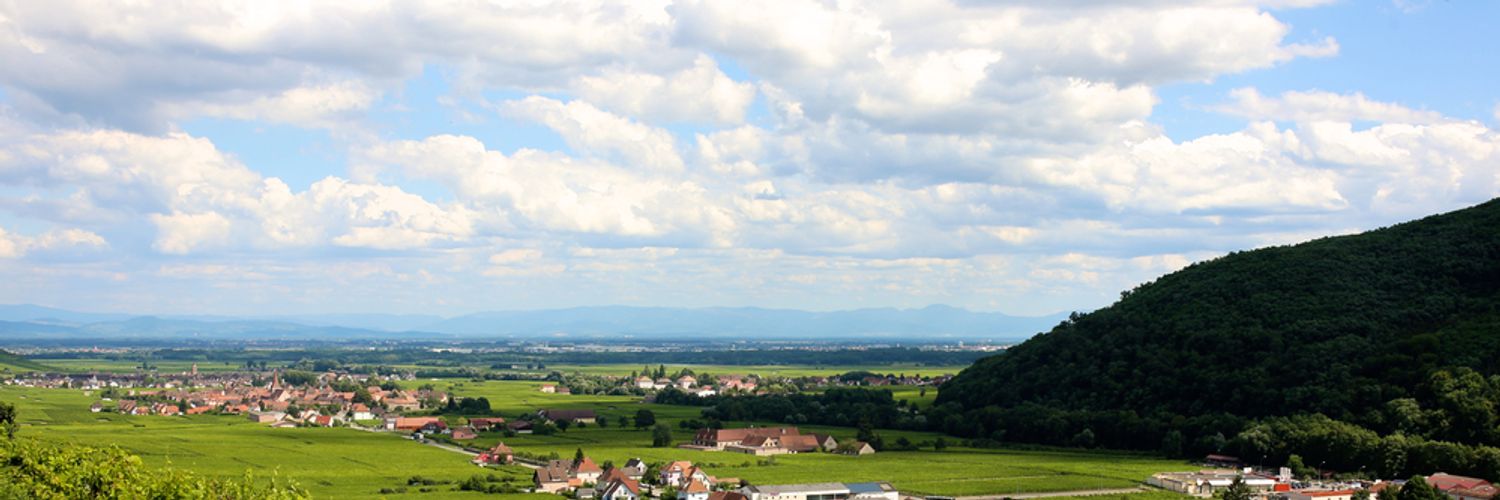
In the heart of Alsace lies Haut-Rhin, a stunning wine appellation celebrated for its diverse terroirs and exquisite winemaking traditions. Home to the celebrated varieties of Gewürztraminer, Riesling, and Pinot Gris, this region offers a remarkable opportunity for wine tourism enthusiasts to explore picturesque vineyards and charming wineries. Discover the distinct character of subregions like Colmar, Thann, and Eguisheim, where you can indulge in tasting sessions and immerse yourself in the rich cultural heritage that accompanies every sip.
Located to the south of the Alsace wine region of France, Haut-Rhin is a picturesque place with medieval villages and beautiful vineyards. The ‘’Haut’’ in its name means ‘’Upper’’, which perfectly explains its hilly location. Traditionally, Haut-Rhin wine region is home to the best wines in the province and proudly continues wine-making traditions.Especially, it is very famous for its elegant white wines.
Haut-Rhin is located in the Alsace region, bordered by the Territory de Belfort and Vosges departments. This region can be found on the eastern side of France along the Rhine River, which separates France and Germany.Haut-Rhin wine region is bordered by the Vosges Mountains to the west, the Bas-Rhin department to the North, Switzerland to the south, and the Rhine River to the east. This region is divided into 6 districts, 31 towns, and 377 municipalities.
The History of Haut-Rhin wine region
Haut-Rhin is one of the original 83 departments created during the French Revolution on 4 March 1790. At that time, it was divided into three districts: Belfort, Altkirch, and Colmar.In 1800, with the creation of the arrondissements in France, the three districts were changed into five: Colmar, Altkirch, Belfort, Delémont, and Porrentruy. The arrondissements Delémont and Porrentruy were eliminated in 1814 and transferred to Switzerland.The subprefecture of Altkirch was moved to Mulhouse in 1857. Later in 1871, the Haut-Rhin department became part of Germany, except for a part that forms the Territory de Belfort.
In 1919, Haut-Rhin's territory became part of France again. Nowadays, the Haut-Rhin wine region is managed by the Departmental Council of Haut-Rhin in Colmar.
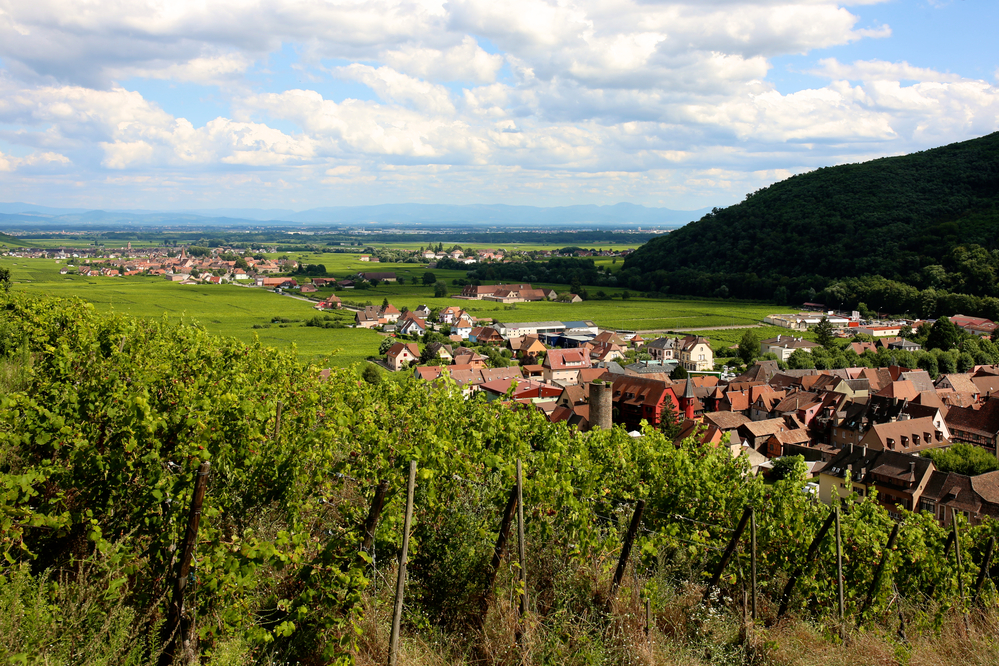
Vineyards around Kaysersberg, a small village in the heart of the Alsace Wine Route, France
Unique terroir of Haut-Rhin wine region
An eventful geological past provided unique soils to appear in the Haut-Rhin region. Around 150 million years ago, the sea rolled over what today corresponds to the Rhine Rift Valley. Numerous rocks such as sandstone, limestone, and marl came to locate atop the platform.Around 50 million years ago, the Rhineland mountain collapsed slowly and created the Rhine Plain. These successive collapses contributed to intensely renewing and separating all the geological zones.
Finally, three geological units stood out in this region: the Vosges mountains, the sub-Vosges hills boasting a wide range of soil diversity, and the Rhine alluvial plain.
Volcanic-sedimentary soils
Over 300 million years ago, volcanoes produced ashes that became solid underwater. These dark, stony terroirs retain the heat and sublimate the grape varieties. This kind of soil produces intense and full-bodied wine with a smoky aroma.
Sandstone soils
Sandstone is compacted quartz sand. Geologically it is close to granite terroirs that have the same acidic and sandy character. The wines produced there have firmness and are less aromatic.
Limestone-sandstone soils
The Haut-Rhin hills have clay, limestone, and sandstone soils. It’s the rock variety that creates the mineral resources. So, this territory is very fertile and boasts a great water-storing capacity. The limestone and sandstone lighten up the soil.
Clayey-marl soils
Clay is the primary component that produces heavy and fatty soils. Wines from this terroir have a weighty structure and need time to expose aromas. Because of the clay-dominated soil, the taste of tannin is common even in white wines.
Landscape of Haut-Rhin wine region
What are the Grape varieties in Haut-Rhin?
The diversity of the soil has led to the creation of the best environment for different varieties of grapes.The mix of minerals and composition of soils contribute to marvelous layers of flavors in Haut-Rhin wines. The slope faces south and southeast, giving the grapes great exposure to the sun, and providing good drainage.The four “noble” grapes of Alsace—Riesling, Pinot Gris, Muscat, and Gewürztraminer—occupy the premier sites and are, with minor exceptions, the only grapes planted in the region’s grand cru vineyards. Out of 51 official grand crus, 33 are located in the Haut-Rhin area.
Pinot Gris grape achieves the richest expression, with spicy qualities and a frame of good acidity. Muscat dhows fragrant floral notes, and Gewürztraminer tends towards sweet spices, rose petals, and tropical fruit. Both are low in acidity, but Gewürztraminer is higher in alcohol. New oak is usually not a factor in the vinification of these varieties, although some producers use large neutral casks for fermentation and ageing.
Generally, the best wines originate in the Haut-Rhin, and over two-thirds of Alsace’s Grand Cru vineyards are located in the department.
Food to pair with Haut-Rhin wine
Tarte Flambée
Tarte Flambée is a thin, crispy, rectangular flatbread that is topped with tart and spreadable cheese, créme fraîche, crispy bacon, and thinly sliced roasted onions. A pinch of salt, ground pepper, peanut oil, and nutmeg add extra layers of flavour to this beloved snack.
Tarte flambée is known as flammeküche in Germany and takes its name from the fact that it is baked in proximity to hot embers in an oven. Tarte flambée pairs perfectly with Haut-Rhin dry white wines and local beers.
Tarte Flambée from Haut-Rhin wine region
Pot-au-feu
Pot-au-feu is a French dish with boiled meat and vegetables. However, it is not as simple as it might appear at first glance. Pot-au-feu, French for “pot on the fire”, is one of the oldest French provincial winter dishes.
It was originally made over an open fire with cheap, inferior cuts of meat, vegetables such as potatoes, carrots, onions, leeks, and turnips. The use of tough cuts of meat and low cooking temperature means a long cooking time to make the meat tender, sometimes even an entire day.
With its unique aromas and juicy, tender meat, a serving of pot-au-feu paired with a glass of Haut-Rhin red wine is an authentic experience.
Coq au Riesling
Coq au Riesling is an Alsatian version of the classic coq au vin. This dish consists of chicken, mushrooms, onion, lardons, and dry Riesling wine from Alsace, recognized as one of the best wines in the world.
It is said that the dish is even better when rewarmed the next day due to the flavors that develop when left in the fridge overnight. The chicken can be served over egg noodles, boiled potatoes, or the more traditional spätzle, making for a great comfort dish, especially on a cold winter's night. You should taste this dish with a glass of Haut-Rhin wine.
Top 3 places to visit near Haut-Rhin wine region
Colmar
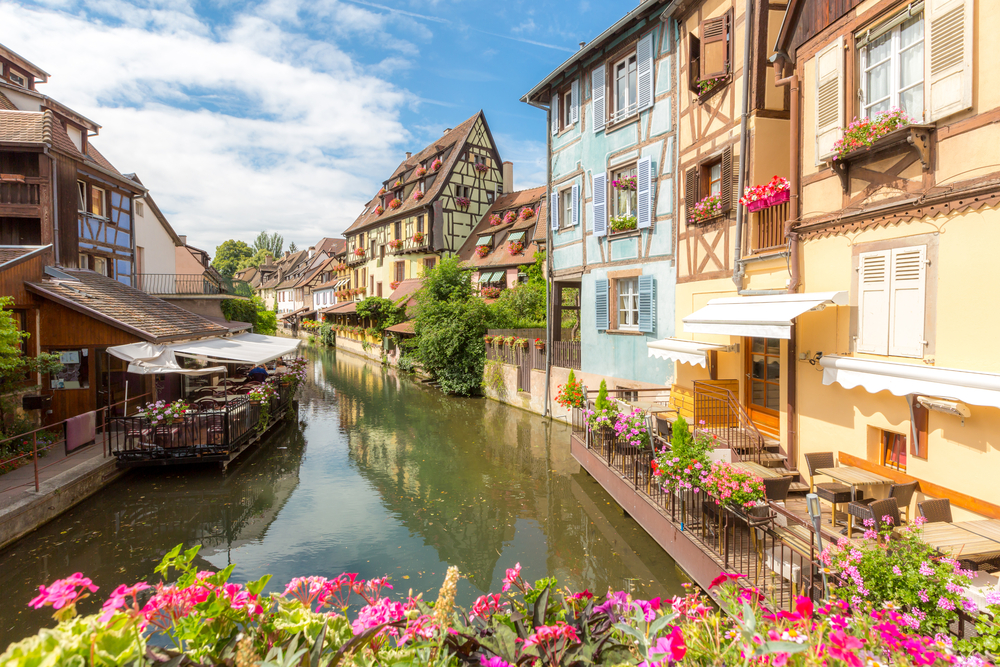
Colmar is a medieval town in the Haut-Rhin department to the south of the Alsace region. Although the town has numerous recent buildings, you will love the center of the city with narrow streets and old houses. These views will show you the real Alsace as it was hundreds of years ago.
This historic part of Colmar Old Town has various interesting areas such as:
The part of the old town.
The 14th-century Ancient Customs House.
The Rue des Tanneurs with very tall houses.
The Quai de la Poissonnerie (Quai of the fishermen).
Town of Colmar in Alsace region
Bergheim
Bergheim is a village to the north-east of Ribeauvillé, in the Haut-Rhin department of Alsace. This tiny and beautiful village is enclosed by the original fortified wall. Bergheim's remaining walls include double defensive doors and 9 towers. The town is entered by the arched doorway that was built in the 14th century.
Once you enter the Bergheim you will find a lovely little town with a cobbled main street and brightly painted half-timber houses. You should explore the church of the village and the town hall.
Eguisheim
Eguisheim is near Colmar in Alsace, in the Haut-Rhin department of northeast France. Eguisheim is now considered as a part of Colmar, but historically it is a separate town with a different history.
The winding, cobbled streets of Eguisheim are lined with traditional medieval half-timbered buildings, brightly painted, as are many of the buildings in Alsace. Eguisheim is listed as one of the most beautiful villages in France.
Haut-Rhin is located in the Grand Est region of France that superseded three former administrative regions, Alsace, Champagne-Ardenne, and Lorraine. Geographically, Haut-Rhin is situated in the Alsace wine region.
What is the Haut-Rhin wine region?
Haut-Rhin is a wine-producing region, located in Alsace, the north-east of France.
What are the most popular grape varieties grown in the Haut-Rhin wine region?
The predominant grape varieties in the Haut-Rhin wine region are Riesling, Pinot Gris, Muscat, and Gewürztraminer
Top 10 wineries to visit in Haut-Rhin
Just getting started on your wine journey, or jumping back in? Look through our collection of great wineries
Haut-Rhin is located in the Grand Est region of France that superseded three former administrative regions, Alsace, Champagne-Ardenne, and Lorraine. Geographically, Haut-Rhin is situated in the Alsace wine region.
What is the Haut-Rhin wine region?
Haut-Rhin is a wine-producing region, located in Alsace, the north-east of France.
What are the most popular grape varieties grown in the Haut-Rhin wine region?
The predominant grape varieties in the Haut-Rhin wine region are Riesling, Pinot Gris, Muscat, and Gewürztraminer
Get your monthly boost of wine inspiration
Join our newsletter now to receive our free guide on how to plan the perfect wine tour